Pennywise Beats The Allegations (feat. Kether)
 |
“We all float down here.”
Brief Disclaimers
Kaiser: This blog was 100% written and researched by Kether (also known as Kira), a good friend of mine. Like Davoth VS The God Emperor of Mankind, this is a project separated from TGTQVS blogs that we are merely hosting so it can reach a wider audience. The original document has been slightly altered in formatting for the sake of presentation, but its contents are largely untouched with the exception of one or two custom images. You can read the original document here, so enjoy! You might be wondering about Ryuko Matoi vs Cutie Honey, which should come out soon. In case you wanna read our last analysis, Inuyasha vs Kurama, click here. Flip and Yerm helped with formating, and L.A.D. did our initial image, so a thanks to them!
Kether: The uninitiated reader may read this blog and be confused as to the many many sources cited that seem on the surface to have nothing to do with It, so I shall take a moment to elaborate. Stephen King’s novel “IT” does not exist in isolation, rather it is a part of a greater multiverse which contains the greater part of King’s bibliography, and a very foundational one at that.
The series of books which ties all the stories together is The Dark Tower series, and it contains countless references to other works penned by King such as The Shining, Salem’s Lot, The Stand, The Mist, and of course IT. Among others at least.
Stephen King’s official website has a brief section that explains his literary multiverse and contains a list of connections found throughout multiple books. Something I will also state now is that I will not be including anything from the IT movies, nor the recent HBO series, and I shall elaborate on why nearer to the end of the blog.
For a more full and thorough reading list, here you are:
- The Dark Tower Series (Books I-VII, including The Gunslinger Revised Edition and The Wind Through The Keyhole)
- Marvel’s Dark Tower Comics (See the full reading order here)
- Dark Tower Guides and Supplementary Materials (Guide to Gilead, End-World Almanac, The Gunslinger’s Guidebook, Stephen King’s The Dark Tower - The Complete Concordance Revised and Updated)
- The Stand (The Antagonist Randall Flagg is a recurring character within The Dark Tower and a servant of the Crimson King)
- The Eyes of The Dragon (Randall Flagg / The Man in Black’s backstory)
- Everything’s Eventual - The Littler Sisters of Eluria (A Prequel to The Gunslinger)
- Everything’s Eventual - Everything’s Eventual (Includes an important character who later joins the Ka-Tet in The Dark Tower, and introduces the reader to the concept of “Breakers”)
- Salem’s Lot (Father Callahan becomes a major character in the Dark Tower later on. This book also hints at the nature of The White and its struggle against the Outer Dark)
- Hearts in Atlantis (The five short stories included all contain notable references to the Dark Tower series as well as showing more notable figures and concepts that are relevant such as the “Low Men” / “Regulators”)
- Insomnia (Perhaps one of the most important books for it contains the first appearance of the Crimson King, elaborates more on the cosmological structure of the Dark Tower Multiverse, and The Deadlights also make a direct appearance)
- The Talisman and Black House (Heavily connected to the story of the mainline Dark Tower series, and elaborates more on the lore)
- The Shining and Doctor Sleep (Foundational stories on the psychic tropes King enjoys including in his works. Doctor Sleep also contains more blatant connections to the Multiverse of the Tower)
- IT (Especially relevant here for obvious reasons. Maturin and It both make their first appearances here, and the God of the Dark Tower Multiverse also makes a direct appearance)
- Later (A more recently published book in which It makes a return as an antagonist, taking place multiple decades after its original appearance)
- Fairy Tale (Another more recent addition to the Dark Tower multiverse which takes place on the make-believe realm of “Empis”. Contains more elaboration on the nature of the multiverse as a narrative construct built from stories)
Content Warning
Some of the scans used in this blog may references to sensitive content, including but not limited to: racism, sexual assault, incest, child abuse, etc. You have been warned.
Background
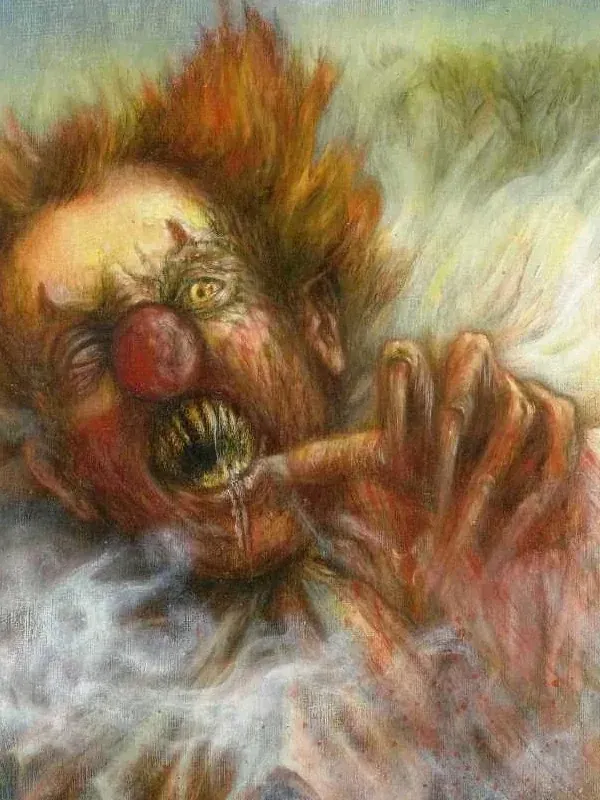 |
Before creation ever came to be, in a time when rules meant nothing and nothing meant everything, the world was dominated by the chaotic waters of the Prim. As the nothingness writhed and swelled a Tower then rose from the soup, and six Beams radiated out from its head, joining together in the shape of a great Wheel. All life and possibility were contained within this Wheel, and as it turned the motion of time thus commenced. When the world was made its creator moved on, but before it could fall into the Abyss a great Turtle emerged from the Prim to catch the Tower upon his back. And as this Turtle rose it cast a shadow, and from this darkness came a thing opposite to the Turtle, a dead and shapeless light that mocked all life, an eater of worlds that would stand outside existence for all eternity. This dead light possessed no name, and thus it would come to be known simply as “It”.
Maturin the Turtle and the Deadlights were both respectively the first among the primordial beings of the Prim, the Beam Guardians who served the White, and the Demon Elementals aligned to the Outer Dark. And as the Guardians stood guard at the Wheel of Ka the Elementals sought the destruction of the Tower. Maturin would stand and watch, while It would descend and eat, terrorizing the children of the Tower and lending its aid to the malevolent Crimson King who sought the annihilation of the Wheel and the return of the Prim’s dominance.
Although many of its acts of service to the Outer Dark remain obscure, it is known that It journeyed to earth within a physical vessel, crashing into the planet’s surface in some distant era millions of years ago, and here at the sight of its landing It would make its abominable abode. When the first humans settled on its hunting grounds they founded the city of “Derry”, and the Elemental swiftly got to work tormenting and manipulating the population, feeding off their fear and misery. For centuries It would reign uncontested, until the day It would learn the price of the evil it wrought.
After two hundred years of its tyranny seven children would come who would prove far stronger than It could have anticipated. They were the first who could resist It, who could survive and escape its grasp, somehow always miraculously triumphing. For a time It considered that perhaps itself and the Turtle were not alone in the Abyss, but that there was something out there older and greater than itself at the backs of these children. A terrifying thought for the so-called eater of worlds who wished to never acknowledge such a thing, and so It denied it, a mistake It would soon come to regret. For a time it seemed that perhaps It had gained the upperhand, having reduced their number from seven to a mere five, but as they battled for the final time It would learn and feel the force of that Other that horrified It, and despite its great power even It was subject to forces greater than itself,and so Good triumphed over Evil and the Deadlights were cast outside the universe…
But not for good. Even as It was defeated in Derry, the Deadlights continued aiding the Crimson King in his quest for Discordia, and soon enough It would make its return within the Tower to continue its reign of terror. And so It did, possessing the body of an evil man named Therriault and finding himself in conflict with yet another psychic agent of that Other, and though It was defeated yet again this time its vessel lived and persisted on. And so It endures, wandering somewhere out there in the worlds that spin about the Tower, and only time may tell if the encroaching forces of the Outer Dark can ever be stopped.
Knowledge and Experience
It and the Turtle existed long before the universe was ever born, and its physical avatar first flew to the earth millions of years ago in some era prior to the ice age, cratering the land and residing in what would later become Derry. As early as 1741 after the first settlers arrived, It awoke and claimed its first known victims, numbering approximately 300 in total. This would mark the beginning of its cycle of awakening, murdering, and slumbering for the next 27 years before then beginning again. Whenever It awakens many die whether by its own hand or the events It influences, and within a single year It can be responsible for as many as 127 child disappearances. This would place its direct kill count in the thousands, and potentially many more via its passive influence.
However, beyond its own interests it is possible that the creature also has some affiliation with larger scale events such as the Crimson King’s struggle against The White. When It is asked to identify itself It uses the name “Legion”, a recurring title utilized by beings with ties to The Outer Dark such as Randall Flagg / The Man in Black (who also uses this same term to refer to “The Ageless Stranger” a creature strongly implied to be connected to the Crimson King in some form, and is later shown in the comics to be a demonic entity in opposition to Gan known as Maerlyn). The Crimson King himself is even shown to potentially be on speaking terms with It, given his line “Shape-changing is a time-honored custom in Derry” in the Novel Insomnia, followed by him using the Deadlights to move between the different levels of the Tower. He also claims to have “worked very hard in Derry” at some point prior to the events of the novel. Both characters even use the same aliases, with It referring to itself as the “Kingfish” and the Crimson King later calling himself by that name as well. And then they also of course both refer to themselves as “the Eater of Worlds”. They also appear to share certain symbolic similarities, with the Crimson King’s true form being described as a gigantic spider which seems to be evocative of the same shape said to be the closest approximation to its true form. The comic depictions of the Crimson King also portray him as a monstrous spider. Overall it is likely that It knows of the Crimson King and his goal of destroying the Tower, and perhaps might be even acting in his favour personally. They could even be of the same species of being or some sort, and such a thing is implied in supplementary material (see: “Demon Elemental”). Perhaps Stephen King could have even been flirting with the idea that It and the Crimson King are the same entity in some manner, although this remains unconfirmed.
Thus It is not a simple eater of children as one may think, but is very likely involved in the same multiversal conflict regarding the White and the Outer Dark which the Dark Tower as a whole revolves around, obviously on the side of the Outer Dark.
Abilities
Glamours/Shape-Shifting
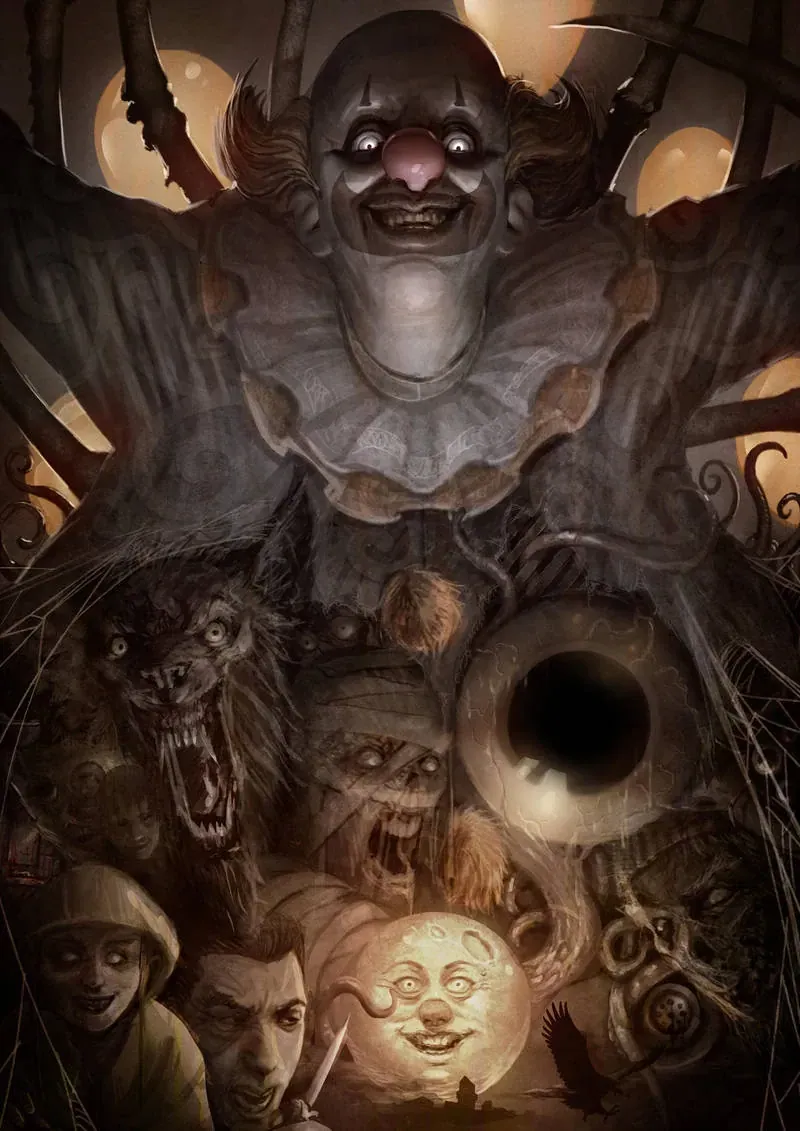 |
While the Loser’s Club originally thought Pennywise to be a supernatural creature called a “Glamour”, it is later revealed that Glamours are actually mere masks that It adopts in the physical world. Whenever It adopts a Glamour It changes shape, and must then obey the rules of whichever shape It has taken. For example, when It assumes the form of a Werewolf It gains the powers associated with this creature while also suffering their traditional vulnerability to silver. The incident of It being harmed by silver is explicitly pointed out as being a weakness of the form It took and not a general vulnerability, as It is able to assume other forms over which “silver wielded no power”. The Glamours themselves can be rather versatile as well, in some instances taking on the aspects of two shapes simultaneously, transforming into inanimate objects, and can also apparently duplicate itself to assume the form of a group of zombified children.
Using Glamours It can assume the shape of one’s greatest fears, whether they be real-life figures or fictional entities, though it does this primarily as a means of toying with its victims in order to feed off their fear. its avatar may freely cast aside all glamours and assume the closest approximation to its true self, a “nightmare Spider from beyond time and space” that exceeds all human imagination, perhaps a literal statement as this Spider-shape is stated to be a “translation” of something that does not abide by 3-D reality, strongly implied to be the Deadlights themselves fully entering into the physical world.
Illusion Creation

It possesses the power to project hallucinations capable of targeting multiple senses, including distinct scents, sounds, images, tastes and touches, etc. These illusions can also become fairly large scale as It can project its face onto the moon, and in one instance made Richard feel the presence of a Gargantuan corpse in place of Maturin.
Fear Manipulation
 |
Although It primarily preys upon the fears of its victims via its glamours, there are multiple instances where it is implied that its ability to use your fears against you has a more direct vector, as it is stated that one victim who had been physically torn apart died not from blood loss but rather overwhelming fear forcing his heart to stop. Even the mere sound of its voice can cause the body to go cold and rigid, and it’s implied that It causes this irrational fear response telepathically.
Weather Manipulation
It can generate severe thunderstorms that encompass all of Derry and upon its defeat a massive earthquake ripped through Derry, destroying much of the town in the process.
Immersion
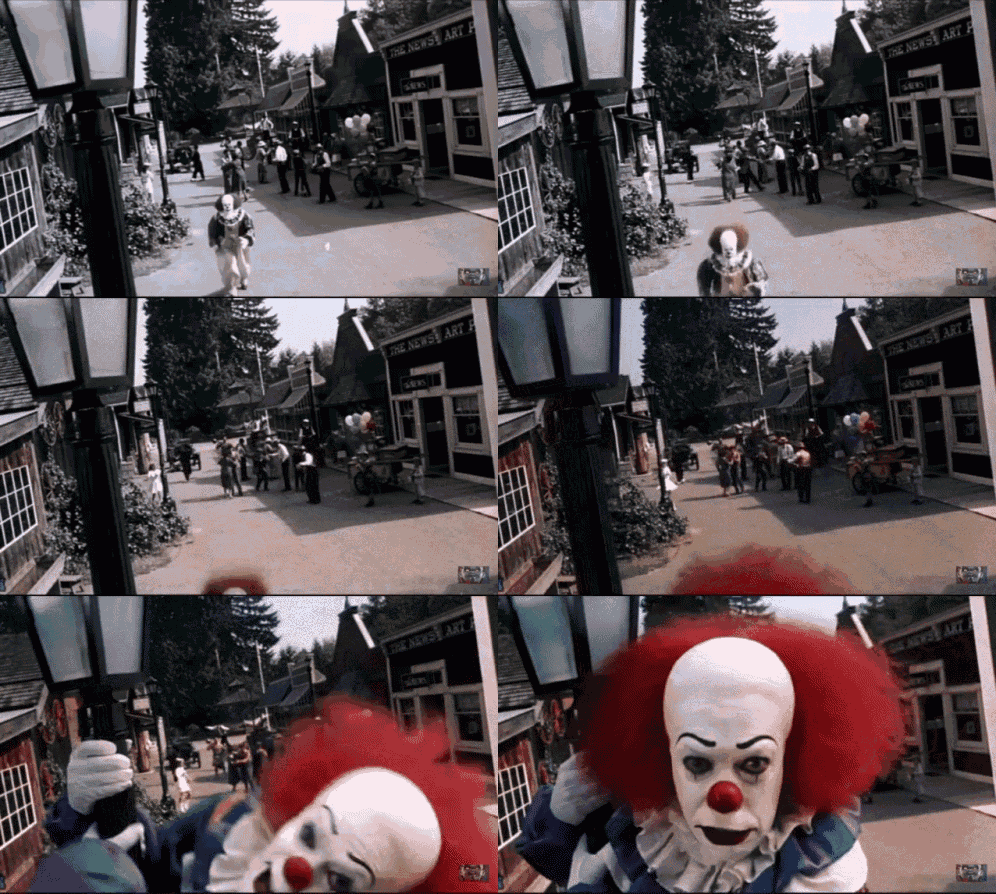 |
Can appear within Television screens and photo albums for the sake of frightening its victims.
Technology Manipulation
Seemingly capable of interfering with technology, forcing lights and televisions to turn on through non-physical means.
Spatial Manipulation
Capable of warping space to create impossible angles, cause corridors to elongate and ceilings to rise, and extend the length of staircases.
Biological Manipulation
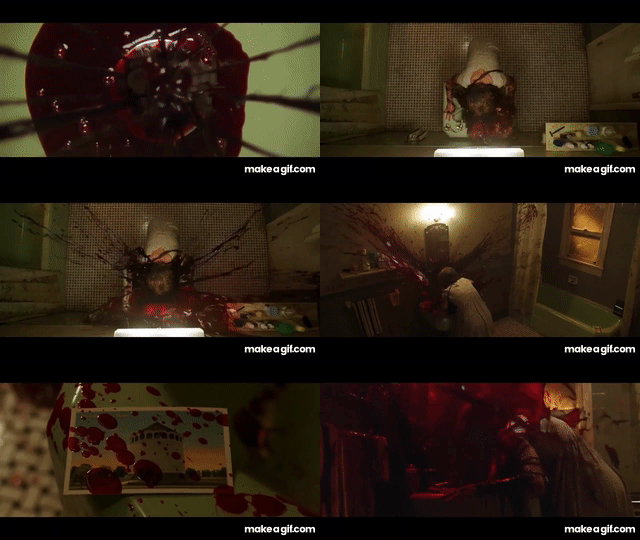 |
It has shown a recurring tendency to manipulate organic matter, typically coming in the form of cataracts of blood, though It is more than capable of using its power to manipulate bodies. It can force healed scars to reopen, give people terminal illnesses, extend human lifespans by centuries, and even cause plant life to wither away just by walking too close.
Telekinesis
Having potent psychic abilities It has of course displayed telekinetic feats, capable of pushing others away with a glance, and causing balloons to pop from a distance. It should also of course scale above the Telekinetic feats of the Man in Black, who can toss around steel beams and ragdoll humans. Apparently this Telekinesis functions by manipulating gravitational forces. You could also potentially argue for It scaling to many other Telekinetics throughout the Dark Tower, but I'll again suggest just reading through this blog if you want more information on that end (It’s pretty well researched).
Transmutation
Has the ability to transmute the physical makeup of large structures, such as when It transformed Beverly’s house into candy.
Corrosion Inducement
Its bodily fluids possess an acidic quality which burns away the skin upon contact.
Thread Manipulation
The Deadlights

The Deadlights are the very essence of It, identified with its mind, with its physical manifestation merely being a “glamour” or a reflection that conceals its true existence.
The Deadlights shine through the eyes of its corporeal avatar, and when one gazes into them they are cast into the Void suffering a fate worse than death, alive yet not alive, either having their soul destroyed, or being driven to madness as they are then assimilated into the lights. Witnessing the Deadlights also kills the body, causing the brain to implode into a bloody mess.
The Deadlights’ power to destroy or assimilate the Soul should also be noted as being far more impressive than it sounds, for the Soul / Consciousness is identical to Ka. To affect one’s Ka would require power that pervades over the entire universe (see: “Transcendence over Ka” under Abilities and “The Wheel of Ka” under Cosmology).
The Deadlights can also skip the process of creating a physical form and "possess" evil spirits, taking control of them and using them to operate within the universe. Or beyond that even, the Deadlights can simply reach down into the physical world Itself and exert Its influence directly.
Another perhaps more esoteric ability possessed by the Deadlights, is that they can send beings up and down the Dark Tower's All-Time levels (see: “All-Time levels” under Cosmology).
Psychic Power
 |
Within Stephen King’s greater Dark Tower mythos psychic abilities are noted to come in 5 forms (though other stories have of course shown more), of which It has shown proficiency in a few. It has the ability to enter minds and read their thoughts in order to better manipulate their fears against them, and It can also project itself to another, communicating in a way no one else can see or hear, and can project its thoughts into another’s mind directly. It can manipulate the minds of others, and has used this power to prevent any knowledge of Derry’s murders from spreading to the public, as well as erase the memories of the Losers Club. its presence also has a profound effect on Derry’s adult population as a whole, often manipulating them into committing atrocities against one another to a point the town’s murder rate is six times that of any other. its psychic power is likely the means by which It knows the names of all its victims before having met them.
Throughout its conflict with the Losers Club he has assumed control of Derry’s citizens, such as when It sent a nurse to kill Mike in the hospital, commanded Bowers and his friends to kill Beverly, forced Beverly’s father to attack her, and so on.
It should perhaps also be pointed out that in The Dark Tower’s cosmology one’s consciousness is fundamental to their essence, encompassed by their “Ka” (see: “Transcendence over Ka” under Abilities, and “The Wheel of Ka” under Cosmology) making the manipulation of one’s Mind no trivial feat. This is consistent with the fact that psychic powers such as “Shining” (Or The Touch) are commonly attributed to the divine. The mind is even at points referred to as being symbolized by a Wheel with a hub at its center serving as the base of consciousness, which is itself an obvious reference to The Wheel of Ka encompassing the mind. Even on the microcosmic level the concept of Ka is such a lofty thing that to affect an individual’s Ka would require supreme power over the universe.
its psychic power being potent to such a high scale should of course not come as a surprise, as the Ritual of Chud and the empowerment of Gan himself were required to allow the Losers Club to even stand a chance against its true form in the Abyss, and they’d have been dragged into the Deadlights and devoured otherwise. The Ritual of Chud is noted to be Telepathic and Astral in nature, and later material even describes it as a state of spiritual Nothingness akin to the Buddhist concept Sunyata. It should also easily be beyond Demon Elemental Hybrids such as Mordred, who was able to casually overpower Flagg (A magician gifted with psychic powers) with his psychic ability despite being a literal infant.
Another more esoteric power belonging to those with psychic ability is cross universal travel via the Todash Space between worlds, an element which is surprisingly consistent as The Shining is also stated to allow contact with spirits from other worlds within the Tower. Alain, a young and inexperienced Gunslinger, could utilize this power to travel through Todash despite only having heard of it in legend, and though It has never shown using this specific ability itself, It should nonetheless be theoretically capable of replicating the same feat. It is of course no stranger to travelling around the Tower, as It can move between the All-Time levels, as well as pull beings outside the Tower. (see: “The Deadlights” under Abilities).
Being gifted with the Shining is also implied to grant immunity to metaphysical plagues such as the Red Death and the superflu.
While there are many more instances of different psychic abilities shown throughout the Dark Tower multiverse, I’m not including them here firstly for the sake of brevity, and secondly because I’d rather avoid giving It too many powers and abilities which It has not shown directly (or indirectly in the case of Todash traversal). Though you can definitely argue It should possess many more abilities it hasn’t shown, due to being a Demon Elemental (Magical entities who are classed infinitely beyond beings such as the Crimson King and Randall Flagg in terms of magical capabilities). If you wish to see a greater variety of psychic applications throughout the Dark Tower multiverse, I’d recommend reading this blog (seriously, give credit to those guys, because they had to read through a massive chunk of King’s bibliography only to say none of it mattered for the matchup).
Dream Manipulation
It has showcased the ability to manipulate the dreams of the Losers Club on a few occasions, and though its own feats of this are rather typical, there is another being with a lot more direct showings whom It scales far beyond.
The Man in Black, a magician who is himself stated to be incapable of ever comparing to the Crimson King or the Beam Guardians, has showcased rather impressive feats of dream manipulation. He can manipulate reality within the dreamscape to such a fine degree that he can recreate the infinite recursions of the Dark Tower, and on many other occasions he’s been shown invading the dreams of people, and could even overpower another psychic within her own dreams. Flagg’s Dream control is so great that even Sheemie, who’s among the most powerful class of psychics known as “Breakers”, was powerless when hit by Flagg’s eldritch bolt.
Another element relating to Dream based powers within the Dark Tower is that the ability of psychics to traverse the Todash Space (see: “Psychic Power” under Abilities) is also described as a state of lucid dreaming, implying that Dream traversal requires the power to cross through different worlds of the Tower.
Walk-In
 |
The Deadlights’ vessel within the physical world is referred to as a “Walk-In”, and this is a term used to refer generally to entities who can walk into different worlds from other wheres and when. Utilizing the Doorways Between Worlds, a Walk-In can enter any world they choose by imagining their destination. The name “Walk-In” is itself in reference to “the walkin’ dude”, a title used by The Man in Black, a character within the Dark Tower mythos who is infamous for moving between worlds and eras.
By itself It has shown the capability to travel universes, as its Avatar flew to the Earth from outside the Multiverse, and the Deadlights also allow travel between the All-Time levels of the Dark Tower. It is also implied that It is capable of teleporting at will, as It is seen suddenly appearing and then disappearing on multiple occasions.
Demon Elemental
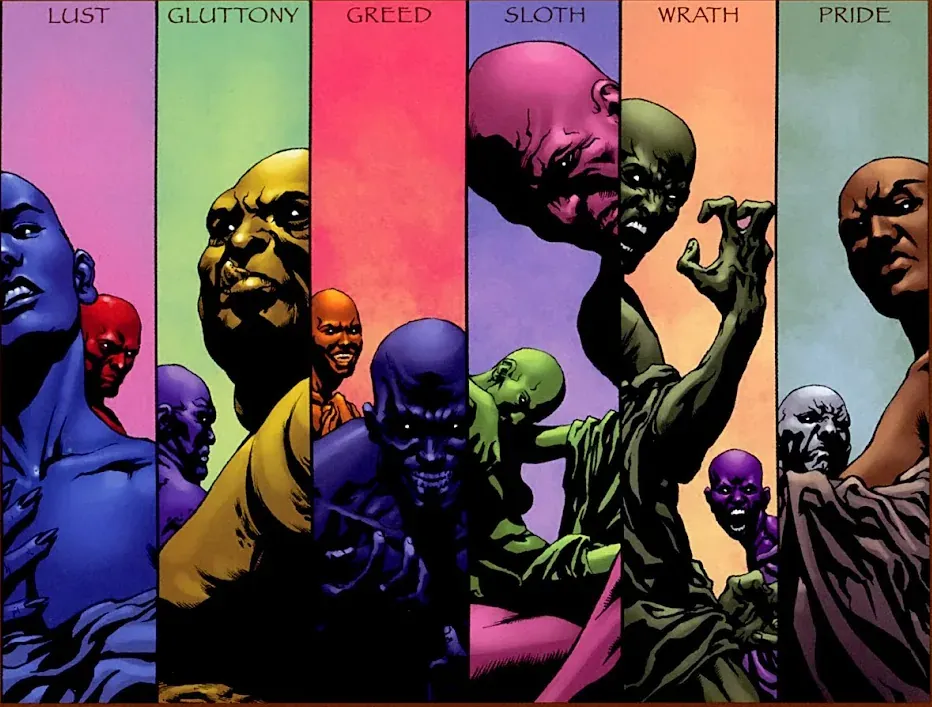 |
It once claimed to be an “eater of worlds”, and despite the title seeming unwarranted at face value, it is very much real in the greater scope of the Dark Tower. It being a godlike entity with an even greater cosmic role is briefly hinted at in the original novel via The Turtle referring to It as his “brother” who exists as a natural counter balance to himself in the greater scheme of the cosmos. This fact would later be confirmed with the introduction of the Beam Guardians, a collection of beings made in service to The White, who guard the magical constructs known as the “Beams” which maintain the metaphysical structures of the Tower. The Turtle’s true name is revealed to be Maturin, and he is considered foremost among the Guardians, having caught The Tower on his back, holding the world within his mind.
The Guardians all have darker counterparts called “Demon Elementals”, servants of the Outer Dark who seek to destroy the Beams. They preside over the hierarchies of the Prim, and are responsible for all plague and misfortune that enter the world. Given its status as Maturin’s opposite, It would naturally be Maturin’s corresponding Demon Elemental. The Elementals are stated to possess both Male and Female aspects which also corresponds to its own gender being treated ambiguously, given Maturin calls It his “brother” whereas the Losers Club refers to It as a female (And its physical shape is shown to be pregnant to reflect this).
Magic
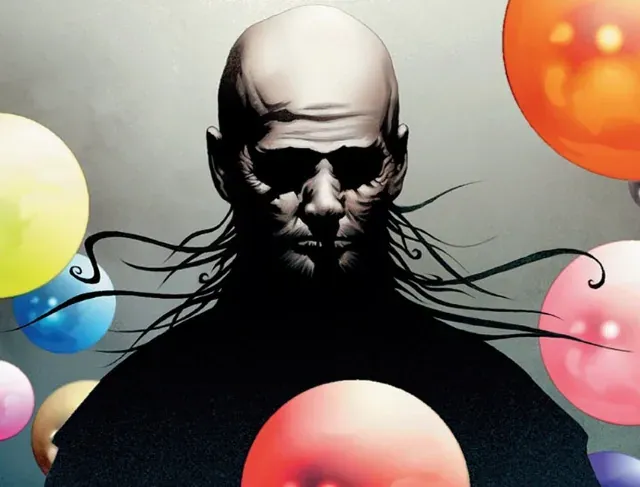 |
The Prim from which all creation arose was an infinite sea of primordial magical substance, granting the entities that arose directly from its waters immense power. Magic is naturally a fundamental component of creation, for The Tower and The Beams themselves are magical in nature, and this very magic allows them to maintain all that exists for eternity. The concept of Magic is also fundamentally linked with one’s creative imagination, for the Dark Tower is populated by worlds formed of narratives, with authors such as Stephen King acting as imitators of Gan, having “touched the worlds with his imagination” and generated stories with the magic of the Prim. This is further shown to be quite literal, with the Fairy Tale world of Empis being stated to be part of a “world matrix”, born of humanity’s collective imagination, experienced as real by those within it despite being fictional to those above it. This very fact has been hinted at prior within Danny Torrence’s world, with the phrase “All that we see or seem is but a dream within a dream.” Of course all these statements will become quite important later (see: “Cosmology”). It is even said that Magic is the means in which a willful individual alters the turning of the Wheel of Ka (see: “The Wheel of Ka” under Cosmology, and “Transcendence over Ka” under Abilities).
On a few occasions the ability to alter reality through imagination has been shown, with one of the more impressive cases being Patrick Danville, whose magic could “draw” others into existence, and even erase entities such as the Crimson King until only his eyes remained.
The Beam Guardians, and thus the Demon Elementals should of course be among the very strongest of the magical beings, as the Guardians maintain the existence of the beams and the laws of the Tower. As established earlier, It would be classed among these magical beings as It is Maturin’s corresponding Demon Elemental. (see: “Demon Elemental”). Maturin, its opposite, is also implied to hold a special place of power, being the “most revered” of the Guardians. He is said to have caught the Dark Tower on his back, and holds the world within his mind.
With It being among the oldest and most fundamental of the magical beings, It should exceed the capabilities of The Crimson King who’s magic couldn’t harm the Guardians, or The Man in Black who’s stated derisively to be capable only of “little magic and a long life”.
Immortality
 |
Maerlyn, the second entity to rise from the Prim after Gan (allegedly), used his vast magical power to craft a dark mirror which corrupted and distorted all things caught within its reflection. Using this artifact Maerlyn wounded the Dark Tower on the metaphysical level. Yet despite this Gan (The Tower) was able to repair the damage inflicted using his power of “Endless Regeneration” which all magical creatures are said to share. The Beam Guardians are shown to possess similar capabilities, for as they are the animating spirit of their respective Beams, they thus maintain their eternal existence. The technological guardians which were erected by the Old Ones are stated to draw on the power of the original totems, and although their beams are inferior to the original beams and thus vulnerable to breaking, they may regenerate and recreate the other beams should this happen. These regeneration feats are fairly impressive, as the Tower and the Beams are the literal embodiment of Ka, encompassing the concepts of Soul, Life-Force, Consciousness etc (see: “Transcendence over Ka” under Abilities, and “The Wheel of Ka” under Cosmology).
It has of course shown regenerative abilities itself, such as when It reconstituted itself from an amorphous taffy-like substance. And to a much larger extent It may be capable of returning from complete destruction, as the Deadlights are somehow still present during the events of Insomnia as well as Later which both take place well after its supposed death. In fact during the events of Later, even when Jaime bests It in the Ritual of Chud (a Ritual which was thought to incapacitate It for at least a century if not kill IT outright), It asserted that It couldn’t be killed in the ritual, for the danger applied only to the vessel possessed by the Deadlights. Later on in the novel It proceeded to return as though nothing happened, even asking Jaime to try the ritual again. If the ritual was capable of killing The Deadlights the first time, it certainly cannot anymore.
The Clown form known as Pennywise also reappears briefly within The Tommyknockers, and in Dreamcatcher a piece of graffiti painted near the sewer drains states “PENNYWISE LIVES” further strengthening the idea that either It never died or It simply regenerated after being destroyed.
Transcendence over Ka
 |
Everything within The Dark Tower is bound together by a universal force known as “Ka”. Ka is a word which has multiple meanings, encompassing the concepts of one’s Fate / Destiny, their Consciousness or Soul / Life-Force, etc. And the word owes its multifaceted nature to the fact that Ka is in fact the Wheel of Being itself, its turning motion dictating the cycle of all existence. The one who turns this wheel is Gan, and his hands reach all throughout the Dark Tower. Ka is so absolute that there are few beings believed to be capable of altering a human’s fate, for this requires supreme influences over the forces of the universe.
The Beam Guardians however are stated to reside in a state beyond Ka and thus even powerful entities such as The Crimson King are incapable of destroying them. Maturin and It especially reside far beyond the reach of Ka, with Maturin being regarded as “the most revered” of the Guardians and his Beam resides beyond and outside the Dark Tower. It is similarly said to have come from outside all that exists, inhabiting a void beyond even the Macroverse (A term used to refer to the worlds encompassed by the Dark Tower). Being outside the Tower, this Void lacks the order and coherency associated with the Tower’s metaphysical laws. It even goes as far as to state that It has nothing in common with the Turtle or the cosmology of the Macroverse save for one thing: All living things must abide by the laws of the shape they inhabit, and the Deadlights (its true state) neither has a shape that abides by physical reality, nor is It even “alive” in a conventional sense (They are called “Deadlights” for a reason, after all). There is also the fact that both It and the Turtle are known to precede the very formation of the Tower itself, which is the embodiment of Ka.
Thus It entirely transcends concepts such as life and death, time and space, size and magnitude, and all the other myriad forces that govern reality within the Dark Tower. Its Avatar has even indicated directly that Its personal relation to time and space is irregular, as upon encountering a time traveler who travelled to Derry in 1958, It stated that “time doesn’t matter” and just “floats away”.
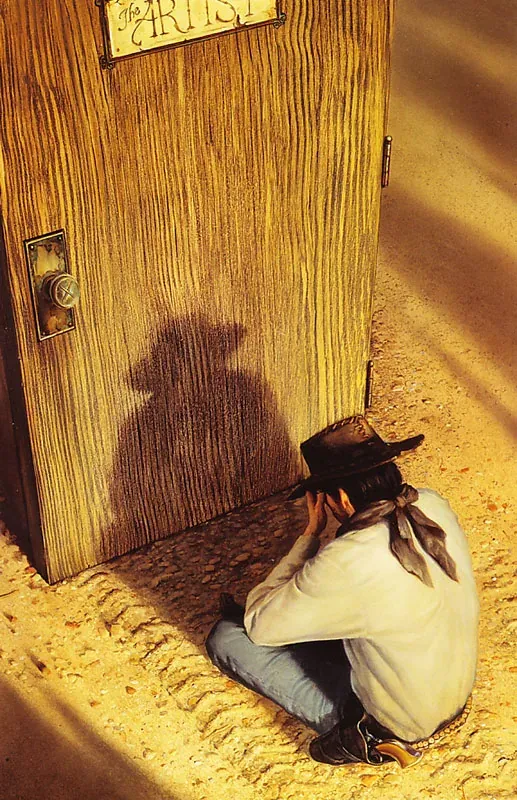
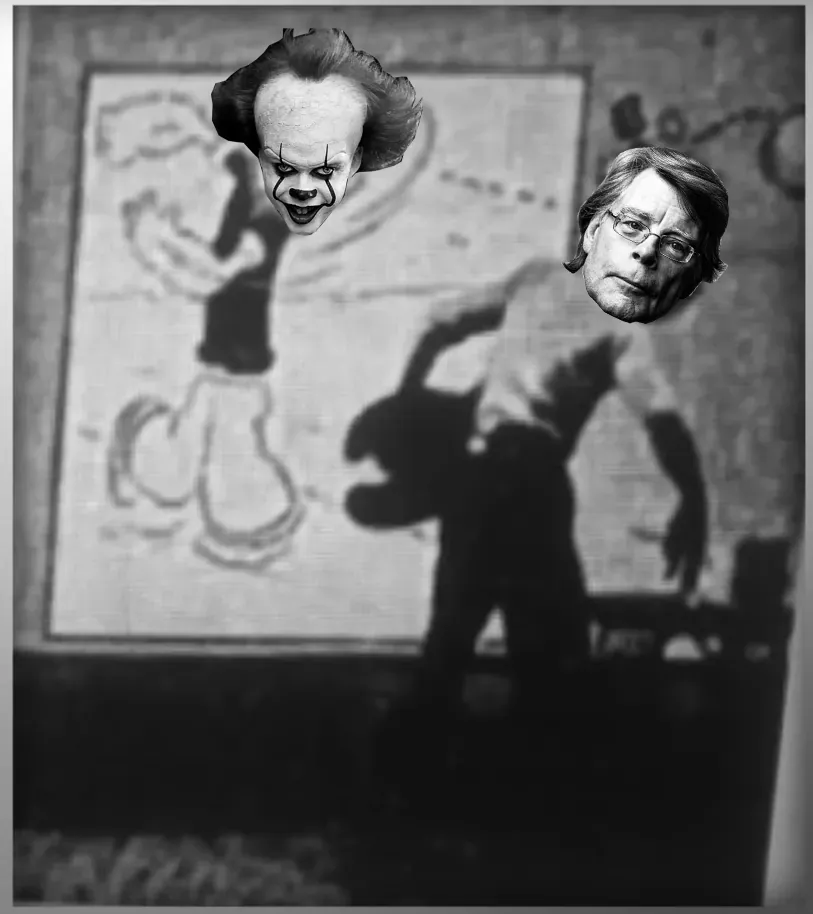
It would also be outside the influence of Kas-Ka Gan such as Stephen King (Image related) who’s imaginations generate all the stories that exist within the Dark Tower. King has stated himself that the “Song of the Turtle” (Maturin) is beyond his ability to sing, and Discordia (The Prim) is something that precedes all that he’s created, which would include the Guardians and the Elementals who were spawned directly from its waters before the Tower came to be. For more extensive information on Ka as a concept see: “The Wheel of Ka” under Cosmology.
Nonexistence
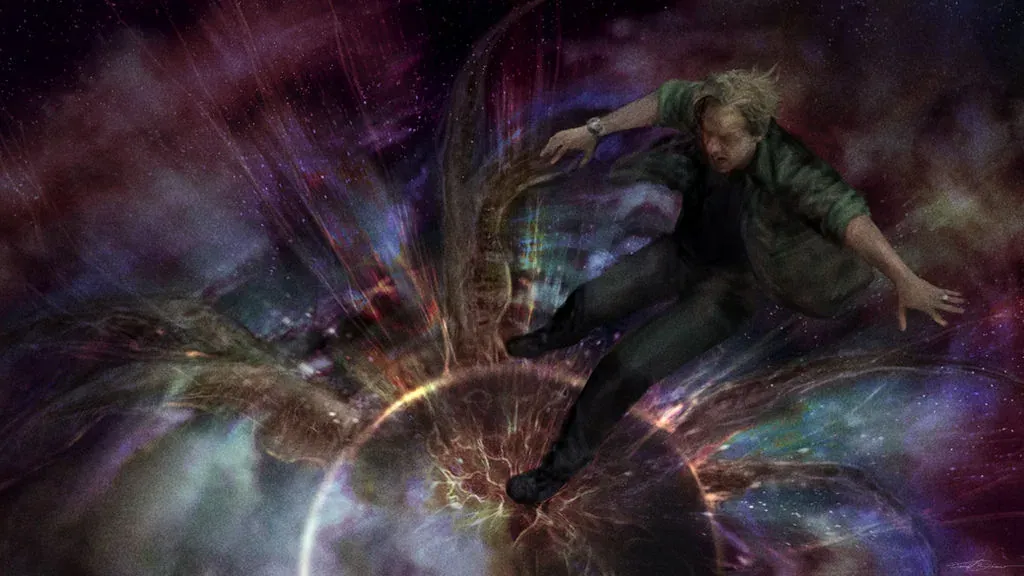 |
The Deadlights inhabit The Abyss outside the Tower, which is described as an archetypal void, a place of nothingness, and “the outland beyond all outlands”. The Deadlights themselves have nothing in common with the cosmology of the Dark Tower, and lacks the things which gives Gan’s creation its definition such as size, time, space, dimension etc (see: “Transcendence over Ka” under Abilities).
Resistances
- Reality Warping, Magic, Law Manipulation, Spatial Manipulation, Time Manipulation, Fate Manipulation, Size Manipulation, Soul Manipulation, Mind Manipulation, Life Manipulation, Death Manipulation, Plot Manipulation: Transcends Ka, the Wheel of Being which dictates all these very concepts. Powerful magical entities such as the Crimson King are stated to be incapable of affecting comparable entities such as the Beam Guardians, and the Man in Black is similarly stated to be nowhere near the level of the King let alone the Guardians (see: “Magic” and “Transcendence over Ka” under Abilities). The Spider Form would also benefit from much of these same resistances as is the form closest to the Deadlights in nature, and does not abide by the laws of physical reality (see: “Spider Form” under Transformations).
- Biological Manipulation: Although its glamours must abide by the rules of their respective shapes, It doesn’t quite have any real “biology”, and its avatar is able to freely cast aside these imposed rules by assuming the form closest to its true identity.
- Metaphysical Plagues: Being a Demon Elemental who’s shown proficiency with psychic abilities, It should be far more powerful than the psychic mortals who were made immune to metaphysical illnesses due to their Shining (see: “Psychic Power” under Abilities).
- Immortality Negation: Although it’s debatable whether the Ritual of Chud truly “killed” It at all, assuming you agree with that interpretation, It was later shown to have developed a form of immunity to the ritual. Whilst the ritual was originally stated to possibly be capable of killing the Deadlights, it is later shown that only the vessel is threatened by the rite and the Deadlights remain unaffected (see: “Immortality”).
- Existence Erasure: Naturally resides in a state of nothingness without metaphysical definition, and thus can’t be “erased” in the conventional sense (see: "Nonexistence" and “Transcendence over Ka”).
Transformations
Spider Form
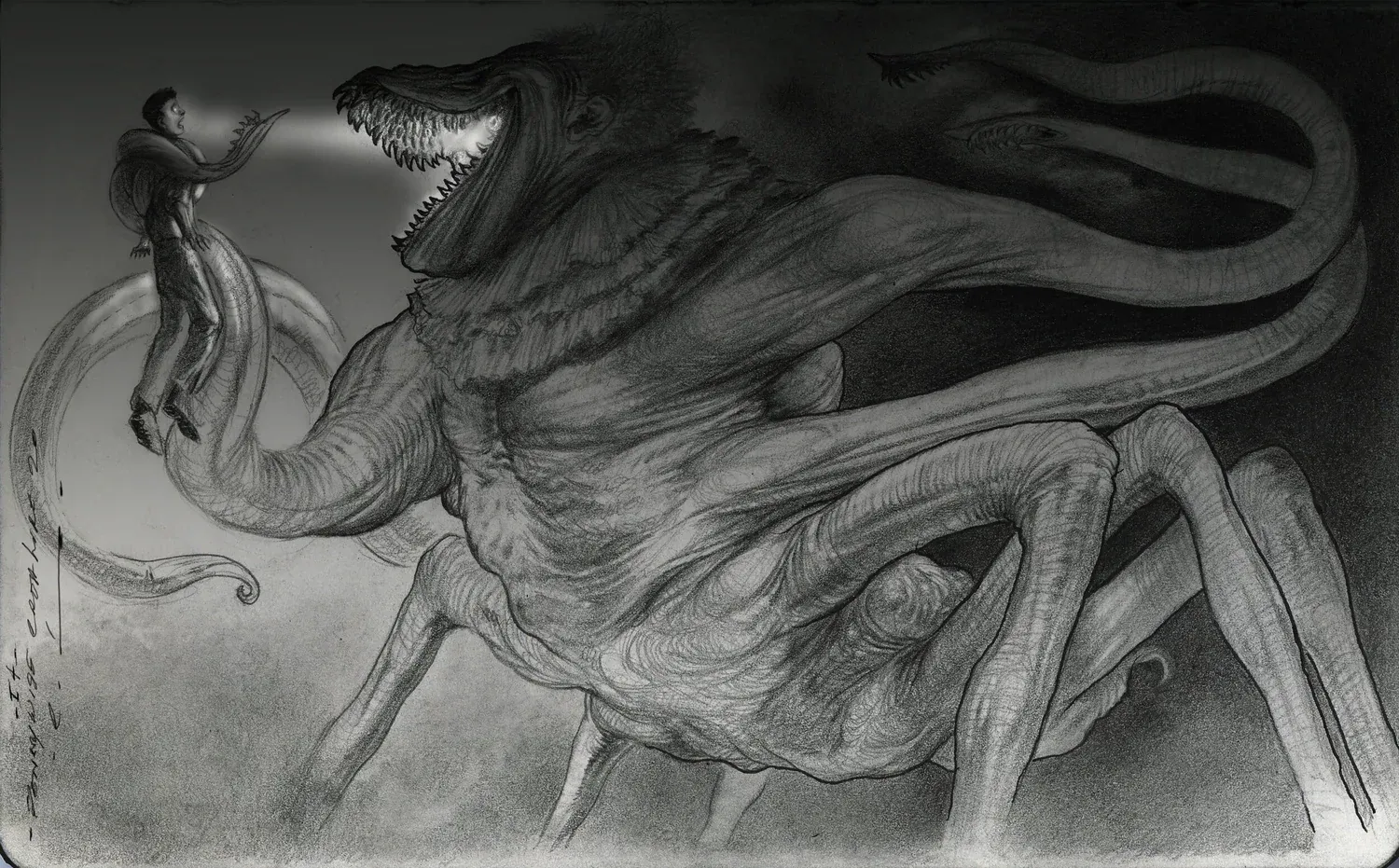 |
When casting aside all Glamours It assumes the form closest to its true-self, a “nightmare spider” from beyond time and space. It is likely that this phrase is not merely hyperbole either, as it is later shown that the Spider shape is nothing more than a perceptible translation for something that does not abide by physical reality. After all, the avatar is stated to have from “outside everything”, and It has also stated that It shares nothing in common cosmology save for law of things abiding by their shape. Given the Spider Form is the closest apprehension of the Deadlights in a physical shape, it is likely that it is not subject to the metaphysical laws of the Tower and possesses a level of cosmic power, which is supported by the fact that the Losers Club had to attack its Spider Form with the force of the Wheel of Ka in order to damage It. Its avatar has even stated that “time doesn’t matter” and just “floats away”, further indicating the laws of time and space do not apply to It, especially in Its Spider Form.
Feats
Power
 |
- Ripped off the arm of a child
- Consistently capable of easily tearing children apart
- When It crashed into earth the impact created a massive crater which now contains the downtown part of Derry
- Generated a thunderstorm that encompassed Derry
- Upon its defeat a major earthquake erupted from underground that destroyed much of Derry (2.6 Gigatons)
- The Deadlights can allow one to freely ascend the All-Time levels of the Dark Tower (High Outerversal)
- Naturally resides in the Abyss outside the Dark Tower and transcends its level of existence (High Outerversal)
Speed
 |
- Stated to move as “fast as an express-train” (19-31 m/s)
- Physically flew from to the Earth from outside the Tower, and was stated deliberately to have travelled there itself without the aid of a spaceship or meteor (19,486c - 47,092c to Immeasurable)
- Pulled members of the Losers Club outside of the Tower at incomprehensible speeds, with beings such as Maturin who dwarf and transcend the Tower streaking by the in the blink of an eye. The Tower at one point is stated to contain at least a “googolplex of worlds” (At least Googolplex C to Immeasurable)
Durability
 |
- its avatar survived colliding with the earth and the impact that followed
- The defeat of its physical avatar required the combined might of the Losers Club amplified by the force of The Final Other and the Wheel of Ka (High Outerversal)
Scaling
The Losers Club
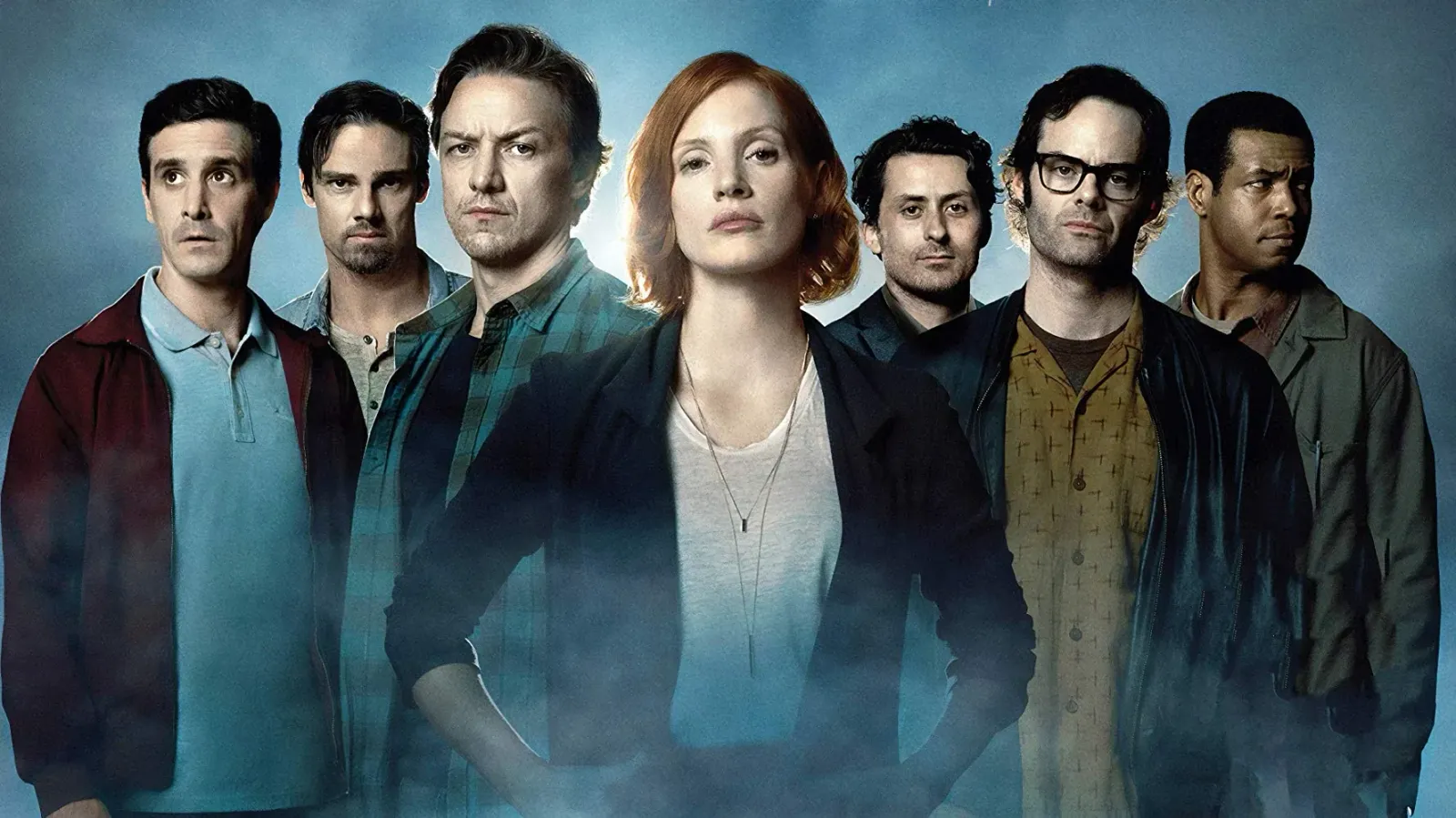 |
It scaling to the Losers Club should be a no-brainer, really. They fought directly at the conclusion of the original novel, and the Losers Club even while receiving aid from Gan were still pushed to their limits.
- Capable of perceiving and reacting as they are being pulled outside the universe at incomprehensible speeds, and can react at these speeds quickly enough to “bite the tongue” of the Deadlights. During this scene they were streaked by the Turtle who dwarfs the Tower, which contains at minimum a googolplex of worlds. (At least Googolplex C to Immeasurable)
- In their battle with It their attacks were augmented by power of the Final Other, with their combined force being compared to the Wheel of Ka (High Outerversal)
The Beam Guardians
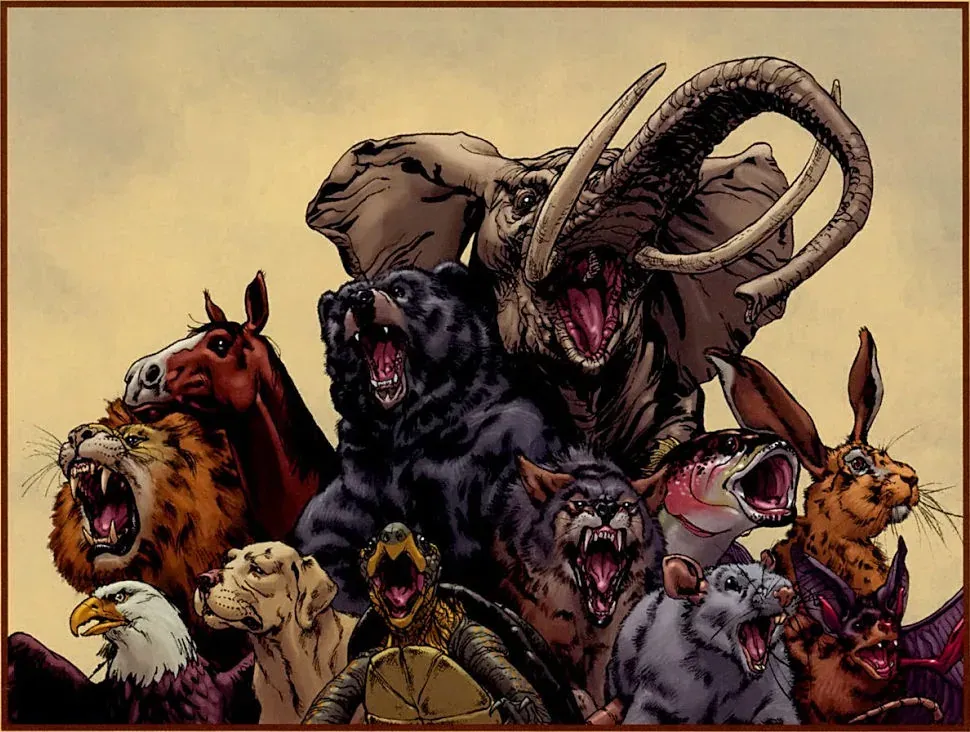 |
The Demon Elementals are the shadow counterparts to the Guardians, with It being ranked among them. And as the Guardians transcend Ka and reside beyond the tower, so does It. Although Maturin supposedly dwarfs its power they are stated to maintain a natural counterbalance and exist within the same plane of the cosmology. There is also the fact that the Turtle is treated as a special case among the Guardians, with It and Maturin both apparently preceding everything else in creation, so you can also argue It would scale above all the other Guardians who aren’t the Turtle.
- Maturin is said to carry the whole of the Tower on his back (High Outerversal)
- The Beam Guardians are all said to dwarf the Tower completely, containing all that exists within their mind, or inside their eyes (High Outerversal)
- The Guardians all maintain the existence of the Beams, which are all fundamental parts of the Wheel of Ka and stabilize the metaphysical laws of the Tower (High Outerversal)
- The Guardians themselves all transcend Ka (High Outerversal)
- The Crimson King and his Breakers are all incapable of killing the Guardians, and they were only ever a threat to the Towers existence when the original magical beams were replaced by the technological beams of the Old Ones, which were “mortal” and subject to decay (High Outerversal)
The Crimson King
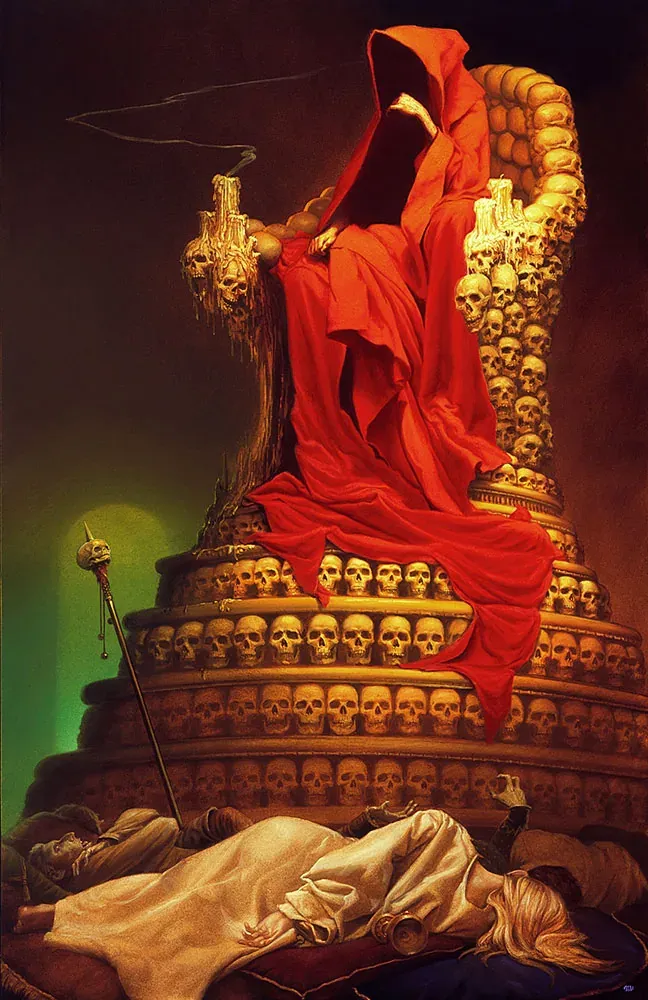 |
Allow me to add a degree of qualification here. Technically speaking there are multiple “manifestations” of the Crimson King that appear throughout the Dark Tower, of which we know of three, perhaps four. There’s the “Santa Claus” Crimson King also known as Los, the “Tower-Pent King” who is trapped within the Dark Tower, and The Crimson King as he appears in Insomnia, also known as the Fisher King. These multiversal incarnations of the King should all be viable for scaling, as Maerlyn himself said that the Red King’s magic is infinitely below the Beam Guardians. Furthermore the Fisher King is shown requiring the aid of the Deadlights to ascend the Tower’s All-Time levels, which makes the scaling direct.
There is also the incarnation of the Crimson King that appears in the Dark Tower comics, which takes place on a different level of the Tower. Within this version of Roland's journey the Crimson King is described to be a mixture of a human and a Demon Elemental, and It should logically scale above him due to being a pure Elemental of the Prim.
While It does scale to the Crimson King’s multiversal incarnations, It does NOT scale to his alleged true state known as “Dis”. Without going into too much detail, Dis is stated to be “Gan’s crazy side” who rules over the chaotic sea of the Prim. Given the implication that he’s second only to Gan, Dis is thus outside the scope of its power.
- The Fisher King is an eternal entity from the All-Time levels (High Outerversal)
- Mordred Deschain, the Crimson King’s “son”, could easily kill the Man in Black as an infant.
- The magic used by the Warriors of The Scarlet Eye were bestowed upon them by the Tower-Pent King
- The Fisher King is stronger than Clotho, Lachesis, and Atropos, who are all stated to be Long-Timers (At least Outerversal)
- Black Thirteen, which is identified with the Eye of the Crimson King, is a power which can reach throughout the multiverse and allow one to enter the Todash Space between worlds (High Outerversal)
- Los The Red caused a storm in End-World on his way to the Tower
- To witness the King’s true form would destroy the mind
- Implied to not even be a person necessarily, but simply Evil itself.
- Shrugged off a blow from Sheemie, a Breaker who possesses power capable of destroying the Beams
- The Crimson King generates an “Anti-Ka”, and this force seemingly allows him to deny the course of fate, preventing the deaths of others despite their fated ends being imposed (High Outerversal)
The Man in Black (AKA Randall Flagg, Walter O’Dim, Marten Broadcloack, Nyarlathotep, Aleister Crowley etc.)
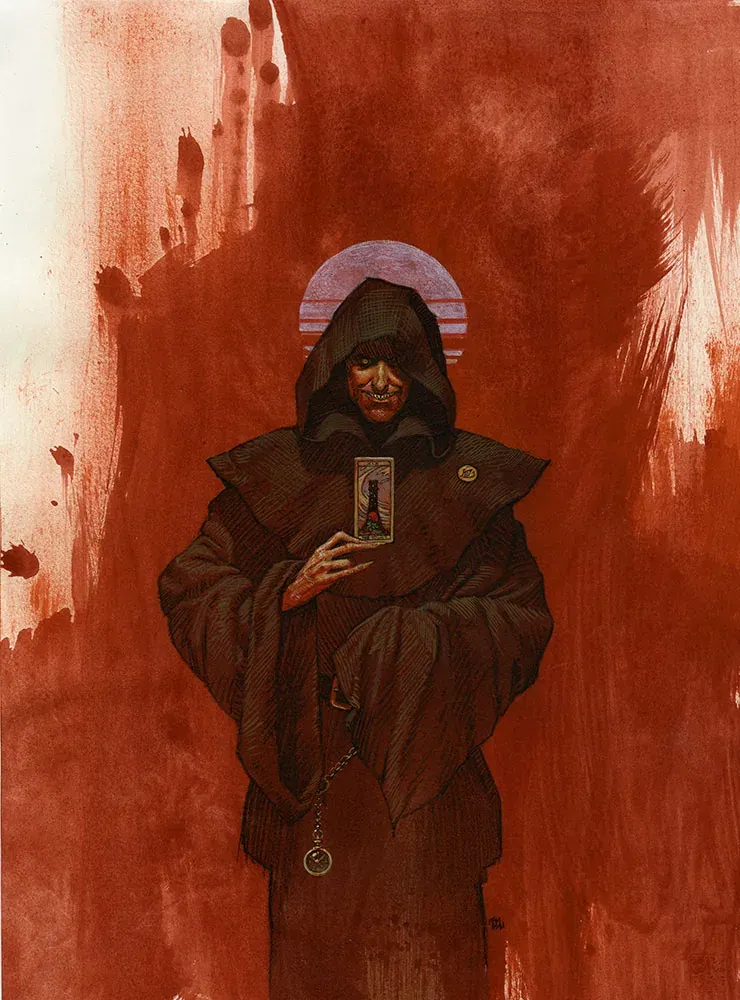 |
Although The Man in Black and It have never directly interacted, he’s stated by Maerlyn himself to be only capable of “little magic and long life” which should easily place him beneath primordial magical beings such as It and The Beam Guardians.
- Can casually catch bullets while not even facing the same direction
- The bullets fired by Roland’s guns in particular are shown to have enough force to violently fragment a satellite dish
- Capable of attacking with natural lightning and summoning tornados
- Can manipulate the trajectory of electricity mid-flight
- [Dreamscapes only] Within Roland’s dreams he has been shown generating a universe, and could even recreate the infinitely recursive structure of the Dark Tower (At least Low Outerversal)
Weaknesses
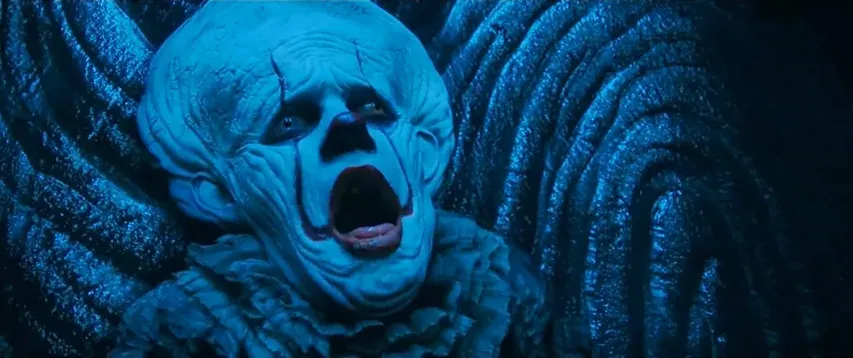 |
As a shape-shifter, It must abide by the laws of whichever shape It inhabits, and although this may potentially grant It powers associated with a given form, its weaknesses are also adopted.
It is not only highly arrogant but enjoys playing with its food, both as a means of intimidating prey, thus “salting the meat” with fear, and because It genuinely doesn’t consider the possibility of a human managing to fight back. The mere thought of there being another being more powerful than itself terrifies It, and It prefers to deny such a thing is even possible. However, should an opponent prove to be a legitimate threat to It, It will not hesitate to immediately stop holding back, resulting in It adopting its spider form.
Lastly there is the Ritual of Chud, a Rite which elevates the castor to a sense of “perfect nothingness” granting them a state of supreme spiritual clarity in which they can then combat demons the originate from the mind as well as invaders from outside. The Ritual itself can take the form of any ceremony, but it is in practice an agreement between two parties that one shall win and the other will lose. It is psychic in nature, initiating an Astral battle in which the minds of both come into contact, establishing a telepathic link. It is also noted that Chud is the only means capable of trapping It within a singular form.
The Ritual was originally thought to be capable of either destroying It or banishing It from the universe for a century, however, in later applications of the ritual It stated that It couldn’t be killed in the rite, and only the vessel the Deadlights possessed were in any danger. Both known instances of the ritual as well were either outright confirmed, or at least strongly implied to have succeeded as a result of Gan’s divine intervention.
Cosmology
 |
The Structure of The Dark Tower
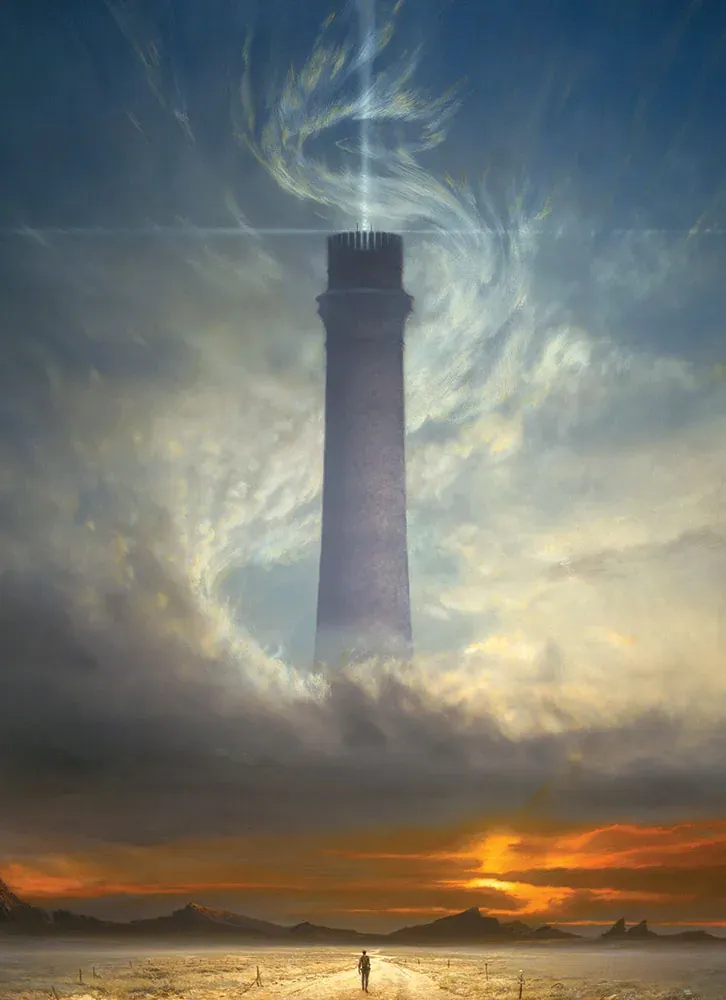
At a baseline level, despite the Tower itself appearing to be finite it is actually infinite in size, and it contains endless worlds within its infinitely many levels. Every universe that exists is contained within a larger universe, with the difference between worlds likened to an atom within a blade of grass, and this series of recursion repeats ad infinitum. Manifestations of the Tower such as the Talisman are described as a “dimensional macrocosm” and a “universe of worlds” all overlapping one another like a shirt of chain mail.
The Narrative Nature of The Dark Tower
The worlds that spin about the Tower aren’t merely physical universes, but a series of endless stories, where one universe can be a fictional narrative within another, whilst being experienced as “real” by those within the narrative. All that we see or seem is but a dream within a dream, and beings who descend to other worlds experience those universes as “dreams”.
The metafictional state of The Tower is referenced numerous times, with authors or Kas-Ka Gan such as Stephen King being described as imitators of Gan who generate the worlds that spin about the tower through their imagination.
Long-Time levels
The hierarchy of the Tower is divided into infinitely many levels, and these levels are all classed within three distinct types. Short-Time Levels, Long-Time levels, and All-time levels. The Short-Time levels refer to the lower most levels of the Tower, containing beings with finite life-spans.
Beyond the levels of Short-Time Creatures is the abode of the Long-Timers, and from here all the levels below appear as nothing more than mirages, with the Long-Time levels seeming more “real” by comparison. This of course harkens back to the narrative nature of the Dark Tower, being a series of “dreams within dreams”, and worlds existing fictionally in relation to others.
A single Long-Time level is thus Outerversal, and as there are infinitely many levels that exist above one another in the Tower, the Long-Time levels collectively form an Outerversal+ hierarchy.
All-Time levels
Standing in a state that is wholly inaccessible to even Long-Timers are the All-Time levels, which contain the beings who can truly be called Eternal. These levels of existence are described as a series of “unimaginable” worlds stacked atop one another, and moving between these levels requires the aid of forces that transcend the Tower such as the Deadlights.
Long-Timers such as Clotho and Lachesis, who can alter the auras of Short-Timers in order to allow them to ascend to their level, are unable to access the All-Time levels, and All-Timers such as The Crimson King are stated to possess more power than they.
A single All-Time level is High Outerversal due to transcending the hierarchy of the Long-Time levels, and there are likely infinitely many All-Time levels stacked atop each other in the Tower.
Todash Space
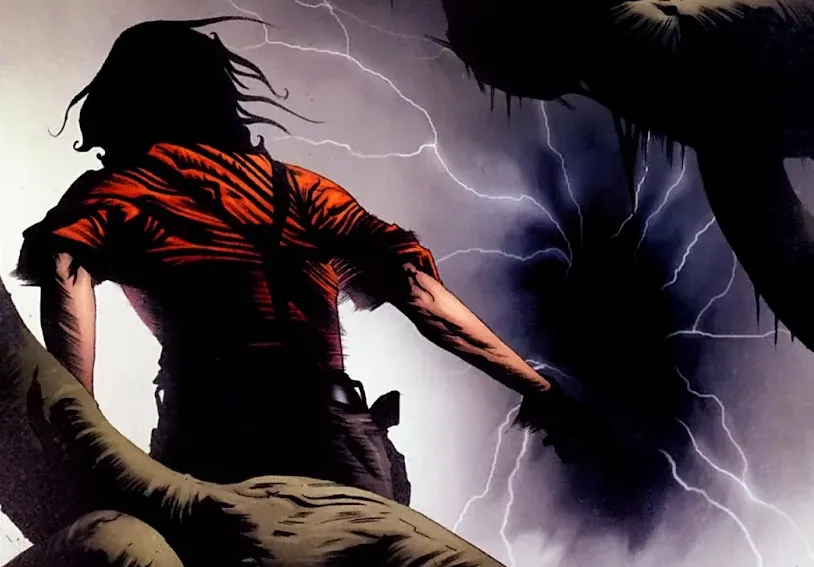 |
The Todash Space is the nothingness that separates the levels of the Tower, compared to a “space” between the inner and outer walls of a house. It is a void of possibility beyond all physical worlds where one’s disembodied Ka goes to upon death.
The Todash Space as a whole encompasses all levels of the Tower, even the All-Time levels, and is thus a greater degree of High Outerversal
The Wheel of Ka
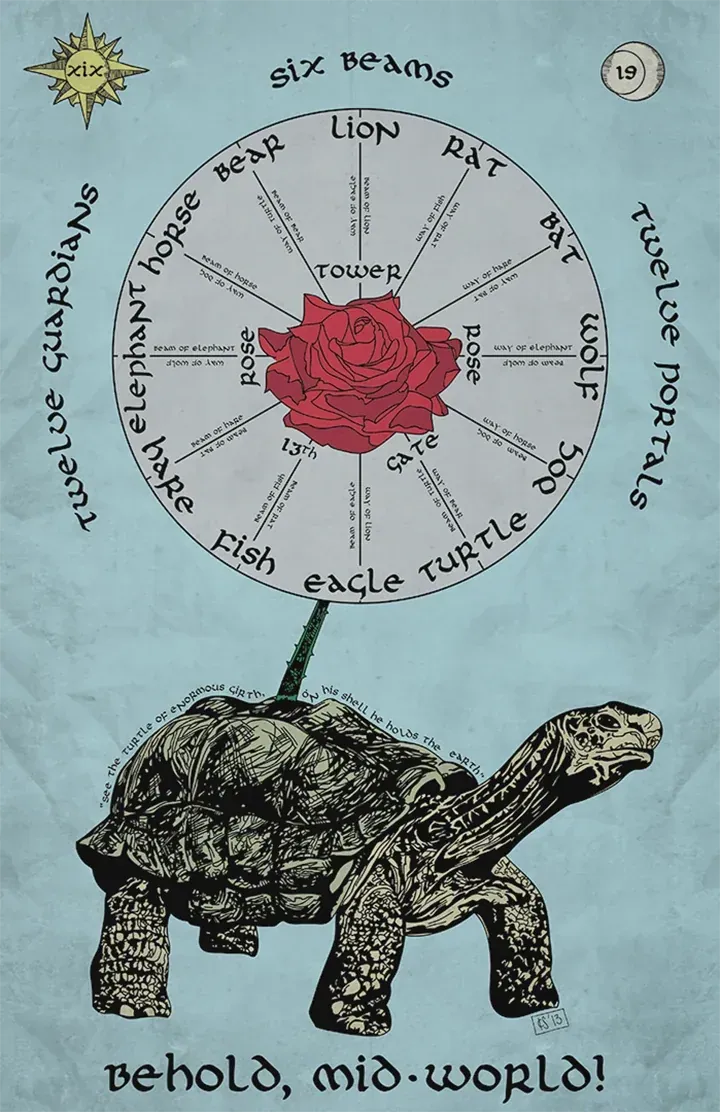 |
Ka is a force which encompasses many aspects of existence, whether they be Life, Soul, Mind, Fate, etc. But above all else Ka is the Wheel of Being, and this very Wheel is embodied by the Tower which serves as the hub and the Beams which serve as its spokes. This Wheel dictates existence in all its stages, and the master of Ka is Gan, with its influence being likened to his very hands. Ka reaches all levels and all worlds within the Tower, and not even the Todash Space between these planes is exempt from Ka’s presence.
Of the parts of the wheel Gan’s physical manifestation as the Tower is of course chief among all, as is Gan’s feminine counterpart known as Bessa who rules the concept of “Khef”, the waters that bind all things connected by Ka.
The Tower’s infinite depths contain all possible manifestations of life, be they sentient or inanimate, alive or dead, everywhere and everywhen. The metaphysical laws of all that exist are all aligned by the Tower and its Beams (whilst also being transcended by the Tower), fueled by the creative magic of the Prim for all eternity.
It is also possible that just as worlds encompass other worlds, the Tower recursively encompasses itself as well.
The Wheel of Ka encompasses all that exists within the Multiverse, and is thus an even higher degree of High Outerversal.
The Abyss
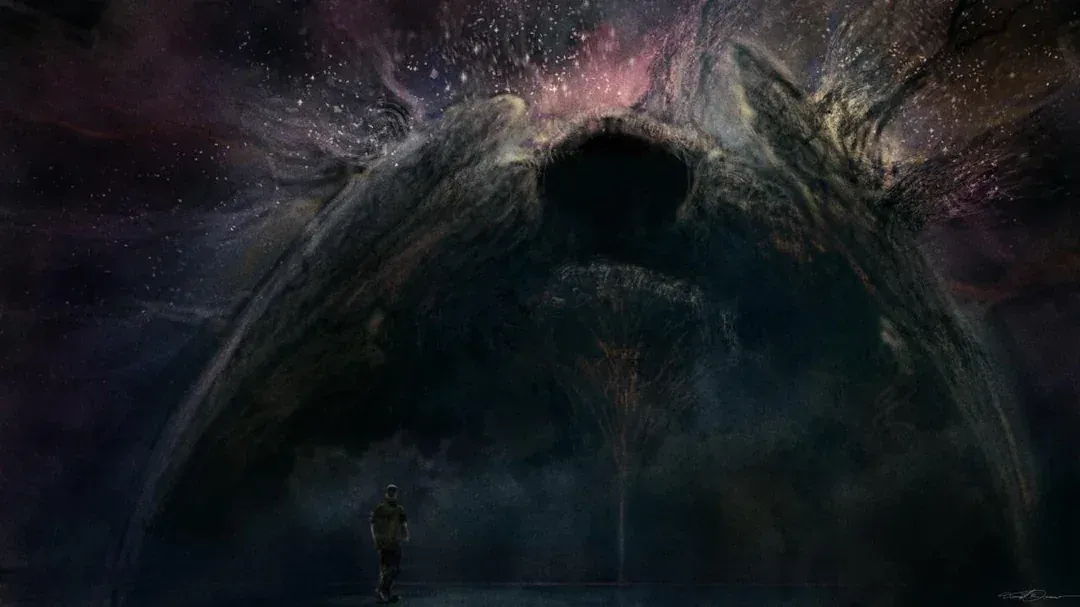 |
(Due to the inconsistency with which the term “Macroverse” is used, I will be referring to this part of the cosmology as simply “The Abyss”) The Abyss refers to the place that is outside and beyond the Wheel of Ka, which includes the Beam Guardians and of course the Demon Elementals. When Gan made the world Maturin is said to have caught the Dark Tower on his back, preventing it from falling into the Abyss, and we know this Abyss infinitely dwarfs the Tower as the Totems are said to transcend it to such a degree that Guardians such as Maturn “holds us all within his mind” and Shardik contains “All worlds within his eyes”.
The Abyss is an archetypal void of nothingness that resides outside of everything, an “outland beyond all outlands”. The entities native to the Abyss such as the Deadlights are said to have nothing in common with the rest of the cosmology, and due to existing outside the Tower it is exempt from its metaphysical laws.
The Abyss is naturally an even greater degree of High Outerversal.
The Prim
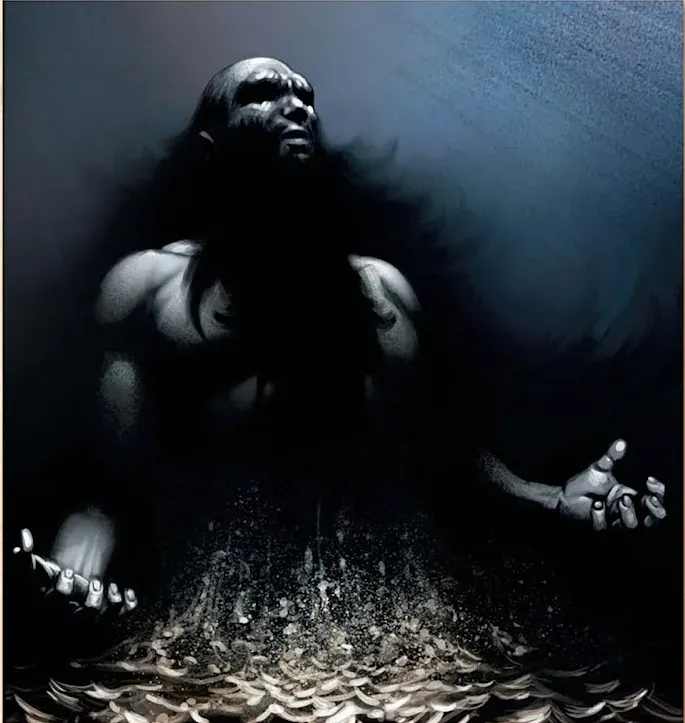 |
The Prim, also known as Greater Discordia, is a primordial sea of magic which preceded the creation of the multiverse, and all things spawned from it, even the Guardians and the Elementals. The Prim is a level of existence where rules mean nothing and nothing means everything, and due to this fact anything whatsoever can spawn from it, such as the stories of the Kas-Ka Gan, and the greater Discordia is said to precede their stories as well. This magical soup is also said to be the waters dripping from Gan’s navel, while also being implied to be the true form of the Crimson King. It is from this sea that the Tower and the Beams emerged, and its magic holds them in place for eternity.
The Prim is thus yet another greater degree of High Outerversal.
The White
 |
Throughout the whole of the Dark Tower there are said to be two all-encompassing forces at eternal conflict, the White, and the Red. The Red (also known as The Random, or The Outer Dark) is of course represented by the Crimson King, who acts as “Gan’s crazy side”, and it is a force of chaos that introduces discord into all levels of existence. The Red in its truest state is identical with the chaotic aspect of the Prim, revered as a state of existence exempt from all laws which the Crimson King claims rulership over under the name of Dis.
However despite attempts of The Red to introduce Chaos it is ultimately subservient to the Order of The White, as the Random is an extension of the will of the Purpose. For the White is not merely another entity, but rather the objective Truth of Unity itself, the One which underlies the existence of all divinities (even the Prim and all things from it). It is to this Unifying principle, Gan who’s name is even more fundamental than “God”, that all Kas-Ka Gan pay tribute to in their acts of creation. The Tower is itself a mere physical manifestation of Gan that conveys his song, and Gan himself resides beyond and outside everything, holding all creation, even beings of the Prim such as the Demon Elementals and The Guardians as motes of dust within his mind.
The White is appropriately Boundless.
Debunking certain Anti-Feats
Is Gan a fraud?
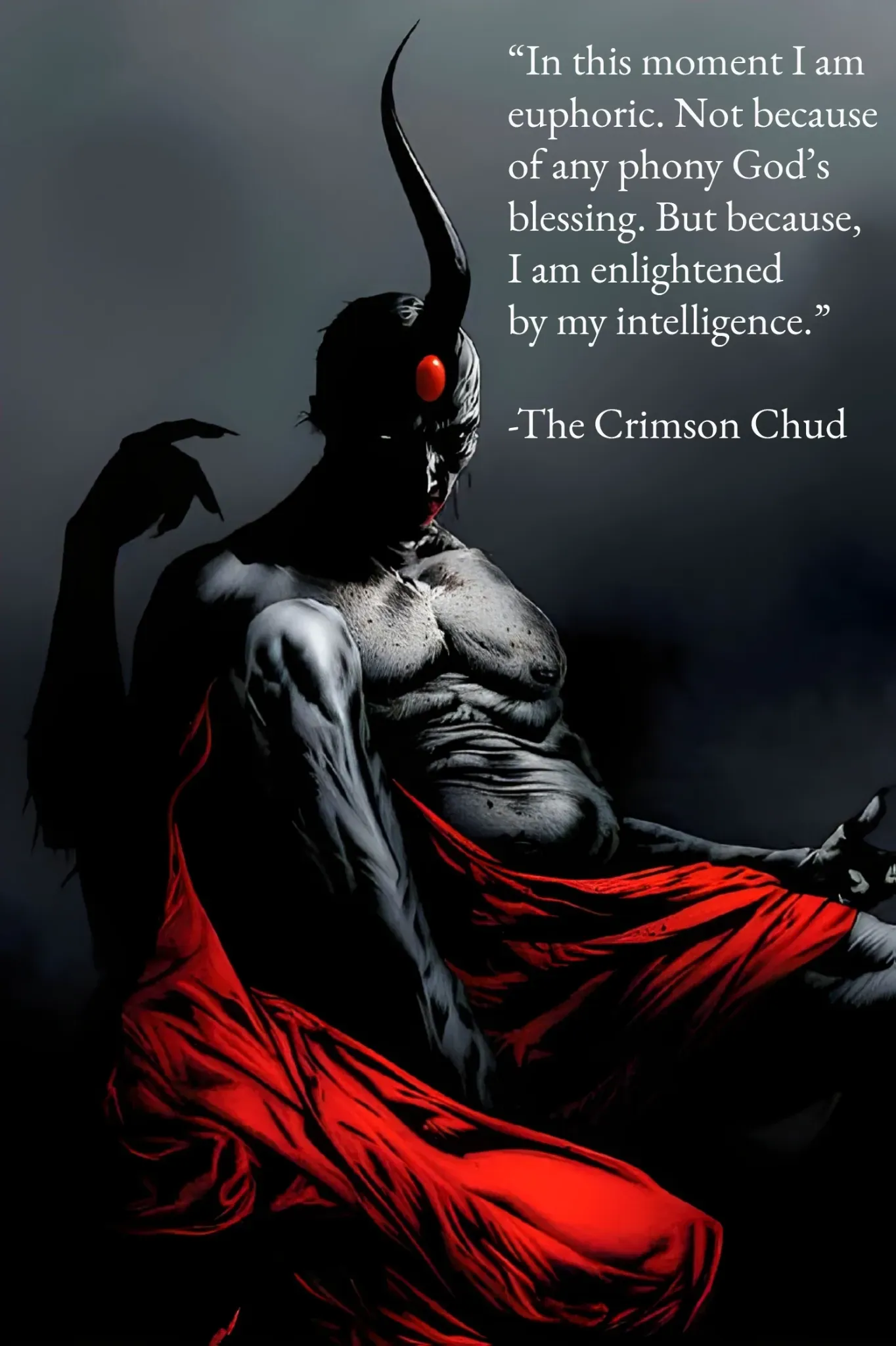 |
Although Gan’s level of strength isn’t inherently relevant to It, as this blog also serves as an introduction to the powerscaling of the Dark Tower in general, I shall include this here. There are a few references to Gan being an entity who was born or created from the Prim rather than preceding it. Most egregiously, in the continuity of the Comics Gan is stated to have been wounded by Maerlyn, another entity who spawned from the Prim. These all naturally seem to indicate that Gan isn’t really Omnipotent.
Firstly, the paradox regarding Gan “arising from the Prim” is actually acknowledged in-universe as a mystery of Gan’s existence, and Gan literally having been born of the Prim likely isn’t meant to be taken literally. Secondly, Gan “rising from the Prim” in general most definitely refers to the Tower (invoking the image of a Tower ascending from the waters) rather than Gan’s essence being from it. As we know, the Tower is Gan’s physical manifestation and not his true existence. Secondly the part where Maerlyn is said to have “wounded Gan” similarly also refers solely to the Tower, as the text uses language associated with the Tower’s physical structure when describing the damage inflicted.
Some might point out that there are things that "transcend Ka” which is stated to verbatim to be Gan’s will, as well as entities from within the Tower being able to oppose it. However, do remember that even things that seemingly run contrary to the White (such as the Red) ultimately serve his will (See “The White” under Cosmology). The existence of things that transcend Ka shouldn’t really be considered an Anti-Feat as this class of beings includes the Beam Guardians, who all serve Gan and were created by him. There is also the fact that Gan is also described pretty blatantly to be beyond the Tower and all that ever was including the Guardians and the Elementals who transcend Ka. The Manni even go as far as saying all divinities, even the Prim and its creative forces that they revere, are merely “mask” adopted by the One (Gan).
Whatever evils exist throughout creation ultimately serve Gan’s will even if they believe otherwise, and Gan in actuality is the Unity which transcends even Ka and the things that precede it. The arguments against the White being Boundless are thus resolved.
The Recession of The Prim
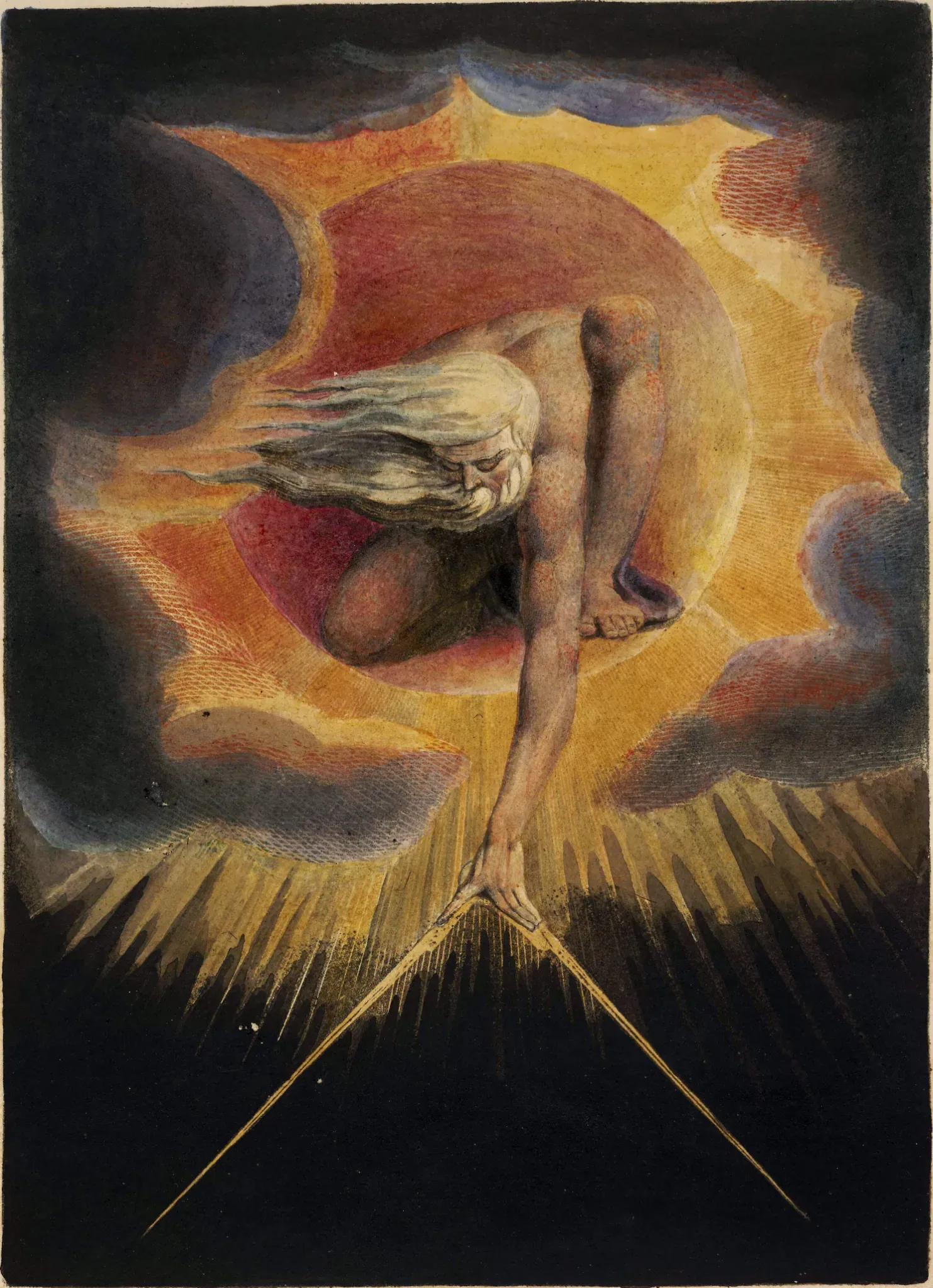 |
Throughout the Dark Tower series there are references to the Prim “receding” after the emergence of the Tower, as well as the magic “having gone away”, which might lead one to believe that the Prim is a quantitative thing that can “run out”, however this is not the case.
The Prim “receding” is in actuality just metaphorical speech for Gan imposing order on existence in his creation of the tower, and we know for a fact that the Prim still exists as Kas-Ka Gan such as Stephen King is able to cast his stories into the sea, and Maerlyn as well is described crafting his bends of the rainbow from its waters after the Tower’s formation. The Crimson King is also described as being native to the Prim, with his “family” having been “locked out of creation” as the Tower emerged.
As for the magic “going away” this also isn’t a literal statement. The magic went away not because it ran out, but because the people lost their faith and thus their connection with the divine magic was broken. The magic within the Tower and the Beams would have otherwise been eternal if not for this loss of faith and the meddling of the Old Ones.
With that the arguments against the Prim are resolved.
The Technology of the Great Old Ones
 |
An anti-feat which would potentially downgrade much of the cosmology (if it were real) is the fact that the Technology of the Great Old Ones was shown to have profound effects on the Tower, and the Beams. The Old Ones “recreated” the original multiverse, replacing the magical Beams with technological ones in the process, which could bend and shatter unlike the originals, leaving them vulnerable to the Beam Breakers.
While this might normally call the scaling of the Tower into question, there’s actually an explanation for this. Their technology functions by utilizing the primordial magic of the Prim, which the Tower and the Beams are made out of. Even their technological replacements for the Beam Guardians are said to draw power from the magic of the actual Beam Guardians who reside beyond the fluctuations of Ka.
With that the problem introduced by the Great Old Ones is resolved.
Maturin “choking on a galaxy”
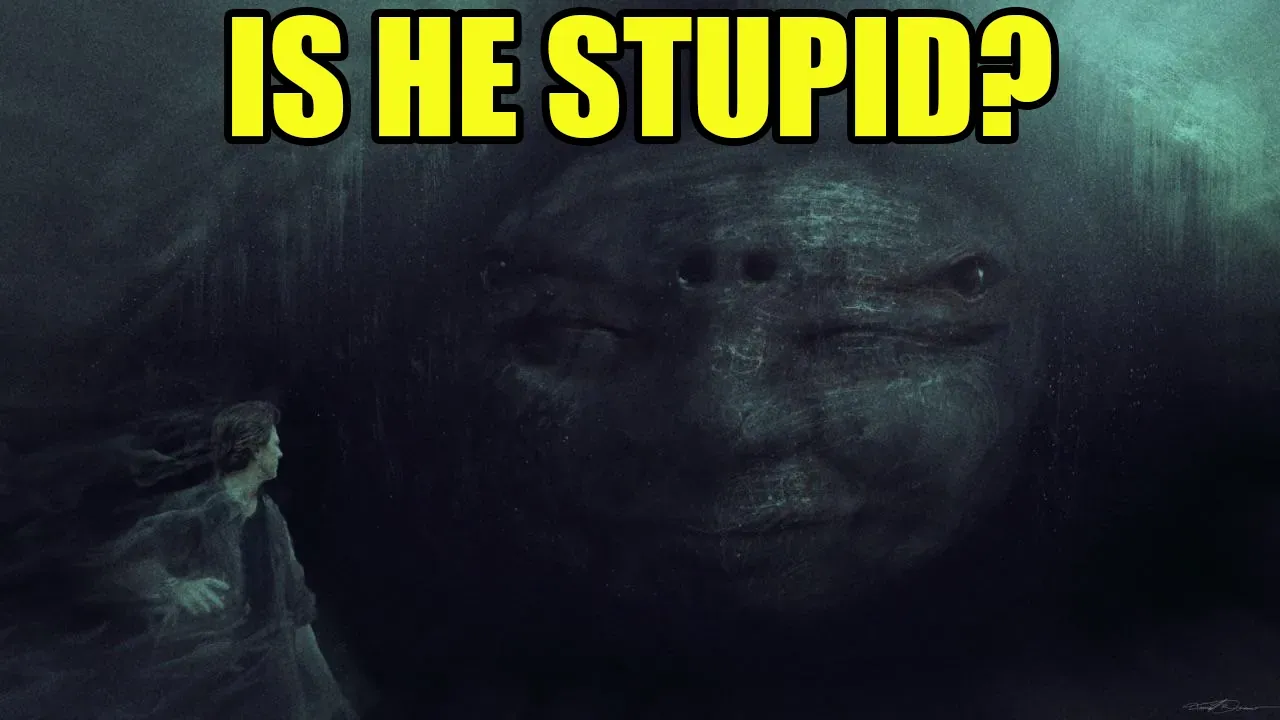 |
So, this scene obviously isn’t real for many reasons. Firstly by the conclusion of the Dark Tower series we know that the Beam of the Turtle remains in tact, which would be impossible if Maturin had died, and furthermore the Great Turtle is stated to carry the Tower on his back, meaning if he really had choked to death at any point the multiverse wouldn’t even exist anymore.
There is also the fact that within the story itself It refers to the physical universe as a “puny egg”, meaning It and Maturin both dwarf the universe to a substantial degree, making the idea of the Turtle somehow choking on a galaxy even more questionable. The idea of Maturin and the other Guardians dwarfing the Tower to an infinite degree is later reaffirmed with their statements of holding the world within their minds or their eyes. And although Richard senses Maturin’s “corpse” it’s likely this is merely an illusion.
Going even further, It also states itself that It “thinks” Maturin is dead, and in reality It hasn’t been paying much attention to Maturin for billions of years. The Turtle simply withdrew into his shell and hasn’t moved, which makes the idea of It claiming he choked on a galaxy even more dubious.
In summary, if Maturin somehow died the multiverse would not exist anymore, and he’s a bit too large for the idea of him choking on a galaxy to be believable. Consider this point debunked.
Dispelling Misinformation
 |
Why do you consider the Dark Tower comics valid while dismissing the IT movies?
The films are simple enough to address. Aside from the many continuity differences (Such as the Turtle and The Final Other being completely missing from the Film Adaptations), Stephen King has stated in interviews that he had no involvement whatsoever with both the movies and the Welcome to Derry series, which is set in the film’s continuity.
You may ask in that case, what about the Dark Tower comics? They’re not written by Stephen King either, and contain their own assortment of major differences from the source material. Well, there is more context in their case. The writer of the comics, Robin Furth, is actually a frequent collaborator of King’s, and she was originally hired to organize the Dark Tower’s worldbuilding for King to reference as he wrote the later books in his series.
The continuity differences in the Dark Tower comics are also intentional. In a postscript attached to issue #1 of the Man in Black series Furth addressed the discrepancies in the source material by stating that the comics take place on another level of the tower. Due to the multiversal nature of the Dark Tower series, she used the comics as an opportunity to explore a different take on the story. And while it is true that King did not write the comics, he is credited as a Creative Director and Executive Producer. Furthermore within the comics themselves it is strongly implied that their storyline takes place within one of the many repeating cycles of Roland Deschain’s life, offering yet another in-universe explanation for the differences.
Similar statements exist for the Dark Tower film, with it being described as a sequel set within another one of Roland’s cycles around the Tower, and Robin Furth also worked as a consultant for the movie.
In Summary King had no involvement whatsoever with the IT films and television series, whereas King and his assistant worked directly on the comics.
It being “weak to imagination” or a lack of fear
 |
This idea is mostly a result of people watching the movie without having read the book, as well as taking certain statements from the novel out of context without having seen the full text. The common argument used to assert It having a weakness to belief and imagination tends to be cited whilst leaving out a very important accompanying statement. Namely the fact that It was falling back on this explanation as an attempt to cope and deny a much more distressing fact, that being the presence of an “Other” who’s been aiding the Losers Club.
Multiple references to an “Other” secretly aiding the Losers club in all of their confrontations with It are made throughout the book. Who is this “Other”? Well it can’t be Maturin. It is already well aware of the Turtle’s existence, and Maturin himself states that it is not in his nature to interfere with earthly matters.
The unseen presence is then revealed not simply another entity of cosmic power, but a “Final Other” who dwells in a void beyond the It and the Turtle, a being so all encompassing that the Deadlights are no more than a speck of dust in his mind. This Final Other is the author of all that ever was, and is confirmed to be the creator of both the Turtle and his “brother”. This description of course directly corresponds to the Supreme Being of the Dark Tower, Gan, who created the Beam Guardians including Maturin, as well all of existence. This Final Other of course does not refer to Gan as the Tower, but rather Gan’s true state as The White.
As for the extent of the aid given to the Losers Club, it is stated that he made them “more than children” in their battle against the Deadlights, confirming that the feats displayed throughout the Ritual of Chud were the result of his divine intervention. Their combined attacks against It are also stated directly to have been augmented by the force of the Final Other. And although it’s not stated explicitly, in the events of Later it’s implied that Gan was present to aid in the second Ritual of Chud against It as well, with Jaime comparing his feat to a miracle akin to Providence, which he believed not even a Saint could accomplish twice.
Furthermore it is highly likely that the Losers Club all form a Ka-Tet, a group of people bound together by destiny. A Ka-Tet is a bond which holds immense power, and the Ka-Tet of the Gunslingers was capable of generating a psychic force so powerful it could maintain the stability of the Tower as it threatened to collapse. The Losers Club being a Ka-Tet is hinted at throughout the novel, with the structure and ending of the novel invoking the motif of a Wheel, which harkens back to the Ka being described as the Wheel of Being. Their combined attack which was augmented by the Final Other is even described as containing a force “like one big wheel”, and they were made “more than children” by the Other partly through the strength of their bond. Furthermore, much like the Gunslingers of Gilead who serve The White, It speculates that the Losers Club may be agents of the Other who It fears. The number of the Losers Club is also stated to have mystical properties in of itself.
Needless to say, the idea that the Deadlights are weak to a lack of fear is wrong in the case of the novel’s continuity. It lost because God was aiding the Losers Club, not because they weren’t afraid of him.
Stephen King claiming he’d “Never go back to IT”
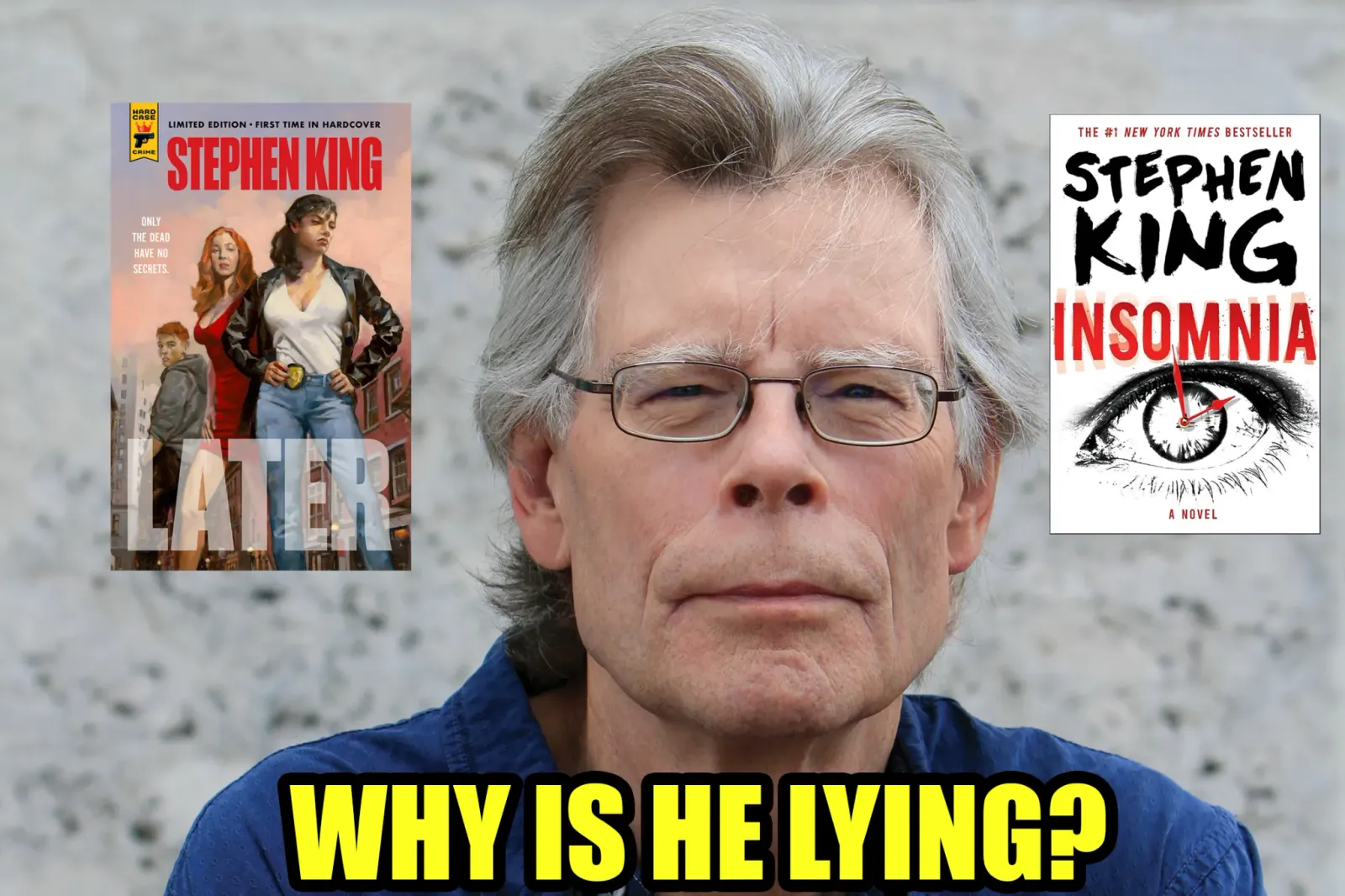 |
There is an argument that was used by a certain blog, seemingly in an attempt to claim that destroying the Deadlights’ avatar would result in the permanent death of the Deadlights, which involves a particular statement made by Stephen King in an interview. When asked about his involvement regarding the ‘Welcome to Derry’ series, Stephen King claimed he “had no intention of going back to IT”. Personally I’m not sure what exactly it is meant to prove, but the statement was clearly taken out of context. Stephen King having no intention of revisiting IT doesn’t necessarily mean the actual character is deceased, and frankly if you look at a few of his works he clearly didn’t mean to imply that either.
During the events of Insomnia, a book which is confirmed to take place after the events of the original IT novel, the Deadlights make a direct appearance and are shown to be working in favour of the Crimson King. And then you have King’s more recent novel “Later”, in which the Deadlights are quite blatantly a central antagonist that appears throughout the story. Said novel even contains direct exposition on the Ritual of Chud, as well as a scene where the Ritual is used in a confrontation against It for a second time. That novel also confirms that the Deadlights aren’t actually killable in the ritual and only the vessel is at any risk, so even if you believe It was destroyed by the ritual in the original novel, that’s clearly not a weakness that applies to the Deadlights any more (Though more likely the implication is that the Deadlights never died and only the Avatar was destroyed).
The idea that subsequent appearances and references to It can be explained by the eggs It laid in the sewers also isn’t a very strong argument. The Deadlights, as we have already gone over, are timeless in nature, having come into being before the multiverse even existed, and they innately transcend the cosmology of the Dark Tower. To claim that subsequent appearances by the Deadlights can be explained by the birth of physical beings on Earth, is to also say that their births somehow also creates exact duplicates of the Deadlights in the Abyss outside the Tower, which is frankly a massive reach with no supporting evidence.
Within the mainline Dark Tower series, we see an instance of a Demon Elemental (a class of beings which It belongs to) performing a convoluted series of sexual assaults in order to create a half-man half-demon spawn named Mordred who is very much his own distinct being with his own conflicting thoughts and identity apart from his his creators. Although its “pregnancy” within the novel isn’t ever fully elaborated on, it is implied that the avatar of the Deadlights might reproduce through similar means, with It declaring it had come to “rob all the women and rape all the men” and vice versa. The children visible within the eggs are also described as being “miscarried” further alluding to a rather unnatural method of giving birth. The idea that subsequent appearances of Pennywise The Clown are merely its “children” imitating their originator is a fan theory which has never been confirmed.
In summary, Stephen King’s statement was taken out of context, and the original entity from the IT novel still exists. The presence of the avatar’s children fails to explain subsequent appearances by the Deadlights, and later novels confirm that the Deadlights cannot be killed in the ritual of chud.
The Avatar’s Physical Stats
 |
Most commonly, people (for understandable reasons) are generally under the impression that its avatar doesn’t scale to any of the loftier cosmic feats. Common proposals you’ll often see are scaling It into the gigaton range due to It forming a massive crater upon crashing into the earth, as well as the earthquake that destroyed much of Derry upon its defeat. There is also the somewhat infamous “fast as an express train” statement used to place It within the subsonic ranges. However, these are absolute bare minimums.
Both the Avatar and the Losers club actually perform a few direct feats of their own which gets them into the cosmic tier of power. Firstly there is the obvious feat of the Losers Club reacting whilst being pulled outside the universe and into the abyss by It, a feat that would have to be Immeasurable as the Abyss is the place outside the infinitely large tower. The avatar is also said to have physically flown into the Earth from the Abyss, further supporting this tier of speed (see: Feats and Scaling).
But there’s also one fairly major feat that went overlooked that you might have seen earlier. In order to defeat the avatar a combined attack amplified by Gan’s divine intervention was necessary, and said attack was described as having the force of all life “like one big wheel”. This is of course, referring to the Wheel of Ka, the all-pervading will of Gan that encompasses the whole of the Tower. This naturally implies a High Outerversal level of durability for its avatar, as such a level of strength was needed to defeat It, and It also survived for a few moments longer after the initial blow was dealt. Of course, the above stats only apply to its Spider transformation, and none of its glamours (see: Feats and Scaling).
The Spider form possessing this degree of power is also supported by the fact that its referred to as a “nightmare spider beyond space and time”, which is probably meant to be taken literally as the Spider shape is later stated to be the closest apprehension to its true form and it does not abide by the 3-D reality of the Losers Club’s universe (see: “Spider Form” under Transformations).
While it may seem unreasonable at first, do remember that the Losers Club aren’t exactly normal humans, as they were backed by the power of Gan, and the Ritual of Chud that took place in the original novel gets visibly cosmic in scale unlike the movie adaptations.
What in Gan’s name was King smoking when he wrote all this?
 |
Although the shift into multiversal sci-fi fantasy shenanigans might seem a bit sudden, and people often like to jokingly explain his eccentricities through heavy drug abuse, there is a more interesting answer. King explains in his intro to the first Dark Tower book, The Gunslinger, that his series was intended to be his own take on the Lord of The Rings. There are of course a few obvious parallels to the world of Middle-Earth, with Roland’s universe being referred to as “Mid-World”, The Crimson King being an overarching antagonist represented by an all-seeing eye in the same vein as Sauron, Gan being an author among authors, with his own “subcreators” working in imitation of him much like Eru, etc.
While King is known primarily for his horror novels set within small towns, he is also a fantasy author, and a science fiction author, much like the writer H.P. Lovecraft who King has also cited as a personal inspiration.
Does Freddy have literally any win condition whatsoever?
(The Final Slander)
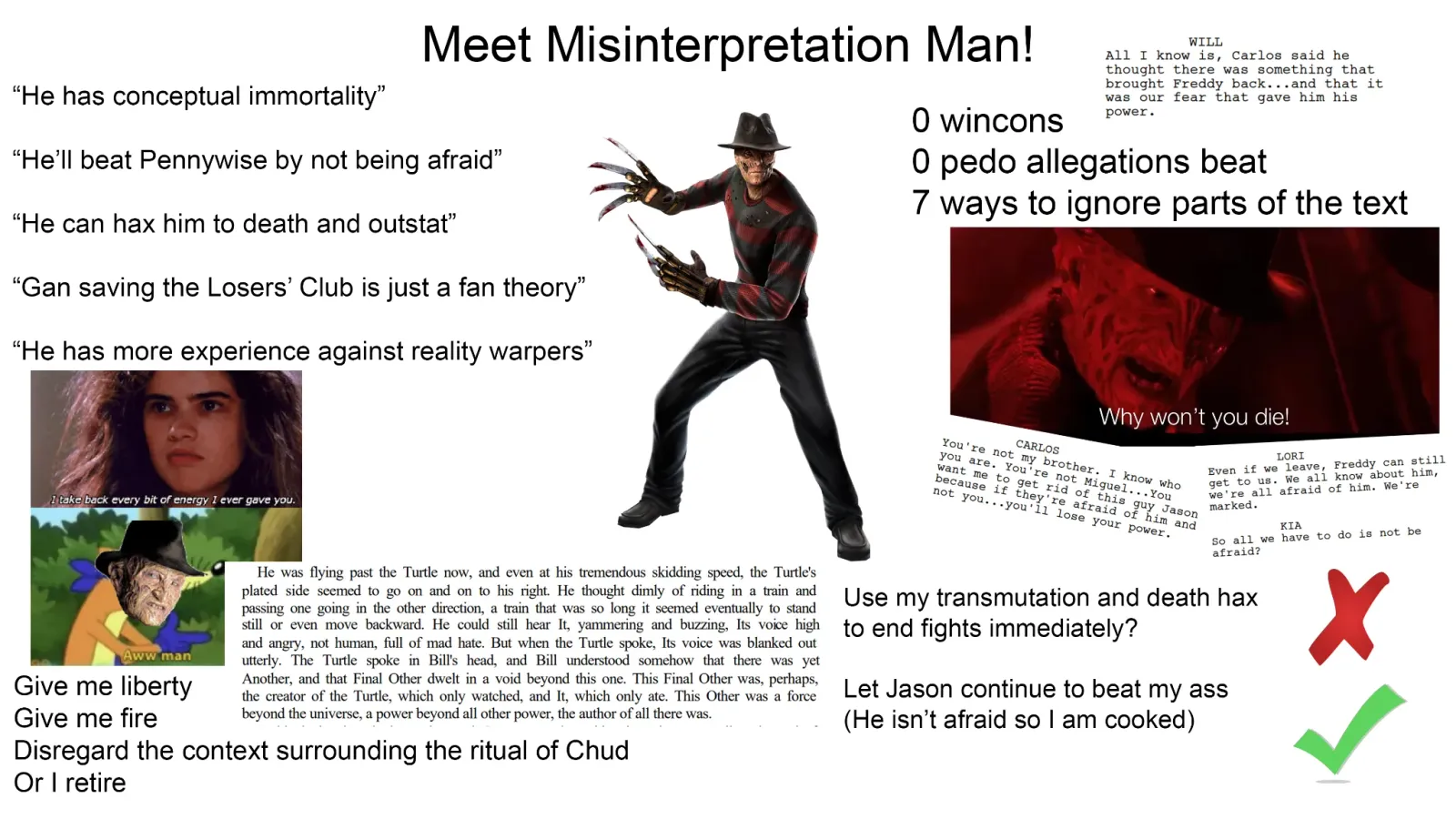 |
Maybe he could try turning to religion, but The White generally does not favour child abusers (Roland will certainly tell you).
Also since this is the “Dispelling Misinformation” section, this should fit in here well enough. The claims that Freddy wasn’t a sexual predator in the original Nightmare on Elm Street series is frankly a lie. While they avoided outright confirming it in the original movie due to local controversies, Wes Craven did originally conceive of Freddy as a child molestor. A newsclipping that appears in the fifth film confirms he is in fact a child molestor, Freddy vs Jason contains a statement of him liking little girls in particular, etc. Don’t even get me started on his strange behaviour around minors either, such as him licking Nancy through her phone, waving his tongue at a school child and asking if she “wants to suck face”, etc. Freddy does indeed like them young.
Furthermore, since people often like to argue that Freddy could stomp Pennywise via being unafraid of It, if you read the Freddy vs Jason script it confirms Freddy was genuinely unable to kill Jason until he discovered his (extremely asinine) fear of water.
Before you say anything, this section is obviously mostly meant as a joke, don’t take it too seriously.
Some Dark Tower matchups I’d like to spread
Morgoth vs The Crimson King
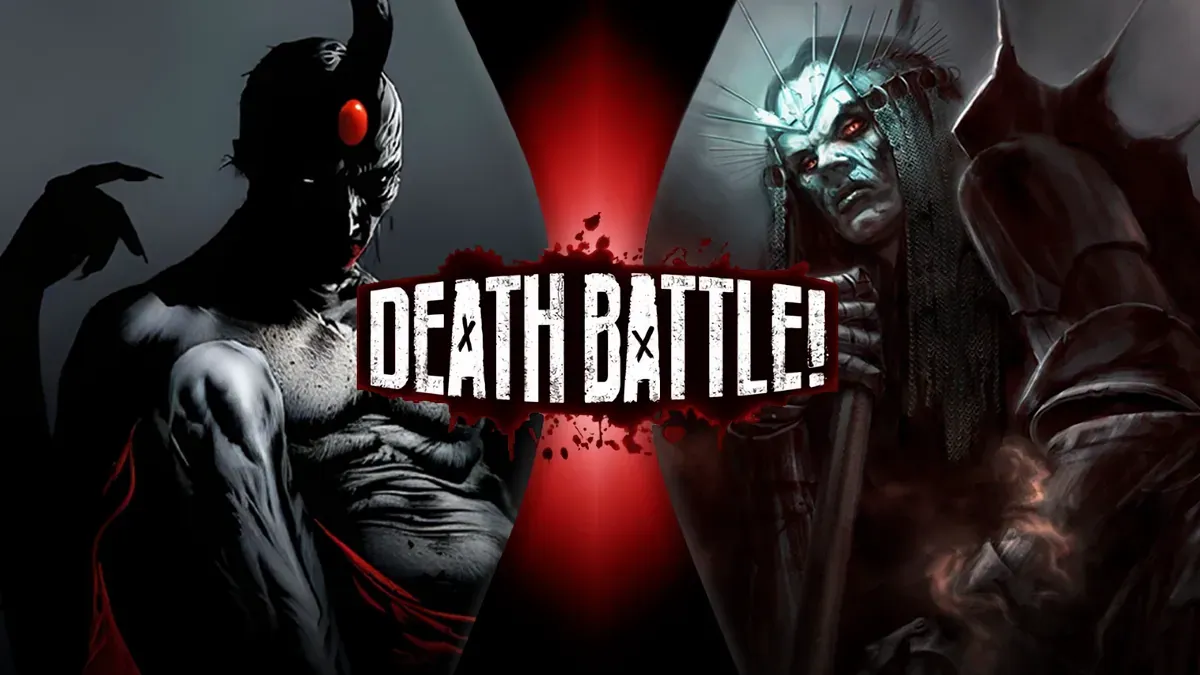 |
Although Sauron is the more obvious comparison to the Crimson King, the Lord of Discordia appears to share more similarities with Morgoth, with them both being primordial malevolent entities consumed by their hatred of their creators, who seek to overthrow their perceived tyranny through the destruction of all that exists. And just as Morgoth’s discord ultimately serves Eru’s song, so does the Red fall beneath the White. The matchup itself makes sense on a thematic level, and their dynamic has a good amount of potential due to their varied powersets. What makes it even better is that this matchup is fairly debatable (although in my opinion it very likely ends in a stalemate), and frankly I find the Crimson King to be a far better opponent across the board for Morgoth than Sinestro. And if you want you could even make it an army battle.
Randall Flagg vs Yasunori Kato
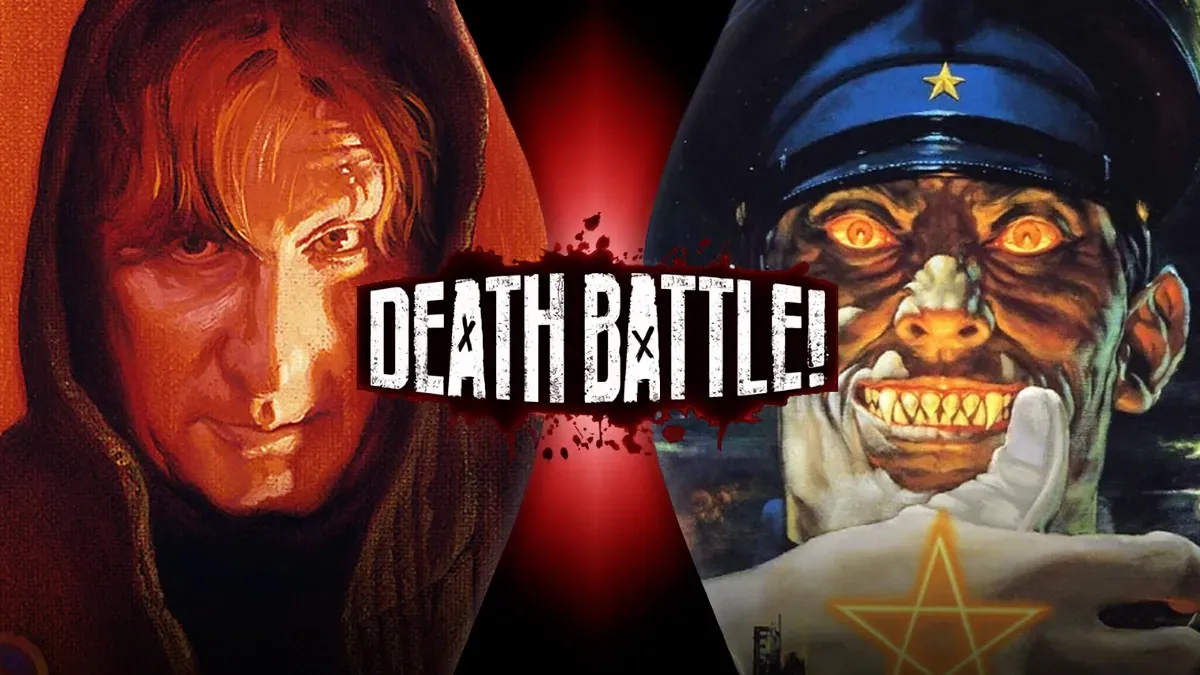 |
Two Crowley inspired, demon summoning, immortal sorcerers, who are both descended from legendary magicians belonging to their respective cultures. Consumed by their obsessive quests for destruction, only to be ultimately bested in the end by the hand of God (Or the Buddhas in Kato’s case). Due to the varied and versatile arsenals of both combatants it could be a fairly entertaining matchup with a lot of potential for unique power interactions, and it should be quite debatable even. Overall I’m convinced this is the best matchup for both (aside from Raidou, but I think at this point him fighting Constantine is inevitable, hopefully not).
Bonus: My serious take on a certain matchup
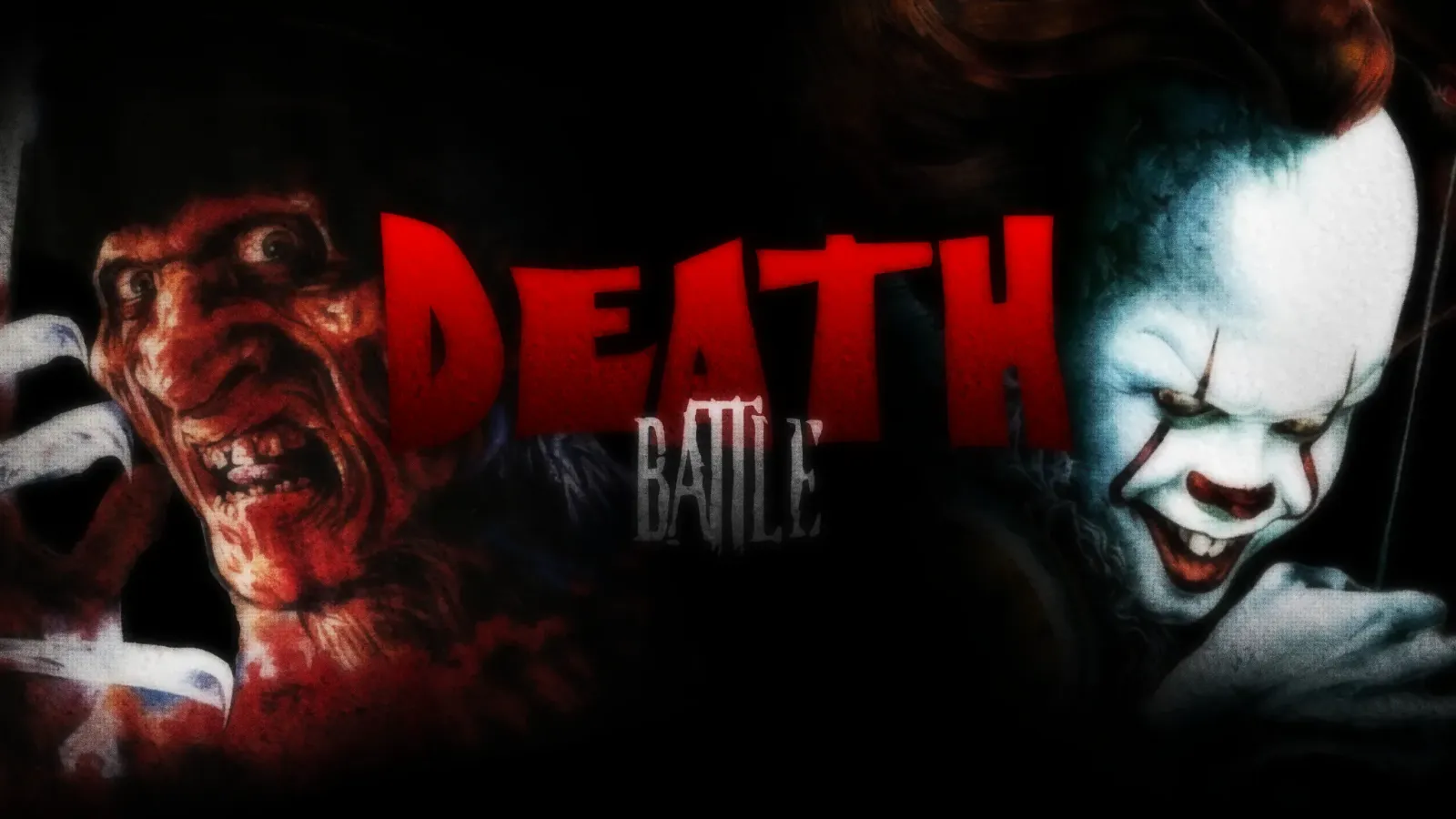 |
(TN by Flip)
Stats
Currently there is a rather thorough and extensive blog that goes over Freddy Krueger, and I shall be referring to it for now. All credit to the CrabCrave team, as I can tell this was very well researched.
Let us begin with the easy part and get stats out of the way. Regardless of whether Freddy is up against the Avatar or the Deadlights, the result is the same. The Deadlights reside within the Abyss and transcend the cosmology of the Tower in its entirety, and its avatar was only defeated after a combined attack hitting with the force of the Wheel of Ka struck its body. its physical attack potency is going to be High Outerversal either way, whereas Freddy’s best cosmology statements place him at Multiversal+. Even if you wish to take Wes Craven’s New Nightmare at face value and apply it to Freddy’s scaling (which the blog disagrees with for sensible reasons), you could argue him to be Outerversal but even that is dwarfed by the Tower’s scale.
Then there’s of course speed, and both have arguments ranging from Massively FTL+ to Immeasurable. Utilizing their finite ends, It pulling the Losers Club past the Turtle in the blink of an eye should at least be a Googolplex times the speed of light (I genuinely wouldn’t know how to begin calculating this number and writing it down here), whereas Freddy can get around 700 Sextillion times light speed with his highest calculations. its finite end of course massively dwarfs Freddy’s, However I will personally be giving priority to their Immeasurable speed arguments. In the case of It Immeasurable speed is extremely blatant, and I’ll be taking Freddy’s highest peaks at face value for this matchup.
Perhaps you could argue It would be faster with Immeasurable ends due to the infinitely greater scale of the Dark Tower’s cosmology, but I won’t get into that for now. Regardless, It takes strength and durability and speed shall be considered a tie, although to be fair one should keep in mind that these are primarily hax based combatants.
Abilities
For obvious reasons I am not going to be applying the “if you don’t fear him he is powerless” arguments to either side of the debate. I’ve already given a thorough debunk of why that doesn’t apply to It, and similar debunks exist for Freddy’s alleged weakness to not being feared.
The way this matchup is even meant to initiate is already an issue, for one reason. its mind is identified with the Deadlights. Within the world of A Nightmare on Elm Street the Dream World is described as a parallel dimension of reality which is entered as the soul departs from the body during slumber, but the Deadlights natively exist outside the multiverse. Although It has the power to enter Dreams at will, It does not dream itself, but to be generous to Freddy let us assume It willingly enters the dream world for whatever reason and Freddy happens to catch It there.
While Freddy’s character-defining gimmick is his power over Dreams, It actually has the scaling necessary to keep up. It has shown the ability to enter and manipulate dreams before, and although its level of power with this ability is rather vague in the original novel, It should scale infinitely beyond another character within the Dark Tower mythos known for similar feats of dream control: Randall Flagg. As we covered beforehand Flagg is stated explicitly by Maerlyn to be fodder in terms of magical power, and beings like the Crimson King and the Beam Guardians absolutely dwarf him (Both of which It has direct scaling to). With his level of dream control Flagg was able to create an entire universe within Roland’s dreamscape, and even managed to replicate the recursive structure of the Tower. Furthermore he’s been shown contesting other psychics within their dreamscapes and overpowering them. The fact that Flagg, a being who cannot even touch entities on its level with his magic, is already doing higher scale dreamscape feats than Freddy is already a bad sign for the dream demon. There is also the fact that if this battle takes place within the Dream World it wouldn’t be its avatar fighting Freddy but rather the Deadlights, as they are stated to be the actual mind of It. This places Freddy at an even greater disadvantage as he would be contesting an entity inhabiting a nonexistent state of being who would literally view him as fiction, likely making him unable to interact with It in any meaningful way.
Could Freddy try his luck in the physical world by spawn camping the Avatar? Well if he’s equipped with the Necronomicon he would have access to the same reality bending powers he had in the dream world. Due to the sheer variety of powers and tricks at the disposal of both combatants, let's split this part of the debate by addressing their win conditions as a series of questions.
#1: Can Freddy kill It?
The answer is likely not. Although Freddy has some rather impressive powers and abilities at his disposal that could instantly kill most opponents he’s shown to have difficulty against undead entities such as Jason who could simply get back up each time Freddy tried to put him down. It has shown rather impressive regeneration feats directly, and scaling to Gan’s (As in the Tower) power of endless regeneration, a power which all magical beings are said to share, It could be capable of recovering even from damage on a metaphysical scale.
As for Freddy’s more incorporeal means of dealing with his foes, such as his Soul Manipulation and Existence Erasure, those aren’t going to be a great option for him either. Any attempts to target the Soul would force him into a confrontation with the Deadlights, which would naturally be capable of overpowering Freddy in any case. Perhaps erasing the Avatar might do something, however, The Deadlights have been shown to be capable of interacting with reality even without a physical body, such as the time they literally reached through a mirror and slammed a woman’s head against the glass, or when they helped the Crimson King move up the Tower’s All-Time levels. And should It lose one vessel the Deadlights are also capable of skipping the Avatar to possess a pre-existing host. The only time its regeneration and ability to enter the universe was ever threatened was during the two instances of the Ritual of Chud, but in both cases the direct of aid of Gan was required to defeat It, a condition which obviously isn’t going to repeat itself for Freddy’s sake.
Trying to utilize Plot Manipulation to cheat out a victory also isn’t going to be helpful, due to the Deadlights transcending the Tower and the influence of Kas-Ka Gan such as Stephen King (literally its own author).
#2: Can Freddy incapacitate its Avatar long enough to be considered a victory?
Sadly, no. One of Freddy’s best immediate options for an incap victory would be BFR’ing It to a place It couldn’t escape, however, do remember that It is a “Walk-In”, and traversing through different worlds isn’t exactly a foreign concept to It. The Avatar flew to Earth from outside the Dark Tower, and the Deadlights also possess the power to navigate the Tower’s All-Time levels, meaning It would likely have the range to come back from whatever dimension Freddy tries sending It to.
What about his transmutation? Can Freddy turn It into an inanimate object perhaps? Well, due to its natural shapeshifting ability this isn’t likely to work either. The only way to nullify its shape-changing powers and trap It in a singular form is via the Ritual of Chud with the aid of Gan, which again isn’t going to happen for Freddy.
What about Freddy’s Time manipulation? Well, while Freddy could maybe catch the Avatar lacking while It is utilizing a glamour, the moment It assumes the Spider Form any time based abilities will instantly become moot. Remember, the Spider Form is the closest approximation to the Deadlights’ true state, and the Spider shape itself is but a perceptible “translation” of something from beyond time and space that does not abide by physical reality. It counters Freddy’s Fate manipulation in a similar manner, for the Deadlights transcend Ka, which is the pervading force of Fate and Destiny throughout the Multiverse.
Could Freddy potentially trap It in a 2-D plane, or a fictional world? I’m afraid It counters that as well. The Deadlights can allow one to ascend the Tower’s All-Time levels, and the difference between levels of the Tower is like crossing from a fictional reality into a more “real” plane of existence.
What about sealing? Could Freddy seal It in the Dream World, thus trapping It there? Well this would require sealing its soul, which is the Deadlights, within the Dream World. The Deadlights could very easily overpower Freddy’s attempts given their transcendent nature, and the fact that they’re beyond the influence of beings with Magical power like the Crimson King, Randall Flagg, the Kas-Ka Gan, etc. further aggravates this issue. There’s also the fact that Freddy would need the range to reach the Deadlights in the first place, which he simply lacks.
#3: Could It eat Freddy’s Soul?
Although Freddy has showcased resistance to having his soul absorbed before, this required him to be capable of overpowering the very person who did it. The Deadlights are far beyond anything Freddy’s ever had to contend with. The only reason the members of the Losers Club were capable of forcing their way back away from the Deadlights was again due to Gan’s intervention, and it’s not a feat they’d have been capable of performing otherwise. So, yeah, It can)
#4: Can It overcome Freddy’s “Conceptual Immortality”?
As we have discussed prior, one’s “Soul” within the Dark Tower is identified with their Ka, which encompasses all aspects of their Being, such as their Fate, their Life-Force, their Consciousness, etc. While Freddy can recover from having his mind and soul torn apart, Ka is even loftier than these.
The Tower and the Beams all together form the Wheel that embodies Ka, and the Tower contains each and every possible manifestation of life. Ka is the very thing that encompasses the metaphysical laws of existence, and its hands reach every world and every level of the Tower. These levels all transcend one another, with each floor existing in a state more “real” than the last as you ascend up the Tower. Even Todash, the void of possibility which encompasses and transcends all these realities is within the reach of Ka, and to even affect the Ka of one being requires power over the Tower’s cosmology.
To have your Ka destroyed would erase the very possibility of your existence throughout the entirety of the Multiverse, even across the nothingness of the Todash, and due to its sheer scale it’d be impossible for Freddy to exert enough influence on the Wheel to somehow will himself back into existence. While Freddy embodies things such as hatred, evil, and negativity he’s certainly not as fundamental a being as The Crimson King, whose Anti-Ka was necessary in order to deny one’s fated end.
To put it more simply, think of the comparison in this manner. Freddy is considered a fundamental concept within his own multiverse. Ka is the most fundamental root of all that exists, like one supreme and all-encompassing concept, and it spans a far greater multiverse which transcends Freddy’s.
#5: What other ways could It counter Freddy in a fight?
A weakness that was fully established within Freddy vs Jason is that Freddy’s level of power corresponds to how many people remember him. After Springwood’s local Government enforced an operation to remove all evidence of Freddy’s existence from the public consciousness Freddy was forced to manipulate Jason into making the people believe in his existence again. It would be rather bad if someone had the power to manipulate the minds and memories of an entire town, wouldn’t it? Well It can do exactly that. As established earlier its influence extends to the whole of Derry, and It deliberately used its mental abilities in order to prevent any knowledge of the town’s murders from spreading outside to the rest of the country. You can of course argue It wouldn’t start with this knowledge so it’d be a reach to claim It would try going for this strategy, however, It has a very consistent habit of reading its victim’s minds in order to expose their fears.
Although Freddy has certain mental protections in place to prevent others from reading his mind, its telepathy should be capable of circumventing any such defenses due to the sheer power and scale of the Deadlights, especially given its ability to destroy, devour, and manipulate Ka. The Losers Club of course also required the aid of Gan to be capable of fighting back spiritually / mentally as It threatened to pull their Ka into the Deadlights, further supporting a higher psychic potency. And of course It would naturally scale beyond Demon Elemental Hybrids like Mordred, who was able to overpower the psychic defenses of Randall Flagg. It enjoys utilizing people’s fears against them thus the moment It learns of this very weakness It is likely to exploit it, rendering Freddy powerless in the process. Although if he has the Necronomicon equipped he could likely circumvent this in a real world exchange.
Whilst the Necronomicon is a rather powerful tool at Freddy’s disposal, It is also among the primordial magical beings who arose from the Prim, and could theoretically overpower any magic Freddy attempts to use against It. The Beam Guardians (And the Demon Elementals) are stated to transcend both the Man in Black and the Crimson King in terms of magical capability in a similar fashion.
There is also the fact that, whilst It can return from whatever BFR method Freddy attempts to utilize against It, Freddy cannot counter its own BFR methods in return. Even to Long-Timers who can adjust the auras of Short-Time beings and bring them into the Long-Time levels, the All-Time levels are completely inaccessible to them. Meanwhile the Deadlights are capable of navigating the All-Time levels at will and can send other beings there. Theoretically the Deadlights could either send Freddy to a lower level of the Tower where he’d be rendered fictional even to the avatar, or It could trap him in the All-Time levels where he’d be surrounded by entities infinitely more powerful than him, and the servants of the White who reside here might feel inclined to jump Freddy on sight. Maybe if he’s lucky the Crimson King will find him first and let him join the Warriors of the Scarlet Eye?
Overall Verdict
Given how unkillable both combatants are and the tactics required to defeat either of them being highly contrived, much of their arsenals aren’t relevant in the fight itself. However, given Freddy’s win conditions are all countered or resisted in some fashion, whereas It has at least two, debatably three methods of removing Freddy from the battle permanently, It takes the advantage in Abilities.
Tertiary Factors
Although It has lived infinitely longer than Freddy has even existed, and it is implied at multiple points throughout the greater Dark Tower mythos that It has somehow been involved with the struggle between the White and the Outer Dark, the extent of its contributions is still rather vague.
Although It tends to be rather arrogant and prefers to play with its food the same can be said of Freddy who typically takes his time tormenting his victims, which has also led to his downfall on more than one occasion. However both It and Freddy have shown a willingness to stop playing the moment someone proves to be a genuine threat to them, so neither combatant will be favoured on that end.
Although Freddy has been around for a much shorter time than It, he also has many more actual onscreen battles and appearances. And while It has a rather wide variety of powers at its disposal, It primarily abuses these for the sake of terrifying its victims, whereas Freddy has showcased more creative ways of utilizing his abilities against comparable opponents such as Jason, Ash, and the Dream Warriors who he has faced throughout his career.
Freddy wins in skill and experience.
Conclusion
 |
“Try to stop me and I'll kill you all! Drive you crazy and then kill you all! You can't stop me!”
Advantages:
- Dwarfs Freddy in both Strength and Durability in its Spider Form
- Matches Freddy’s high-end speed with its own
- Its avatar blitzes Freddy with finite ends
- Too unkillable for Freddy to put down for good
- Should its avatar manage to somehow die, the Deadlights can reach into the universe directly to continue the fight
- Resists or counters Freddy’s incap methods
- Can potentially nullify Freddy’s power over the Dream World via mass telepathy
- its magic should theoretically scale far beyond anything the Necronomicon has shown
- Devouring Freddy’s Ka would prevent him from coming back ever again
- Mogged Freddy in the rap battle
Disadvantages:
- Freddy should easily outstat and outhax the majority of its Glamours
- Less experienced and less creative with its abilities overall
- Racist, sexist, homophobic, and possibly a rapist
 |
“Welcome to my world, bitch.”
Advantages:
- Has more experience against a wider variety of opponents
- More creative with his powerset
- Should be capable of overpowering most Glamours at its disposal
- Is genuinely unkillable against most forms of damage…
- Matches infinite ends for speed...
- If he successfully casted the Ritual of Chud he might be able to pressure It…
- Avoided getting milked into the current era unlike other slasher villains
Disadvantages:
- Infinitely weaker when the Spider Form comes out
- Has no answer to It sending him to a different level of the Tower
- All of his trump cards get resisted or countered
- Vulnerable to having his power nullified
- Has no means of reasonably interacting with the Deadlights
- …But if his Ka is devoured he’ll be erased forever
- ...But gets blitzed in finite ends
- …Firstly he’d have to learn the ritual, secondly he’d need to convince Gan to help him (That’s not happening)
- Is a pedophile from the midwest
In summary, Freddy simply lacks the means to permanently put It down for good, whereas It has multiple means of killing or neutralizing Freddy, with two of them being very much in character for It to resort to. Devouring Freddy’s Ka would result in him being erased across all possible manifestations of life, rendering any form of immortality and regeneration he’d have null. The only means by which Freddy could reasonably get rid of It would require him to learn of the Ritual of Chud and then somehow ensure Gan’s aid in casting the rite, but it’s unlikely that the Great God of the White would lend his assistance to a malevolent being such as Freddy.
To put it simply: It simply has the abilities, resistances, and counters necessary to send the Dream Demon to his eternal slumber. The winner is Pennywise.
 |
Final Word
Hopefully this blog shall serve as a decent starting point for most who are new to the Dark Tower, and as well as put to rest the massive amount of misinformation regarding It that have been pervading through the community for years.
While for all intents and purposes I do consider this blog finished and have gone through the available information I know to be relevant to the best of my ability, Stephen King’s bibliography is wide and extensive, growing nearly every year and thus adding even more potential pieces of information I may have missed. One major title that shall be published later this year is the final book in the Talisman Trilogy, “Other Worlds Than These”, which is supposedly intended to book-end the saga of the Dark Tower as a whole. Should there be anything notable within that book when it releases, I may consider adding an addendum.
Also one small note: You may have noticed that I am usually a lot more thorough with my citations, but some of King’s books are genuinely formatted by an insane person, and eventually I found it too difficult to be as precise. Apologies for that, but at least you can CTRL+F the text.

This was a fun and very informative blog, although I do wish the movies had been included along with the book for a full scope of Pennywises full history. I also had a question. In the book, there's a passage about IT wanting to eat, sleep, dream, and eat again, but in the section detailing its match against Freddy, it was stated Pennywise doesn't actually dream even though it has the ability to enter dreams. So can IT dream or not? I'm a little confused. Otherwise, great job.
ReplyDeleteSo in this section under Transcendence over Ka"
DeleteThus It entirely transcends concepts such as life and death, time and space, size and magnitude, and all the other myriad forces that govern reality within the Dark Tower. Its Avatar has even indicated directly that Its personal relation to time and space is irregular, as upon encountering a time traveler who travelled to Derry in 1958, It stated that “time doesn’t matter” and just “floats away”.
There are a few hyperlinks in there you can click, but when the time traveler stumbles upon Its avatar, this is shortly after the Losers Club first sent the avatar back into "slumber" while they were children. Despite this, It is still very much conscious and aware of what's going on around It, enough to try luring the time traveler into the sewers after recognizing he's not supposed to be there.
The Deadlights also wouldn't be considered "Dreaming" in the way A Nightmare on Elm Street defines it also, even if they were capable of dreaming. In NoES the Dream World is entered when the soul departs from the body and enters the world of dreams, which is parallel to the physical world within the same multiverse. The Deadlights already natively exist outside the multiverse, so there's not really a way It would ever be caught in the Dream World unless It went there willingly.
OK, that makes sense. Thank you!
Delete