Shinji Ikari VS Ultraman (Neon Genesis Evangelion VS Ultra Series)

(Flip)

(Flip)

(Flip)

(Flip)

(Kaiser)

(Kaiser)

(Kaiser)

(Sharaku Jr.)

(TheCardinalKing)

(Sirus)
“They were tossed between two evils, until they discovered the proper distance from which they could best tolerate one another.”
-Arthur Schopenhauer
Shinji Ikari, NERV’s Third Child and pilot of the biomechanical Unit-01 of the Evangelion series.
Ultraman, Nebula M78’s Giant of Light hosted by SSSP operative Shin Hayata.
.gif)
Japan has no shortage of giant heroes protecting humanity from monsters, but whether it's an alien merging with a human or a boy synchronizing with a living giant, both have served as humanity's last line of defense against creatures it can barely understand. Decades of tokusatsu history have brought us to this clash between the Giant of Light and the ultimate Evangelion, but when these two giants finally clash, will Shinji rise above his fears and become the legend he was always meant to be? Or will Ultraman's million-watt radiance outshine even the cruelest of Angels? Let's settle this debate once and for all, and find out who would win a DEATH BATTLE!
Before We Start…
Why (Not) This Matchup?
.png)
This matchup comes with a considerable amount of legacy, but we'll get to that later. After all, legacy can only mean so much if the matchup itself isn't good. Fortunately, Evangelion VS Ultraman has far more going for it than history alone.
So, what makes this such a strong matchup for Shinji and EVA-01? What makes it equally compelling for Ultraman? How well does it represent both characters, their stories, and the franchises they come from? How naturally do their abilities play off each other in an actual fight? And most importantly, beyond personal preference or legacy, what makes this matchup worth championing for both Shinji and Ultraman?
For starters, Evangelion’s psychological, psychedelic, and esoteric elements are just as important as its giant robot fights, so you'd want an opponent who can engage with those aspects without reducing EVA-01 to just another mecha anime. They'd also need enough versatility to keep up with its abilities, and ideally feel like a genuine threat within Evangelion's world. Anyone that Tokyo-3's average military forces could reasonably handle wouldn't exactly pass for an Angel-level threat. And considering how much of Evangelion revolves around Shinji's characterization, you'd want someone with enough depth to do him justice. Ultraman fits pretty well here. His series is no stranger to bizarre aliens and phenomena that humans can barely make sense of, and a giant alien made of light suddenly appearing in Tokyo-3 would certainly catch NERV's attention, especially when you remember what the angels are made of. His arsenal also gets pretty ridiculous once you look past the Spacium Beam, with all sorts of Silver Age-esque nonsense that could make for some really fun interactions with EVA-01's A.T. Field and other abilities.
Looking at it from Ultraman's perspective, EVA-01 is a pretty fascinating opponent in its own right. At first glance, it's another giant humanoid defending Earth, but underneath all that armor is a living creature that's arguably closer to the kaiju Ultraman usually fights. And unlike most of Ultraman's enemies, there's a fourteen-year-old boy inside it who never really wanted to fight in the first place. This gives Ultraman a reason to approach the battle differently, especially considering the original series had its fair share of sympathetic creatures, from Jamila's tragic origins as an abandoned astronaut to Seabozu simply wanting to return home, or Pigmon sacrificing himself to protect others. Ultraman knows better than most that not every monster is necessarily evil, while also having grown attached to humanity himself, to the point that his very first act on Earth was saving Hayata's life by merging with him. Shinji, meanwhile, is a human who can barely bring himself to connect with other people, even though being accepted by them is practically all he wants. It's also interesting how Ultraman willingly puts his life on the line for a planet that isn't even his own, while Shinji is stuck piloting EVA-01 partly because he wants his father's approval.
Even the circumstances behind their respective giants couldn't be more different, with Ultraman's bond with Hayata beginning as an act of compassion, while Shinji's connection to EVA-01 is rooted in his mother's fate, his own trauma and Gendo's plans for him. And considering how much of Evangelion revolves around Shinji's fear of getting hurt by others, there's something fitting about putting him against someone who grew so attached to humanity that he chose to stay on Earth and protect it. You could have Ultraman trying to reach out to Shinji throughout the fight, recognizing that he's dealing with a troubled kid rather than just another enemy to defeat. Of course, that wouldn't necessarily stop the fight from ending on a bittersweet note, regardless of who wins. People really liked how episodes like Sentry VS Superboy-Prime and Shadow VS Mewtwo handled the emotional side of their matchups, so giving that aspect even more attention here, especially with less antagonism between the two, could make for something really memorable. And, of course, there's some pretty interesting religious imagery you could play around with too. A Christ-like Giant of Light fighting an Evangelion armed with the Spear of Longinus, named after the lance that pierced Jesus? That's some layered cinema.
There's a lot to appreciate here, both in how their stories complement each other and how their abilities could play off one another. And we've barely touched on one of the biggest reasons this matchup exists in the first place: its legacy, which is probably the biggest selling point of this matchup. To really understand where it comes from, we have to go back to Eiji Tsuburaya, the man often called the Father of Tokusatsu. He was responsible for much of the special effects work on the original Godzilla in 1954, helping popularize the use of miniatures, suitmation, and practical effects that would become staples of Japanese filmmaking. He eventually founded Tsuburaya Productions, and in 1966, Ultraman made its television debut. Needless to say, the series would leave a pretty massive mark on Japanese pop culture, inspiring generations of creators, including a certain troubled young man named Hideaki Anno. And if you know anything about Anno, you probably know just how much he loves Ultraman. Its influence on Evangelion goes well beyond the obvious premise of giant humanoids fighting monsters, showing up in everything from the Evas' movements and NERV's role in defending humanity to the series' cinematography, particularly the unusual camera angles and compositions associated with Ultraman director Akio Jissoji. Anno took a lot of what fascinated him about those older tokusatsu shows and worked it into something very different, with Evangelion eventually becoming a cultural phenomenon in its own right. What's especially funny is that Anno would eventually get to work on Ultraman himself, writing the screenplay and handling the concept for 2022's Shin Ultraman alongside director Shinji Higuchi. So yeah, there's quite a bit of history behind this matchup, as we're essentially putting Shinji against the very hero who inspired his existence, with Anno's career having come full circle in the meantime.
Media
.png)
For Shinji and EVA-01, we will be using all major Evangelion material, including the original anime, The End of Evangelion, the manga, the Rebuild films, ANIMA and other official supplementary media such as games, shorts, guidebooks and interviews. Although these stories were long viewed as separate continuities, with theories of an overarching connection often dismissed by fans due in part to the perceived gap in quality between the original series and much of the extended material, more recent works from Studio Khara have increasingly embraced the idea that Evangelion's various incarnations are interconnected, and we'll cover those developments in more detail later in the blog.
Even setting that aside, allowing Shinji access to his full body of material makes for a much closer and more interesting debate, and we'll always make it clear when something comes from a particular source. As researchers, we shouldn't exclude official material that's valid to use simply because we think it's bad, otherwise, things like Solaris wouldn't be discussed in Sonic MUs so much, for example. Some readers questioned our decision to exclude the Rebuilds in our previous Evangelion blog, so we want to clarify that Asuka wasn't treated that way because Rebuild is "bad," but because Shikinami is fundamentally a different character from Soryu. If anything, ANIMA was far more applicable to Soryu, but using it would've turned the matchup into an even larger stomp while moving it further away from the version of Asuka most readers are familiar with. You’ll see why soon below.
For Ultraman and Hayata, it is considerably simpler. Given the multiversal nature of the series, all official media pertaining to the Ultraman franchise starting with Ultra Q will be used. This includes all the TV Shows, novels, specials, films, guidebooks, games, interviews and web content that fit within the wider series. Due to the legacy aspect of the matchup, Shin Ultraman will also be used as supplementary material due to it being an adaptation that is mostly faithful to the spirit of the original series and approved by Tsuburaya, despite a few creative liberties. We also took the liberty of researching other non-canonical material like Kazuo Umezu’s 1966 manga adaptation and Marvel’s Ultraman comics. Though the 2024 animated film Ultraman: Rising interweaves ideas and plot elements from the original series in a similar manner, the history and characters it presents are just too different from the source to count.
Both characters are also involved in an obscene amount of crossovers with different franchises such as Super Robot Wars, Godzilla, Kamen Rider, Compati Hero, GigaBash, Shin Megami Tensei, Super Mario and even Sonic the Hedgehog (???). None of those will be used for scaling, as this could fall into outlier territory. We are sorry if you expected to see Captain Marvel or King Ghidorah in their scaling sections, but that is not going to happen. We’re also obviously not scaling the characters to each other given how a bunch of their crossovers would overlap.
For a comprehensive list of the material used for both characters, you can check the very end of the blog under “Sources”.
Last but certainly not least, credits! Much like Ryūko Matoi vs Cutie Honey, we'd like to thank community members Bang, Cardinal, Gio, Kuma, Scar, Tony, Landon1195, WWAL, Spirit, KaijuConvoy, 08, and Yuix for their indirect contributions to this blog. Cardinal and Tony, in particular, were directly involved in the production of this project, having also played a significant role in researching Ultraman long before work on this blog began. If some arguments or wording feel familiar, that's likely because their work influenced our own research, or simply because Cardinal and Tony were involved in both. As always, we still revisited every source ourselves, because we genuinely care about making our blogs as accurate and thoroughly researched as possible rather than simply taking someone else's work at face value. That process led us to some slightly different conclusions, and we may even present arguments that were not previously discussed, but their contributions to Ultraman’s groundwork were invaluable and deserve proper recognition. In particular, we'd like to credit their Bang’s Blogs: Gohan vs Ultraman Zero blog, which Bang kindly allowed us to consult directly and which served as a major reference throughout the making of this project.
Glossary

This blog has a lot of proper nouns and specific terminology, so we thought it might be best to share a mini glossary that briefly describes some of the more recurring terms in either series.
Neon Genesis Evangelion | 新世紀エヴァンゲリオン
Angels [使徒]: Enormous creatures spawned from the Seed of Life, Adam, who himself is the 1st Angel. Each one of these creatures plays an antagonistic role in the series. It is later revealed that Humanity and its progenitor, Lilith, are among the Angels.
Seeds of Life [生命の樹]: Lifeforms sent across the universe by mysterious beings only known as the "First Ancestral Race" to spread life across the universe. Effectively godlike in power, two of them, Adam & Lilith, are on Earth.
First Ancestral Race [第一始祖民族]: An ancient, alien (possibly extradimensional?) civilization of which nearly nothing is known. What we do know is that they are responsible for the creation of the Seeds of Life, Spears of Longinus, and the Dead Sea Scrolls.
NERV [ネルフ]: An agency formed for the research of and defense against the threat of the Angels. It is the successor organization to Gehirn.
Evangelion [エヴァンゲリオン]: Gigantic bio-mechanical robots created by NERV that are piloted for the purpose of combat against Angels. Later, it is revealed they are designed off of the Seeds of Life.
Black Moon [黒き月]: The vessel in which the Seed of Life, Lilith, had arrived on Earth in. It is buried deep underground, in an area of Japan known as the "GeoFront".
SEELE [ゼーレ]: An old, secretive organization with international reach and immense power, operating as the "Human Instrumentality Committee" as a branch of the United Nations. It is under them that NERV operates, with SEELE using NERV as a means of triggering Human Instrumentality.
Human Instrumentality [人類補完計画]: A ritual process involving Seeds of Life, Evangelion, and the Lance of Longinus that aims to transform all of humanity into a single unified consciousness, stripping all souls of individuality and achieving apotheosis. Very goopy.
Time Loop: A popular theory following subsequent Evangelion spin-offs and installments (primarily the manga adaptation & Rebuild films) that suggests every entry in the EVA franchise is part of a cycle revolving around Human Instrumentality.
Ultraman | ウルトラマン
Ultras [ウルトラ]: Alien residents of the Land of Light. The species was mutated by an artificial sun, the Plasma Spark, that replaced their dying star.
Nebula M78 [M78星雲]: The nebula where the Land of Light is located, 3 million light-years away from Earth.
Land of Light [光の国]: The planet where the Ultras reside.
Alien [宇宙人]: Generic designation for extraterrestrials from the Ultra series. Those that display intelligence equal to or higher than humans, or those that share the name of their planet, are also referred to as Seijin [星人].
Kaiju [怪獣]: Generic designation for non-intelligent beasts from the Ultra series. They are usually organic and can be from Earth or other planets.
SSSP [スリーエス・ピー]: The Science Special Search Party, a specialized force dedicated to understanding and combating unknown or extraterrestrial threats. It is a subsidiary of the International Science Police Organization.
Spacium [スペシウム]: A special radioactive element abundant on planet Mars and in Ultraman's body. Used in Ultraman's signature finishing move beam.
Fourth Dimension [四次元]: A higher dimension of space where many Alien antagonists reside. Also called the Anti-Universe or Antimatter Universe.
Absolutians [アブソリューティアン]: Beings very similar to the Ultras from Central Planet, mutated in very similar circumstances but seeking to conquer a new world for their empire.
Shinji Ikari
Background

Tokyo-3 was a strange place. Being one of the last vestiges of Japan in a world ravaged by forces known as the Angels, it hosted the paramilitary organization NERV, a group that held on to one of the last front lines humanity had left against this threat. NERV held and empowered machines known as the Evangelion Units, which were the strongest tools they had to combat them. But they required very specific pilots to reach their full potential. And one such pilot was known as Shinji Ikari.
.gif)
Shinji was just a normal boy in an abnormal world. At the ripe young age of 14, he didn’t expect much from life, content to simply live out his school days and carve out his future. Unfortunately for him, he was plucked from his ordinary life by his mad scientist father Gendo Ikari and sent on humanity’s front lines against the angelic threats every single day. Fortunately for him, he was not alone. He was recruited to pilot the Evangelion Unit-01, as he was the only human who could for reasons he didn’t yet fully understand. Alongside that, he also had the help of two of the best pilots in the business: Rei Ayanami and Asuka Langley Soryu. While he was strongly reluctant to get in the robot initially, the pressure of his strict father and the encouragement of his caretaker Misato Katsuragi eventually got to him, and he turned out to be a natural when it came to crushing the Angel threat.
However, as the enemies grew stronger and their abilities became more abstract, Shinji began to change. Experiencing trauma upon trauma, from accidentally killing his high school classmate to forming an attachment with another boy who turned out to be an Angel trying to manipulate him, Shinji started to lose his grip on his will to live. This proved to be fatal for humanity, for it would soon be revealed why he was sent to pilot the EVA unit in the first place.
As it turned out, the Evangelion was possessed by the spirit of Shinji’s dead mother, Yui, due to what was revealed to be an incident in which she sacrificed her life to protect him from the Third Impact and the Human Instrumentality Project. Because of this, Shinji was the only one that could truly bond with the robot, accessing its full potential in combat, as will be revealed later. SEELE, the organization that developed the EVA units and recruited Shinji in the first place, had kept this a secret from him all this time.
However, Shinji never wanted this for himself, he never asked for any of it. All he wanted was a normal life and, being only 14, was horribly equipped to handle this situation. Between the trauma of this war and his deteriorating relationships with the other pilots along with Misato, he broke. He lost his will to live, which, unfortunately for everyone involved, was the final step necessary for SEELE to fully awaken Lilith, the second Angel of humanity, and finalize the Human Instrumentality Project, an event that would cause humanity to collapse into a collective consciousness. When this happened, all of humanity was dragged in, including Shinji himself. But in the primordial ooze, Shinji experienced a psychological journey, one where he felt all the pain, suffering, trauma, and loneliness of his life all at once. But in that journey, he felt one final emotion: Hope. The hope to carry on throughout all of it, the little joys that make life worth living, and he realized that the individuality that came with life wasn’t worth sacrificing. That realization was all it took to free him, and as he stepped out of the fluid and saw a ruined world with no life left, his old friend Asuka would resurface next to him, leaving both to sit and contemplate their lives in silence, hoping humanity would follow them soon enough.
Even then, this isn't really the End™ of Shinji's story. Across the many loops and alternate timelines he's been through, even Instrumentality doesn't necessarily mean his search for happiness is over. In the manga adaptation, Shinji wakes up in a restored world where the Evangelions have become relics of a distant past, their existence all but forgotten as he heads to Tokyo to start his life over. ANIMA takes things in a completely different direction, with Third Impact being stopped before it can finish, allowing Shinji to spend another three years growing up alongside the people he nearly lost. Of course, things eventually go horribly wrong again, and his battle with Armaros leaves Earth almost unrecognizable, with humanity having to make a new home out of what used to be the Moon. Other timelines are considerably kinder to him, letting Shinji enjoy a normal school life surrounded by his friends and family, without having to deal with the usual Evangelion nonsense for once. And when the story is finally Rebuilt, Shinji realizes that he's been through variations of this same story before. This time, however, he decides against simply turning back the clock or restoring everything to how it was. Instead, he creates a world where Evangelions never existed, finally breaking the cycle and getting the ordinary life he'd wanted all along. A Neon Genesis.
Bonds
.gif)
Evangelion Unit-01
.gif)
Coming in at 40 to 200 meters and weighing in at 700 to 96,000 tons, the second EVA unit ever made hosting the soul of Yui Ikari, Evangelion Unit-01 is the primary robot Shinji pilots throughout the series. Constructed to do battle against the destructive aliens known as the Angels in what is now known as Project E, EVA-01 was the last unit made before mass production began, constructed and produced entirely in Japan’s Tokyo-3.
While Shinji would initially struggle with getting in the damn robot, still terrified of being thrust into a responsibility he didn’t want, he would eventually be the greatest of all Evangelion pilots. Case and point, where all other pilots in the series have synchronization rates that measure from 0-100% that measure how in tune they are with their Evangelions, Shinji & Unit-01 at their peak in the Rebuild films have a sync rate measured as “Infinity”, the highest sync rate in the entire series, including spin-offs.
This incredibly strong bond would also manifest in very strange ways in spin-offs, chiefly the ANIMA books where a vaporized Shinji re-manifests inside Unit-01 and the two evolve together into “Super Evangelion”. The newly emerged Shinji & Super Evangelion were now permanently synchronized together, Super EVA following Shinji's movements even after he left the entry plug. Both are merged together at the quantum level through a void in each other's chests connecting one another and both Shinji & Super EVA are described as being the same person, with the upgraded Unit-01 responding directly to Shinji's subconscious thoughts and desires. After further training in his new state of existence, Shinji learned to recognize the line between himself and his Eva and how to control its movements better. When piloting Super EVA from the inside, Shinji's consciousness leaves his human body in the entry plug and transfers to Super EVA itself, allowing him to perceive time on its non-human scale. And mind you that lore-wise, this version of Shinji & Unit-01 would have inferior synchronization to Rebuild Shinji at his peak, demonstrating how potent the bond Shinji & Unit-01 have at the very end of their journey.
There’s obviously more to talk about in regards to Unit-01’s capabilities, but that will be saved for the Abilities section of Shinji’s analysis.
Yui Ikari / Ayanami

“Anywhere can be paradise as long as you have the will to live. After all, you are alive, so you will always have the chance to be happy. As long as the Sun, the Moon, and the Earth exist, everything will be all right.”
Yui Ikari was Shinji's mother, Gendo's wife, and one of the researchers behind Project E. She clearly loved Shinji, although her plans for him were... questionable at best. In 2004, she brought the four-year-old Shinji along to her Contact Experiment with Unit-01, where she deliberately allowed herself to be absorbed into the EVA.
Shinji spends most of the series believing his mother died that day, unaware that she's been with him inside Unit-01 the entire time. Yui repeatedly takes control of the EVA to protect him, even when he’s unconscious and incapacitated. Yui’s soul even helps him reform from being LCL even after NERV’s attempt failed and LCL was splattered everywhere outside the entry plug. Her belief that anywhere can become paradise as long as you're alive also ends up carrying over to Shinji, who eventually rejects Instrumentality and chooses to keep living. Yui, meanwhile, remains inside Unit-01 and leaves Earth as eternal proof that humanity ever existed. In a pretty backwards way, the mother responsible for much of Shinji's trauma also spends the entire series protecting him and helping him find a future of his own.
Yui’s existence in the Rebuild films differs only slightly from her original series depiction. For one, her family name in this timeline is Yui Ayanami, with Gendo instead being the Ikari. While she still resides within Unit-01, 3.0+1.0 reveals that she had somehow also been inside Shinji all along, allowing her to emerge and sacrifice herself in his place at the end of the film.
These also aren't the only times Yui’s soul has stepped in to save Shinji's life. In the ANIMA timeline, after Shinji’s body is completely disintegrated from an attack, she helps his soul return back to the real world from the Other Side and form a new body for him, as well as create the new higher-dimensional window that would act as his and Super EVA’s “heart” and connect the two, though she passes on and out of Unit-01 after this, but does later come back from the Other Side to construct Shinji's dream world. The ANIMA novels describe Yui as an existence outside the universe, having nevertheless always watched over Shinji. In one ending of one of the Evangelion RPGs, Yui fends off an Angel from biologically merging with and possessing Shinji. Campus Apocalypse reveals all Yuis in the multiverse were at one time linked since a version of her chose to be the pillar of the World Tree Yggdrasil. In doing so only a single version of her existed as Lilith until Kaworu replaced her as the tree’s pillar, and branched out his existence across the multiverse.
Rei Ayanami
.gif)
“Birth of a new world. Neon Genesis.”
This section focuses exclusively on the original Rei clone from the Rebuild films timeline. She fills much the same role as Rei II from the original series, piloting Unit-00 and gradually growing closer to Shinji over the first two films. By 2.0, she even takes it upon herself to try bringing Shinji and Gendo closer together, only for her to be absorbed along with Unit-00 by the Tenth Angel, Zeruel.
Shinji's attempt to save her causes Unit-01 to awaken and nearly triggers the Third Impact. While he seemingly succeeds in pulling Rei out of the Angel, she instead remains preserved inside Unit-01 alongside his mother, Yui Ayanami. This is why the Rei he meets fourteen years later isn't actually the girl he saved, but another member of the Ayanami Series created to replace her.
The original Rei finally returns in 3.0+1.0, her hair having continued to grow during the fourteen years she spent inside Unit-01. She apologizes for failing to keep Shinji from ever having to pilot an EVA again before handing control of Unit-01 back to him. Much later, Rei is the last person Shinji speaks with as he prepares to rewrite the world. He explains that he isn't turning back time or restoring the old world, but creating one where Evangelions no longer exist and everyone can move on without them. Rei calls this the birth of a new world, the Neon Genesis, thanks Shinji, and leaves its creation in his hands.
Torwächter B

“You called on me, and now I call on your body. That's all.”
When the dreaded Armaros began its work terraforming the Moon and facing off against the defenders of Earth, it would be supported by two EVA-like entities only known as Victors or Torwächters. While one of the two would fall in combat, the other, designated Torwächter B, would successfully steal Shinji’s Center Trigonus, his higher-dimensional window of a “heart” that sustained both him and Super Evangelion. But, over time, this Torwächter would become one with Shinji himself after Shinji resonated with his heart again. And this Torwächter would now be the "3rd" Shinji along with himself and Super EVA in a 3-way uncertain quantum existence.
Torwächters are incredibly powerful, weighing in at roughly 4,000 Tons and able to fight all of the upgraded and advanced Evangelions across the ANIMA novels, such as the Unit-02 Allegorica, US Evangelion/Wolfback, and even briefly Super Evangelion when empowered by Third Impact, being powerful enough to destroy one of its 100 kilometer wide wings. They can open dimensional windows connected to a hyperspace to teleport around vast distances within the Solar System. Due to both sharing the same heart, the Center Trigonus, they are capable of summoning one another to each other's side and Torwächter B proved able to pull out weapons Super EVA is carrying from its shadow.
After Shinji and Super EVA were transmuted into a giant pillar of salt, we see from Shinji's POV that his consciousness still existed inside of Torwächter B to move and defend Asuka/Crimson A1, becoming his “main” body after Super EVA was out of commission. Even after Shinji came yet again into conflict with himself, losing power from his Center Trigonus, he still possessed and consciously existed inside of Torwächter B, actively identifying himself as Shinji Ikari. Shinji "gave flesh" to the "hollow" Torwächter.
But not everything lasts forever. After sustaining enough damage in its fight against Mari’s Wolfpack, Torwächter B finally broke apart… only for Super Evangelion to emerge from within! Meaning their quantum link can effectively allow for a free revive and return of Unit-01 onto the battlefield.
Skill & Experience
.gif)
Shinji's skill as a pilot also tends to get overlooked. For example, against Ramiel, he had to land an extremely precise long-range shot while accounting for the Earth's rotation, magnetic field, gravity, and the tiny window where Ramiel's core would be exposed. NERV did most of the calculations and guided him through the first attempt, but Shinji still landed a perfect shot despite having never done anything like that before and showed just how quickly he could adapt to NERV's technology. It just wasn't enough to kill Ramiel. More impressively, Shinji then repeated the same shot on complete manual control, this time relying entirely on his own skill.
In the ANIMA timeline, Shinji and NERV successfully fend off the Mass Produced EVAs and proceed to train for several more years until the main events of the story take place and later fights on par with Armaros, an alternate timeline version of himself who won a battle royale against “countless” EVAs all fighting at once. This likely implies that, in this timeline, Shinji managed to grow in skill beyond even Asuka, who could already take on nine Mass Produced EVAs at once despite their Dummy Plugs being modeled after Kaworu Nagisa, a pilot considered more gifted than her in combat. This becomes even more impressive considering Asuka was a child genius that had trained as an EVA pilot since childhood, could devise strategies in seconds under pressure and was proficient with virtually every type of weapon available to her.
Many of Evangelion’s spinoffs surprisingly give Shinji more formal training and experience, even once placed in a virtual world and where he went on a fantasy adventure with Asuka, Rei, and Kaworu. Of course, at the end of the Rebuild films, Shinji becomes aware of and sees all other past timelines, with those who’ve completed Instrumentality and become akin to Seeds being stated to have complete knowledge of Creation, receiving all experiences and possibilities as brought about by free will. Hence why we are giving him his experiences across different versions of Evangelion’s story.
Equipment
.gif)
Plugsuit and A10 Nerve Clips

A combat suit worn by pilots during EVA operations. Its form-fitting design allows it to contract in order to match the wearer's physique once the Suit Fit Switch on the left arm is activated, making it look almost like body paint. It possesses diverse functions including life support systems and provides support for neural connections. However, neural connection with an EVA is possible without wearing the suit. It’s also able to assist in shock absorption, nerve transmission, breathing, and can even generate electric shocks to revive a stopped heart. In the ANIMA novels, Shinji and other EVA pilots receive Orichalcum plugsuits which resist the information-destroying effects of the Ark.
On top of Shinji's head is an interface used to establish a neural connection between the pilot and EVA. It is considered a crucial device for picking up the pilot's neural pulses during synchronization with the EVA. Shinji wears the basic design that resembles a headband, and its interface is uniquely tailored to match the specific nerve impulses in his brain. The pilot’s nerve impulses are then amplified akin to a radio wave booster and then received by the EVA.
Entry Plug and Cockpit

A long thin tube shaped device inserted through the Evangelion’s medulla oblongata that then sits inside the chest cavity. It contains the cockpit and is filled with L.C.L., a breathable liquid that facilitates neural synchronization of the pilot with the Evangelion and serves to absorb the shocks from combat. The interior of the entry plug has multiple screens, allowing the pilot to see what the EVA would be seeing through them, as they’re connected to their optical sensors. The entry plug is fitted with a control device that controls the EVA. The basic piloting method is via neural connection between the control lever and the pilot's A-nerve, through a phenomenon called synchronization. This device, called the interior, doubles as the pilot's cockpit, and the pilot operates the unit while seated in this area. Two control levers are provided in the interior that make the EVA Unit move, and allow for precision firing when handling firearms. The entry plug has multiple escape hatches and an emergency escape mechanism that ejects it with a rocket. From the cockpit, the pilot is not only able to communicate with the NERV bridge and receive instructions from Misato, but also communicate with other EVA pilots.
Umbilical Cable

A giant cable connected to a socket on the Evangelion’s back. It supplies the EVA with power from Tokyo-3’s power grid, since the internal power source from the core only allows operation for 5 minutes. There are multiple buildings in Tokyo-3 with spare Umbilical Cable outlets. It can be forcefully removed through a command from the NERV bridge.
Dummy System

Dummy Plugs are automated control systems built into specially modified Entry Plugs, allowing an Evangelion to function without a living pilot. Instead of relying on synchronization with a human, the system reproduces a pilot's mental patterns and uses them to generate the commands needed to operate the EVA. When dormant, a Dummy Plug behaves no differently than a standard Entry Plug, but activating it strips the pilot of all control, leaving the Evangelion to fight on its own with a brutal, instinctive combat style reminiscent of Berserk Mode, albeit to a lesser degree. This technology was first demonstrated when Unit-01 defeated Bardiel through a Dummy Plug modeled after Rei Ayanami's personal data after Shinji refused to continue the battle. It’s not as reliable as you may think, because when Zeruel was attacking NERV, it was rejecting the Dummy Plug, only accepting Shinji as a pilot.
During End of Evangelion, NERV also equipped the Mass Production Evangelions with Dummy Plugs derived from Kaworu Nagisa's data during the assault on Unit-02, and the presence of numerous unmanned Evangelion units throughout the Rebuild timeline further implies that similar autonomous control systems are routinely employed across different EVA models.
Weapons

NERV and WILLE have developed a ton of weapons for the Evangelions over the years. Most can be sent directly into battle through launch platforms, aircraft or other support systems, while some are stored inside the Evas themselves for whenever they need them. The weapons aren't locked to any particular pilot either, so even if something is usually associated with Asuka or Rei, there's nothing stopping Shinji from using it as well.
For the sake of avoiding an already massive arsenal becoming even more repetitive, we’ve left out the weapons from Neon Genesis Evangelion: The Qualified and Evangelion Battlefields. Most of them add very little to the debate that isn’t already covered by similar equipment elsewhere, so rather than repeat ourselves a dozen more times, we're sticking to the stuff that actually gives Shinji something worth talking about. This includes:
Pallet Rifle / Type MM-99 209mm AU Assault Rifle

A giant-sized fully automatic assault rifle with a bullpup design (magazine placed before the grip) that fires uranium depleted rounds accelerated through an electromagnetic rail system, basically acting like a portable railgun for the EVA units. It is based on the Steyr ACR assault rifle. After the magazine is emptied, it is usually discarded completely by the EVAs as they just grab another from a nearby building. The rounds should share the pyrophoric properties of real depleted uranium rounds, which ignite at temperatures that exceed 600 degrees Celsius on impact for increased armor-piercing capabilities. Ironically, unlike in the original series, Shinji barely uses it in the Rebuild films, fumbling both chances he gets by abandoning it against Shamshel and refusing to use it against the infected Eva-03. It does eventually see some action in EVA-02's hands against Zeruel, though, where it proves capable of breaking through several layers of the Angel's A.T. Field.
Sniper Rifle

The main ranged weapon primarily held by EVA-00, this is a massive long distance rifle specializing in accuracy, though it was ineffective both times it was used.
Sniper Rifle (Rebuild)

Basically a more powerful sniper rifle built for much longer-range attacks, used by Unit-08β to support Asuka during Operation US in the Rebuild films.
Sniper Rifle (Short Barrel)

Also first used by Unit-08β, this is a shorter barrel sniper rifle with rounds that can penetrate AT fields.
EVA-specific Positron Rifle (Special Circular Prototype Type 20)
.png)
A weapon engineered by NERV for Evangelion Units. The rifle operates like a particle accelerator, accelerating positrons (positively charged antimatter particles) and launching them at speeds near light. The trajectory of the projectiles can be affected by contact with electromagnetic fields. Since positrons are antimatter particles and the rifle is stated to cause annihilation, contact with the target should be able to annihilate mass and convert it into energy in the form of photons. Before firing, it is necessary to examine the surrounding magnetic field as positrons, like anything else, are affected by gravity, air resistance, Earth's magnetism and ionosphere, and even Solar Flare.
Positron Sniper Rifle

Originally developed by the JSSDF as the SDF Automated Positron Rifle before being requisitioned by NERV, this experimental anti-Angel weapon fires an extremely high-voltage positron beam designed for long-range targets. During Operation Yashima, Evangelion Unit-01 powered the rifle using electricity diverted from Japan's entire power grid, generating enough output to break through the Ramiel's AT Field.
2nd Experimental High Power Self-Propelled 460mm Positron Cannon
.gif)
Rebuild's take on the Positron Sniper Rifle… which aside from its redesigned appearance, it is essentially the same weapon as the original but slightly flashier.
Positron 20X Rifle

New Type Pallet Rifle “Powered 8”

The Pallet Rifle’s following upgrades in ANIMA were later made with adjustments for better dampening of recoil and can now be extended into a sniper rifle. It can also fire specialized ammunition such as Electronic Excitation Explosive Bullets and “Information-Equipped” Bullets, which generate an AT Field-eroding warhead to penetrate an opponent's Field. Shinji also managed to improvise a bayonet with the Powered 8 by attaching the Stage 2 Progressive Knife onto it.
Handgun

An Eva-sized handgun shaped like a Desert Eagle. The firing mechanism appears to be the same as the Pallet Rifle, but individual rounds are more powerful.
Pistol

Another weapon used mainly by 08β, strong enough to decapitate Mark 09 but with otherwise lower end firepower.
EM-226 Evangelion Portable Revolving Multi-Barrel Machine Gun

A massive 440 mm Gatling gun exclusive to the Rebuild films, used by Unit-01 against Shamshel. It ejects an enormous number of shell casings while firing. Despite the cool design, it ended up being completely ineffective.
Spike Launcher
.gif)
A special projectile that fires needle-shaped bullets. It has seven launch ports, allowing for at least two shots in a row. It is mounted in the weapon rack on the right shoulder pylon and used in combat against the Mass-Produced EVA units by Asuka. It is a hidden weapon designed for close-combat use.
Bazooka

A giant rocket launcher that fires rocket propelled projectiles. The magazine indicates it can fire multiple projectiles before reloading is necessary. Its overall length is roughly the same as an EVA's body, suggesting it was intended for long range interception operations.
Hand Bazooka
.gif)
Smaller version of the bazooka that allows continuous firing with only one hand. Can be dual wielded.
KEG-46R Yamato Rebuild

A handheld cannon adapted from the main gun of a decommissioned Yamato-class battleship, chosen for its reliability over experimental beam and railgun weaponry. Its specialized warheads are equipped with technology unique to AT Field-based weapons, allowing them to erode an opponent's AT Field upon impact from short distances. While there is no evidence that it can erode AT Fields at long range, skilled pilots are expected to eventually guide the shells with their own AT Field.
EXW-038 Guided Artillery Cannon Neyarl

A cannon mounted on Super Evangelion's shoulders.
MM-144 Evangelion Custom Super-Electromagnetic Crossbow

A weapon originally used by 02, this crossbow launches “arrows” using electromagnetic propulsion. It was used against the Seventh Angel.
GB-012 Evangelion Custom Electrical Discharge Portable Ordinance “Thunder Spear”

Looking similar to the rifles but with a blade instead of a barrel, this spear was wielded by Mari when she was piloting Unit-02.
Dual Chain Guns

A pair of chain guns used by 08β. They have a high rate of fire but are vulnerable to overheating.
Azumaterasu

A weapon capable of unleashing an immensely powerful blast, used by Shinji to obliterate roughly half of the Moon's detached landmass as it fell toward Earth. Originally recovered from the vicinity of the Chronostatic Sphere, it is known to SEELE as Sacrilegus. Its immense power comes at a severe cost as its energy requirements are so massive that Shinji requires the use of his window to higher dimensions to draw on the energy needed for the weapon. When he used it, it caused Super Evangelion to turn into salt. Believed to have once been used by Armaros in a previous timeline, Azumaterasu is a bow with no string, instead containing a particle accelerator that meets at a focal point. When particles collide at an angle in the middle, the resulting energy is shot forward akin to an arrow and triggers proton decay within a target.
The "arrow" fired by the Azumaterasu moves at light-speed towards its target, with the release of it briefly halting gravity and time itself. Its sheer power wipes out the entire upper atmosphere of Earth and annihilates half of a 430 kilometer meteor headed for the planet. Had Shinji fired it directly at the Earth, it would have razed the entire planet. As a side effect, the high energy particles left behind from firing the arrow triggered electrical surges in the Ionosphere, infected the Eastern hemisphere's power-grids with high-frequency harmonics, caused power outages across the world, crashed over 150 aircrafts, and made a gamma-ray storm over the Earth. It’s also been used to warp the Centrum Trigonus, which is a window in Shinji’s / Super Eva’s “heart” to higher spatial dimensions.
It is an incredibly energy intensive weapon to use, and its usage even under Super Evangelion transmuted almost all of Super EVA into a giant pillar of salt, with only the Quantum Resonance Signum, which drew its power from Armaros and not the Centrum Trigonus, remained intact. It also drains mental energy and can sap away at your consciousness upon use.
PK-01 Progressive Knife
.png)
The original progressive knife model for close combat with the Angels. It is a relatively short blade stored on Eva's left shoulder and shaped like a bowie knife. The blade’s edge is composed of particles which compress and start vibrating at high speeds. The vibrational energy generated by these particles is directly transferred to the target, cutting apart their intermolecular bonds and decomposing them. Part of the energy generated by the vibration also converts into thermal energy, which hears the blade and melts the target, further increasing the destructive power. It works even on the Angels, whose bodies are made of Particle-Wave Matter, an esoteric form of solid matter that exhibits characteristics akin to elementary quantum particles like light. It is able to theoretically cut through any substance.
PKN-01C Progressive Knife

The Rebuild version of the original Progressive Knife. For the most part, it is identical to the one described above, only distinguished by its slightly altered blade shape and the fact it folds like a jackknife for easier storage.
Stage 2 Progressive Knife

Following the deployment of Super Evangelion, the Stage 2 Progressive Knife was developed after the previous weapon system was revised in response to Unit-01's full compatibility with the S² Engine. During Super Evangelion's first battle, the immense energy released destroyed the Angel Carrier but also caused significant collateral damage to NERV facilities, and because that level of energy could not be reproduced reliably, it was deemed unsuitable as a practical weapon. It was instead designed for more "controllable and efficient attacks", drawing on the power of the S2 Engine directly to generate a miniature black hole that generates heat hotter than the surface of a star due to Hawking Radiation. It also carries the functionalities of the previous models of the Progressive Knife.
Progressive Dagger

It is essentially a larger, upgraded version of the Progressive Knife.
Smash Hawk

A Progressive Knife modified into an axe with increased power. Although it is one of the more difficult to handle combat arms for EVAs, it makes up for it in the power of its blows being greater than the Progressive Knife and Sonic Glaive with its greater mass and high-vibration particle blade.
Sonic Glaive
.gif)
The Sonic Glaive is a modified Progressive Knife, formed in the shape of a Naginata while retaining the ability to cut at the molecular level through its vibrating blade. It proved capable of splitting the 14th Angel in half.
Large Scale Shredding Weapon Dual-Saw

A large double-headed chainsaw designed to counter Angels’ regeneration. Multiple high frequency blades spin at high speeds to shred the target beyond repair. Since it uses high frequency blades, it should share the property of cutting the target at a molecular level like the other Evangelion melee weapons. While Shinji never used this weapon himself and it was originally designed for the Neon Genesis Evangelion game, it does appear in the manga and is wielded by Unit-02 (piloted by Kaworu), as well as in SRWDD and is used by Rei on Unit-00. It was of course also sent by Misato from NERV’s headquarters so it should be accessible equipment to Shinji.
Double-Bladed Naginata

Used by Unit-02γ, this is a double ended blade that can be separated into two swords that was used against Unit 13.
Curved Blade Weapon

A scythe-like blade that can fold itself in a way akin to the progressive knife and be extended for combat. It was wielded by New Unit-02α.
Vertex Wings

Rather than using a conventional propulsion system, they create regions of distorted space through the A.T. Field, generating violent spatial turbulence to provide both lift and propulsion. All of this is possible due to the sheer brute force power of Super Eva’s A.T. Field, as the original system never got off the ground because Unit-01's AT Field wasn't strong enough at the time.
Hand Cannons w/ Bayonet

Unit-01 Type CQB would receive a pair of hand cannons & bayonet specifically designed to be capable of piercing A.T. Fields and force them into the enemy’s side. This technology would later be inherited by the Counter Sword. Speaking of…
Magorox Exterminate Sword B-Stage & Counter Sword Stage 2

Previously just a giant metal sword, the Magorox would later be equipped with the means to allow an EVA to deploy an A.T. Field across the entire blade via its “information palace”. This makes it possible to pierce through enemy A.T. Fields and, when used by the Super Eva, generate miniature black holes as a side-effect. It is mounted onto a shoulder joint for Unit-01 Type 1 & the Super Evangelion. The Counter Sword Stage 2 was developed at the same time as the Magorox and has effectively the exact same functionality. It has bypassed the A.T. Field of Armaros, an entity comparable to Shinji when he’s drawing on the power of Third Impact. In the hands of the reborn Final Model, Shinji could coat the entire Magorox in mini-black holes.
Bizen Osafune

While originally a main weapon for Unit-02 Type II, Shinji and the Super Evangelion would be given the Bizen Osafune while Asuka was on the moon and used it in combat against Armaros and his Victors. Just like the Magorox, it can be used to deploy an AT Field on its blade with the ability to offset and bisect enemy aircraft’s AT Fields.
SRM-61A Field Penetrator Kesara and SRM-61B Field Penetrator Basara

A pair of Field Penetrator swords with slightly different blade designs. They generate specialized A.T. Fields tuned to penetrate an opponent's own. Before deployment, their storage shoulders can apply different configurations, allowing the swords to produce different Field patterns. The downside however is that the swords can take up to 201 seconds to arrange the correct field induction elements to penetrate the specific A.T. Field they’re up against. This does mean that striking first-time enemies with Kesara and Basara is largely ineffective until it figures out the configuration of the enemy A.T. Field. However, given sufficient time to scan they can cut even the wings of light of Unit-01 even after it harnessed the power of Third Impact.
SRM50

A hammer-like successor to the Smash Hawk. Considering its predecessor, it likely uses high-frequency vibrations along its ultra-thick blade to cut targets at the molecular level, but trades the axe-like design for a heavier hammer-like weapon capable of delivering more powerful blows.
N2 Mine

The most powerful conventional weapons ever developed by humanity. N², short for "Non-Nuclear," refers to electromagnetic/nuclear hybrid weapons with firepower comparable to nuclear bombs, but without the radioactive fallout. They are therefore more practical than conventional nuclear weapons, though they are typically only deployed as a last resort. NERV launches them in many variations, including aerial models that are launched from satellites in space and handheld variations that Evangelions can carry and handle with one hand.
D-Type Equipment [Heat and Pressure Resistant Armor]

External armor similar to a diving suit that protects the EVA from heat, pressure and radiation. It can withstand the heat and pressure of a volcano from upwards 1800 meters under the surface and is refrigerated by coolant fluid.
F-Type Equipment [Aerial Transport]

A large stealth bomber shaped aircraft that transports EVAs across large distances to drop them in combat.
Lightscreen Weapon

A weapon made of 2 poles used by EVA-01 and EVA-02 working together that creates a screen of light that seemingly cuts the plane of space between them. They can be shrunk into fairly small units for transportation and were used to defeat Israfel.
Heat-Resistant Light Wave Defense Weapon

In order to defend against the 5th Angel’s particle cannon, NERV improvised a shield for Evangelion units made from the bottoms of SSTO spacecraft. Where the Angel's particle cannon could place Unit-01 out of commission, the shield allowed Unit-00 to block 17 seconds against the 5th Angel’s attack.
Enchanted Shield of Virtue

Originally a large defensive shield first deployed by Rei during Operation Yashima to protect Unit-01 during the Rebuild timeline, it later saw use mounted on multiple ships as protection against Evangelion Mark.4444C. Unlike the TV Series version, which was repurposed from an SSTO heat shield, this one was specifically designed as a shield, featuring four interior handles, a support pylon and a sliding viewing port.
Wire Whip

A powerful electric whip used by Unit-08γ.
Scythe

A weapon taller than most individual Evangelion units with a long and sharp curved blade. Used by Mark 09.
Tonfa

A pair of melee weapons that can be dual-wielded by any Eva unit that are two blunt sticks with handles that can impose severe blunt force trauma on their enemies
All Range Weapon Mastema

A lightweight, multi-purpose weapon named after a fallen angel that can be used as a gun, a blade, or a missile launcher that fires N² missiles, resulting in it being extremely versatile and deadly in combat.
Spear of Longinus

An incredibly powerful weapon, built by the mysterious FAR to stop Seeds such as Adam and revert them back to their Egg stage, suspending their activity and suppressing their abilities until the Lace is removed. In The End of Evangelion, Unit-01 merged with the Spear and managed to kill Giant Rei / Lilith. The Spears are referred to as relics possessing immeasurable power, capable of granting gospel and miracles to their wielders. The Spear also isn’t prone to missing in the right hands. When Shinji once tossed a spear in the ANIMA novels to reach the Earth, it's stated that the Spear would ignore all laws of physics to reach its target unless something directly blocked its path. Even the most powerful of A.T. Fields are inherently bypassed by and cannot stop the Spear of Longinus, the spears doubling in power when it comes into contact with an A.T. Field. When fusing with Evangelion units like Unit-01, they transform them into the Tree of Life as it did with Unit-01.
The Spears / Lances of Longinus and the several other variants introduced in later installments are by far the most powerful weapons in the franchise. The spears can join and sever causality, cause and effect, and can stop beings with indefinite life-spans like Lilith. They appeal to a logic that exists higher than the Tree of Life. In both the Rebuilds and ANIMA, the Spears of Longinus have been used to stop Third Impact by stabbing through an already transformed Evangelion on the verge of initiating Instrumentality. In the hands of an Adam, the spears can rewrite reality and "slay God", later used by Gendo Ikari to pierce through the non-existent and fictional entity that is Evangelion Imaginary.
The only limits the Spears have is that because they were made to cease the life functions and reduce beings as great as Adam or Lilith back to their egg state, they are not as effective on entities that lack a soul, hence why they could not properly contain Lilith after her soul was displaced elsewhere. Also the spears are vaguely alive, though that bit is never fully expanded upon.
Spear of Lucretius

While channeling the power of Third Impact, Shinji pushed the limits of his consciousness to actualize a weapon, the Spear of Lucretius; the Lance of Philosophy. It is named after the Roman philosopher Lucretius and his "javelin argument" that acts as a metaphor for the limits of recognition and how one could throw a spear beyond the edge of the universe. This spear was created outside the Human Instrumentality Project. A spear of materialism thrown at speeds faster than light to summon the World Tree into our 3-Dimensional universe. While Shinji never uses it again, his one usage throwing it allows him to manifest the World Tree (more on that later) and BFR the Lance of Longinus coming his way as shown in the previous link.
Spear of Cassius

The Spear first makes its appearance in the Rebuild continuity during the ending of Evangelion: 2.0, where Kaworu impales Unit-01 with it to interrupt the Third Impact. Shinji doesn't truly gain access to it until Evangelion: 3.0+1.0, when he manages to take one of Gendo’s two Spears of Longinus away from him. In Shinji’s hands the spear had transformed into the Spear of Cassius, the Spear of Hope. Not only did Shinji and Gendo duel and clash repeatedly with the two spears, but Gendo ultimately used both spears to pierce the Evangelion Imaginary.
Spear of Gaius

With no other means to stop the seemingly nigh-omnipotent Gendo with his Unit-13, wielding two Spears of Longinus, Misato and WILLE commit to giving Shinji his own spear so he’d stand a chance against Gendo. Using the AA Wunder ship, which was partly made from Black Moon material, and human willpower, WILLE’s efforts succeed in creating the Spear of Gaius / WILLE, a spear with the power to rewrite the world just like the other two, however this power stems from human knowledge and willpower, the will to return the world to the way it was.
This spear rejects the despair of Instrumentality, conquering even the might of God for a hopeful “continue”. Like with the other two spears, Gaius could pierce through Evangelion Imaginary even as it was actively blocking and pushing back against it. When Shinji decided to get rid of all Evangelions, Yui & Gendo took his place from inside Unit-01 and stabbed themselves inside Units-01 and -13 with the Spear of Gaius, which simultaneously pierced through all Evangelions and Eva-derived constructs across all time, and even Evangelion Imaginary, Shinji himself saying “Goodbye, all Evangelion”. When Mari’s “Final Evangelion” also succumbed to its destruction, we see it cycle through all the EVAs/Adams that formed it until it briefly reverts to just a drawing of Unit-08 and then disappears.
While ultimately the spear’s appearance was quite brief, it fulfilled its purpose as the hope humanity needed in its final hour, letting Shinji bring about the “hopeful continue” of mankind.
Abilities
.gif)
Evangelion Physiology

Evangelion Units are biomechanical, which means they have both biological and mechanical components. Each EVA is a creature of flesh and blood, with internal organs and bones similar to those of a human, but their spines seem to be mechanical and attached to the system that allows insertion of an Entry Plug. Despite being cloned from Adam, they are considered synthetic humans, made in man’s own image. Much like Angels, thanks to being cloned from Adam, Evangelions should be composed of a different type of matter than humans, exhibiting properties of both waves and particles (like light), yet retaining a 99.89% match with the human genome. Normal EVAs aren't organic by nature. But due to being connected to their pilots at a quantum level, EVAs can eject blood and decompose thanks to quantum teleportation. Every part of their 100m+ tall bodies are connected as if they had a human nervous system. And to add on to all of this, Unit-01 is unique amongst other Evangelions, as it’s actually grown off of Seed of Life Lilith rather than Adam, which ends up being very important as this means Unit-01 can substitute for Lilith in the Human Instrumentality plan.
As previously stated, each Unit has a will, mind and soul of its own salvaged from a human. This soul allows for projection of an A.T. Field, and synchronization with the pilot. Synchronizing with the pilot enables them to control the Evangelion’s movements, but it also makes the pilot feel everything that the EVA feels, leading to a psychological effect where they feel the pain of injuries’ equivalent to that of their respective Unit, which can lead to a death from shock. The higher the Synchronization rate, the more the power of the Evangelion increases, but it also leads to the damage transferral achieving a new level, with the pilot suffering the same level of damage as their EVA.
Unlike Angels, Evangelions don’t have infinite natural operational time, as their batteries only last up to 5 minutes without a connection to an umbilical cable, and will power down and stop moving after that. If connected to a sufficiently powerful energy source such as the New Tokyo-3 electricity power grid, EVAs can operate for a practically unlimited time. Though this wouldn’t be a big deal after Unit-01 integrated an S2 Engine into itself, gaining access to an infinite amount of energy.
Following Human Instrumentality and Shinji undoing it during the events of The End of Evangelion, Yui states that unlike humans, Evangelions will live forever. Even after the Earth, Moon, and Sun are long gone, the Evangelion and the soul inside it will remain, drifting forever across the universe, living on indefinitely.
Curse of Eva

No, we don’t mean Anno’s nightmares. This is a concept introduced in the Rebuilds. Those who pilot Evangelion cease to physically age, leaving their bodies unchanged even after fourteen years, or even about ~28 years given Mari was in her late teens even before becoming an EVA pilot and looks to still be a teenager or even younger somehow in her present day appearance. Their hair is seemingly exempt from this and continues to grow normally. Those afflicted also no longer need to eat, being able to sustain themselves on water alone, and seemingly lose the need or ability to sleep.
Absolute Terror Field
.gif)
Also known as A.T Field, it is an invisible light barrier between the mind/soul and the physical body in Evangelion that also serves as the Ego Boundary of all living things, maintaining their solid state and defining their shape. It is the "wall of the mind" every human has that maintains their individual form. All sentient beings possess one, but only Angels and Evangelions can manifest them physically in combat through the warping of a phase space. They are largely impenetrable to conventional weaponry, but can be broken through by significantly stronger weapons or physical impacts, or counteracted by other A.T. Fields of equal or superior strength. Notable applications of A.T. Field Manipulation include:
Forcefield Creation: The A.T field is mostly manifested as a giant tactile barrier in an octagonal shape that blocks enemy attacks such as blunt impacts, missiles, bullets, bombs and lasers. EVA Unit-02 used it to block a thrown sword by a Mass-Production Evangelion. Since it is physical, it can also be used offensively to crush enemies from a distance, like when Asuka used it against the JSDF aircraft in The End of Evangelion and how Unit-01 morphed its light arm into an A.T Field wave barrier that blew Zeruel away.
Energy Projection: Unit-01 is capable of generating cross shaped explosions around itself, similar to how Angels can also create cross explosions with their eye light beams. In its Awakened state, Unit-01 is capable of projecting these beams as a giant purple laser beam. It’s also stated that Berserk EVA can converse the world and all creation into energy.
Shockwave Generation: Powering up the A.T. Field to its maximum potency creates a shockwave around the EVA that blows away their surroundings violently. Unit-01 is also capable of projecting an invisible shockwave with extreme cutting power by waving its hand that was capable of easily cutting through another A.T Field.
Informational & Spatial Manipulation: Against Leliel, Unit-01 could physically tear apart and erode the A.T. Field of the Angel with its bare hands, even ripping itself out of a pocket universe made via A.T. Field. In the battle between Super Evangelion and Armaros, Shinji could damage the Ark and the information contained within it, even though the Ark is normally impervious to damage as its existence is split into two Arks that are tuned through probability distribution that otherwise makes them immune to physical interference. The New Type Pallet Rifle “Powered 8” also contains “Information-Equipped” Bullets.
(Self) Matter Manipulation (Subatomic) [Non-Combat Applicable]: A.T. Fields are a person’s Ego Boundary, which determines their shape and sustains their atomic makeup. Without it, humans lose their solid form and are returned to their primordial quantum state.
Non-Physical Interaction: By manipulating their AT Fields, Shinji & Rei in Unit-01 & -00 could manipulate shadows and attack an Angel hiding inside Asuka's shadow, which Ritsuko describes as being made of "fine constituents that simply exist as they are"
Light Manipulation (Minor): Sahaquiel’s AT Field is so strong it can warp light itself.
Pocket Reality (Debatable): The Angel Leliel created an entire universe composed of imaginary numbers. Whether Shinji should have this specific application of A.T. Field manipulation at his peak we’ll leave as Debatable.
Superhuman Agility
.gif)
Shinji displays incredible agility when piloting Unit-01, being able to perform fast backflips while dodging beams and even jumping hundreds of meters into the air.
Rider Kick!
.gif)
A longstanding Gainax tradition, especially when considering that this anime was made by Hideaki Anno. Unit-01 can release a powerful dropkick from the sky after jumping hundreds of meters into the air and turning multiple times. While this attack was performed with EVA Unit-02 in the original series, nothing suggests Shinji can’t do it by himself.
Shockwave Generation
.gif)
Shinji Ikari can generate shockwaves without the A.T. Field, and his shockwave wasn’t just strong enough to cut through Zeruel’s A.T. Field but Zeruel as well.
Temperature Manipulation.gif)
.gif)
In the opening battle of the ANIMA novels, Shinji’s proficiency in manipulating his A.T. Fields had progressed to where he could flash freeze a chunk of a lake to create a giant dome of ice to block an incoming shockwave. Shinji reduced the temperature in the area from 1000 degrees Celsius to below -200 degrees Celsius, and the chemical bonds he created made the ice stronger and more dense than usual. NERV headquarters theorize that Shinji completely stopped all movement at an atomic level to create this ice, explaining why it’s so dense. Much later, it’s confirmed that Shinji froze things down to sub-atomic particles.
Regeneration
.gif)
Evident more especially in the Rebuild films, Unit-01, when Shinji is pushed to high-stress situations or when under incredibly high levels of synchronization, becomes capable of rapid healing on a massive scale. As shown above, this extends to regrowing large parts of its body to full on generating new limbs from energy, seemingly from the same usage of the AT Field that lets Unit-01 create energy constructs. This happens to be consistent with other side material like ANIMA depicting that if an opponent pushes an S2 Engine too hard it can cause it to initiate spontaneous regeneration and rapidly heal the Eva. More advanced forms of Unit-01 like Super EVA can heal most combat wounds by itself and reattach its own/newly created limbs.
Shinji’s sole regenerative power is also shockingly potent. During End of Evangelion, Shinji’s mind / soul within Instrumentality reformed by itself after completely losing its form, completely of his own free will, on top of other instances such as Yui aiding Shinji’s soul in reforming his body back from LCL. This is after a massive build up of “Destrudo” had occurred within the LCL and was breaking it down, with Destrudo being a reference to a psychological energy that acts as the "death drive" that brings organic life back to an inorganic state. In one of the EVA RPGs, any one of the three main pilots can get possessed by an Angel that transforms them into an Angel and causes their consciousness to fade. All three pilots are capable of fighting back against it through sheer willpower and undoing all the change that's happened to their body, reverting back into a human.
Early on in ANIMA, Shinji and a chunk of Unit-01 is completely vaporized by a gamma ray laser, but not long after Unit-01 becomes to shift and change its form, rapidly repairing itself as it drew in energy from higher dimensions to repair itself and reform Shinji within it. This was thanks to Yui's soul helping Shinji's return back to his body and helping him recreate and transform his body, these changes occurring "outside physical information".
Towards the end of ANIMA, it’s stated that Shinji cannot really die and whenever he does it’s more akin to him “getting lost” as his will continues to exist and merely needs a new body to inhabit. This allows Shinji & Unit-01 to completely reform after total bodily destruction twice in this timeline: Once when Super EVA formed a new body for itself and emerged from a quantum-linked Torwächter and a second time near the end of the novel series where Shinji and Unit-01 Final Model completely reconstituted themselves and emerged from Asuka fully formed, and that death to him is more akin to getting lost as he just wills himself back into reality. So while originally you might’ve been able to make the case these processes would take too long to be combat applicable, by the end of spinoffs like ANIMA Shinji can simply bring himself back at will. Other spinoffs like Legend of the Piko Piko Middle School Students introduce the idea that Shinji can just will people back into existence even after their spirit fades as he did with Kaworu (more on this in the Reality Warping section).
He should also scale to ANIMA Asuka’s feat of restoring her mind and body after the information that forms her was overridden and erased, causing the values, form, and definition of her existence to be lost. Information and data in the ANIMA novels are explicitly synonymous with consciousness and souls. Souls interacting with one another without being separated by an A.T. Field is stated to result in losing pieces of your existence at a time. Guidebooks have also stated Souls in NGE are conceptual in nature / contain a conceptual component.
So to recap, Shinji can restore himself and Unit-01’s damages very quickly in the midst of combat, regrowing/creating limbs mid-battle if need be. Even if the cockpit were targeted and Shinji was totally vaporized, and Unit-01 itself were totally destroyed, Shinji at his peak is totally capable of restoring his body and Unit-01 from total physical destruction. Souls are also synonymous with or contain other fundamental aspects such as mind, concept, and information that other characters like Asuka have regenerated or Yui has helped Shinji restore. It is important to note however that at his peak, Shinji and other EVA characters have only ever restored portions of the soul and the other fundamental parts of it.
Explosion Manipulation (Debatable)

In EVA Magius RPG 2, Shinji can reach several different endings depending on how the scenario plays out. For this section the most notable is Ending 4, where Shinji and the Angel fuse into a single being and gain the ability to generate explosions purely through thought. Shinji/Angel uses this power to destroy Units 00 and 02 before becoming an enemy of humanity and eventually bringing the world to ruin. Ending 5 also notably implies that Yui intervened to prevent the Angel from taking control of Shinji.
The Eva

In the manga Campus Apocalypse, Shinji gains a power called the “Eva”, the ability to manifest a weapon with their will that equals the power of an Angel. Effectively his Zanpakuto, Shinji’s EVA weapon is a gun that can create A.T. Field bailers to protect him and fire energy blasts and energy bullets. Shinji can also release the energy from the weapon directly from his body in a burst large enough to clear several clouds. The EVA makes Shinji superhuman, giving him enough reaction time to dodge automatic fire from the military and assault chopper, and protect him from a barrier that would normally kill humans. He can materialize this gun at will. Asuka using the power of her EVA killed a data-based Angel.
Superhuman Pain Tolerance and Willpower
.gif)
Shinji feels the injuries Unit-01 suffers through their synchronization. In his first battle, he takes the pain of having his arm broken and skull pierced through, and only passes out after Sachiel stabs through Unit-01’s eye. He later fights Shamshel while impaled through the torso and Zeruel after losing an arm. The feedback itself can even become fatal to the pilot.
Despite all this, Shinji powers through injuries like these. He kills Shamshel while impaled and with only seconds of power left. When his sync rate goes past 400% and his body dissolves into LCL, he manages to come back even after NERV fails to recover him. In Rebuild, he refuses to stop trying to save Rei even after being warned he'll stop being human, pushing Unit-01 into an awakened state and pulling her from the Tenth Angel's Core.
Impact
.gif)
Impacts are horribly violent events. Mere aftereffects of just triggering one include creating tidal waves of photons and particles of every imaginable wavelength and its violent energy release are compared to meteors striking the Earth at 95% the Speed of Light.
While in this state, Shinji can end up triggering Instrumentality, an event that transforms the souls and consciousnesses of all living things. And that unlike what both Gendo or SEELE were expecting, Rei had entrusted the ultimate fate of humanity to Shinji, and it's all up to his will how it goes. Even just a partial activation of Third Impact allowed Shinji to transform Super Evangelion into a giant of light, growing in size to match a 200km meteor headed for Earth, a single wing now stretching across 100km. When Impact is fully achieved and Spears of Life are absorbed by an Evangelion, they fuse with / become the Tree of Life.
The only apparent exceptions to Instrumentality are those who have had their DNA mixed with other creatures (i.e. ANIMA Mari, Asuka). Its "song" cannot be woven into them because of the inhibition of the perception of individuality thanks to fusion with other creatures (Note: ANIMA Mari does literally hear the animals she’s fused with in her head, her A.T. Field is stated to contain all the souls of the animals spliced into her, and her condition is compared to Asuka having the information of other numerous living things inside her).
During Third Impact in the anime, we could see that Shinji created his own alternate world from his mind where he lived happily with his friends in school life. Side material would describe Shinji as having created "many possible worlds" from his mind.
Anti A.T. Field
.gif)
Triggered upon either the awakenings of a Seed of Life or when one triggers Human Instrumentality, Anti-A.T. Fields weaken the ego boundary (i.e. A.T. Fields), causing all individuals to no longer be able to maintain their physical form. When the Third Impact was cut short, nearly all living things caught in the spread of Instrumentality were transformed into Eva-like creatures called “Failures of Infinity”, which can spread the partial Third Impact and inadvertently transform other lifeforms into a Failure. Exposure to their blood can also alter biology (likely sufficient exposure simply turns you into a Failure of Infinity).
Levitation / Flight
.gif)
The Wings of Light are wings that form out of EVA-01 after its awakening that allow it to fly. Adam(s) both in the original series and in Rebuild are shown to have these and EVA-01 regained these wings in the latter when it went into its rage state in the second film. In video games such as Neon Genesis Evangelion for the Nintendo 64, Shinji used the Wings of Light alongside the Lance of Longinus to fight the Mass Produced Evangelions in the sky. Aside from the Wings of Light, upgraded forms of Unit-01 would later receive specific attachments that allow for flight, however that will be discussed in the Forms section.
Dream World

After saving the world by stopping a meteor while drawing on the power of Third Impact, Shinji froze the time of that moment to prevent Third Impact from fully occurring and minimizing the damage to the environment. But the stress of all the events of the novel had gotten to him and Shinji retreated to a "dream world" that exists within NERV's school area, with borders separating his dream from the rest of reality. Here, only fellow students and his friends, even the deceased like Rei Cinq and Rei Quatre, can enter or manifest here, taking the ideal form Shinji wishes of them as students. No information can be recorded from within or transmitted outside this dream world. It also has a form of anti-memetic effect as the dream anomaly creates images in the minds of observers that cause them to ignore it, with the exception of Shinji's friends like Toji, Asuka, the Reis, Kensuke, etc…
Shinji’s dream is described as invading reality itself, with his real self and the "Final Model" version of Unit-01 outside the dream. It is a "Basic Life Support" space created by Yui, made from Shinji's thoughts that have been layered onto physical reality. The Shinji that exists inside it is an avatar of himself that can deny entry from anyone he isn't acquainted with while being able to teleport anyone he knows into the dream regardless of distance. Shinji has used this for his friends to communicate across vast distances by connecting to their consciousnesses/dreams. Even if someone is possessed or has their consciousness/soul messed up like in the cases of Toji becoming a Torwachter and Asuka being fused in a synthesis with Unit-02, their consciousnesses manifest as normal in Shinji's dream. This dream is not bound by natural physics and that nothing is capable of destroying it. The dream also continued to exist even after Shinji's body was completely gone and only his will remained.
Shinji enters a similar state in the bad end of one of the Evangelion RPGs, entering a state where he chooses to refuse life or death, allowing him to wander forever in darkness, inside an endless dream.
Seed of Life Physiology

At the end of the final Rebuild film, Shinji takes on the duty of being the First Angel, Adam, from Kaworu, thus more than likely granting him the powers of Adam. In ANIMA, Kaworu hints heavily that Shinji is actually an aspect of Adam, the Snake, that it cast off from itself. The Snake represents Adam's most human aspects, containing sin and evil, and he had cast it off to "become as God" and perceive it and Lilith's creator. Perhaps this is why in other spin-offs, Kaworu says the very spirit of humanity is burdened by despair and sadness, and his goal was to try and liberate them from that through Shinji. Seeds of Life like Adam are the progenitors of life and are powered by S2 Engines. Angels are stated to originally belong to the World Tree and lack a physical form, though they eventually took on bodies in other timelines. They can pass through matter, exist digitally and, even in degraded states with human bodies, can fly. But they possess many more potent and esoteric abilities, such as the following below:
Portal Creation & Quantum Teleportation
.gif)
Towards the end of the last Rebuild film, Shinji gained the ability to generate portals, using it to bring himself to Unit-01 in spite of Gendo quantum teleporting around the entire Anti-Universe with it and Unit-13. After beating Gendo, it would later be shown that Unit-01 and Unit-13 fused together meaning Shinji should likely just have Quantum Teleportation. Mari Makinami Illustrious and her Final Evangelion also managed to transport herself to Shinji in the Anti-Universe, with the Final Evangelion being a four-in-one fusion of several Adams, suggesting anyone with the power of Adams (like Shinji) can do this.
Quantum Omnipresence
.gif)
Credit to EvaGeeks for figuring this out years ago. We're not using the theory alone as evidence, of course, but it turns out supplementary material confirmed it, so kudos to the fans for getting it right all along.
In the very first episode of Neon Genesis Evangelion, Rei appears suddenly to Shinji in the city before their first proper meeting later in the episode, where we know Shinji couldn’t have met Rei because they formally meet later in the episode and Rei is shown to be already heavily injured from attempting to pilot an Eva. Nor would she have even been allowed to leave NERV headquarters in the first place. And then later in Episode 23 we get hints to Rei’s true nature, as in the room she was born in there is reference to the six types of Quarks written across the room in Quantum Mechanics, and by the end of End of Evangelion the exact same phantom of Rei from episode 1 re-appears. So what gives here?
Well the simplest reason is this is all a byproduct of Rei’s true identity: Lilith. Aside from the very obvious Giant Rei imagery in End of Evangelion, Rei is repeatedly confirmed to be the soul of Lilith in a human vessel and what we see with the phantom images of Rei is seeing Lilith projecting herself in the past. It is confirmed in guidebooks that this isn’t just a vision and is when Rei first chronologically meets Shinji. In the manga, Rei tells Shinji that he now "extends everywhere and nowhere at once" after initiating Instrumentality. And there is precedent for this in other Evangelion spin-offs, chief example being Angelic Days where Kaworu, manifesting Adam as the Giant of Light, refers to himself as existing "everywhere and nowhere", and Adam's "Darkness of Light" engulfs the entire world as he manifests. In Campus Apocalypse, fusing with the World Tree is synonymous with branching out one's own existence across the multiverse such as what happened with suitable vessels for the Tree such as Kaworu, the Tree itself existing "everywhere and nowhere" in ANIMA’s description of it. And fusing with the tree or transforming into it is something stated Shinji had done at the end of the original series.
So, all-in-all, Shinji as a Seed should be both spatially and temporally omnipresent, his existence being able to span across the entire multiverse both spatially and temporally. This also serves to justify why Shinji is receiving basically almost every ability in Evangelion.
Higher-Dimensional Existence

It seems to be oddly consistent that Seeds of Life possess a higher view of the cosmology of Evangelion than us humans do. For one we know that Kaworu’s soul, when not in a physical body, simply resides in the higher-dimensional Other Side and can commune with Shinji whenever he wants as portrayed in the ANIMA novels. Rei, in a bad end of an RPG story, met and spoke to her soul, and later began to perceive that all reality had been a dream up until that point, and in her slumber she'd never return to the original story. And as an extension for what was already mentioned in the omnipresence section, Shinji being one with the World Tree should allow him to exist across the multiverse.
Size Alteration
.gif)
While harnessing the power of Third Impact, ANIMA Shinji could grow Unit-01/Super EVA comparable in size to a 200 kilometer meteor to stop it from striking the Earth. His alternate timeline evil self could replicate the same feat and grow to match Super EVA in size, as well as the second Armaros becoming a 200km tall “Giant of Dark” after fusing with the World Tree (see Scaling section). In the 30th Anniversary Special, Asuka could make herself giant sized to fight Angels while employing the “Shinji Ikari Method” (more on that later).
Reality, Fate & Causality Manipulation
.gif)
With the power of the Adams and armed with the Spears of Longinus and Gaius, Gendo Ikari stabbed Evangelion Imaginary and was going to use the spears' power to blend both the Imaginary and Reality together, reducing everything to homogenized information. At the very end of the Rebuild films, after all Evangelions have been destroyed, Shinji begins changing reality, which we see as the film reverts to its rough animation, then sketches, and then the storyboards of the film. However when Mari arrives to meet Shinji like she promised, this process is reversed going back into rough animation and then back fully into colored animation as Shinji runs for Mari.
The Asuka Special explains this by causally dropping that not only do Kaworu and Shinji have the power to make wishes come true, but a “rookie” in Rebuild Asuka’s world (i.e. Mari) has that power too. And this power to alter and create realities is dubbed “The Shinji Ikari Method”, the power to “change the plot” and allow her to find the timeline she wants. When Asuka uses it we see that she isn’t just able to create new worlds with her own alternate scenarios in them, but she’s able to modify these worlds on a whim and create nonsensical scenarios such as Asuka herself being giant-sized and able to fight Angels, a romance world where she and Shinji plan to explore different worlds together, worlds where Asuka replaces Rei and becomes the spirit behind Instrumentality, or taking Shinji’s place at the end of the Rebuilds and getting together with Mari (Bi Asuka is based tho?). We see as well she perceives these realities as playing out on digital media that she can call “cut” on, and we can visibly see the difference between Asuka creating worlds in the Rebuild animation style and the OG anime series’ animation style, pointing out the difference between the two worlds. Shinji himself even arrives in one of these worlds to talk to Asuka, telling her that they could live together in one of these worlds if she wanted to.
This all gets supported by many of the spin-off series in Eva, where Shinji often receives reality warping powers either from Instrumentality or somehow inherently has the power. In ANIMA, Shinji after nearly triggering Third Impact several times over is stated to be able to manipulate reality to his will. In Legend of The Piko Piko Middle School Students, Shinji inexplicably had the power to tap into "a hidden universal source" that allow him to perform acts that defy physics beyond the need of the moment akin to performing a miracle, and he uses this power at the end of the series to wish for Kaworu to come back after his spirit had already faded away.
The Angelic Days manga is where we have one of our best, most clear showings of what Shinji with Adam’s powers could do outside of the Rebuilds. In this timeline, Kaworu once presented a teenage Gendo the offer of becoming the new Adam of the world, where in doing so Gendo will get to remake the entire world in his image. In his case, his ideal world would be to make it all into an empty one as Gendo had no meaningful relationships. The entire world would become a blank white void from his desire of not needing anything, including himself. He only rejects this at the last minute due to the realization he's in love with Yui, and their relationship allows him to accept the world he despised. When Kaworu makes the same offer to Shinji, he offers to make him a new world just for Shinji via the power of the Giant of Light where he isn't left behind by his friends and they all get to remain children forever, Shinji only rejecting this when his desire to be with the real Asuka pulls him out of Adam.
And reality isn't the only thing Shinji eventually gains control over, as fate in expanded Evangelion spinoffs takes a rather deterministic approach, with time and the world itself lacking reversibility. Even the souls of Adams like Kaworu, who can affect fate to some degree by writing down names in the Book of Life, are still bound by fate. The world of Evangelion exists in a grand circular narrative that repeats for eternity. This grand narrative being Human Instrumentality, which has been imposed onto humans by a higher, unknown being and that humanity must successfully attain it to reach its next stage.
People with fates that repeat across timelines like Gendo are described as carrying karma, and that they have a rule imposed onto them that transfers over into the next iteration of the Human Instrumentality Project. Despite all this, Shinji by the end of ANIMA successfully escaped the wheel of Human Instrumentality, freeing his specific iteration of the world from it ever happening. Shinji and the other EVA Pilots in Piko Piko Middle School were able to nullify the temporal regeneration of the Cage of Time and defeat it through their “burning hearts” shattering fate and the wall of a predetermined future. And, lastly, Shinji by the Rebuild films gains power over fate and is able to rewrite the world for himself and all his friends where they all get to live out their lives in peace without EVAs, permanently ending the loop entirely.
Time Travel

In The Legend of Piko Piko vol 5 we are introduced to an Angel that is linked with Kaworu called the Cage of Time. With the power of the Adams, the Cage of Time possessed the power to rewind time and reset events so that the Adams could achieve their goal. This can also be used as a form of regeneration, with the Cage of Time being able to rewind time and undo damage to itself. It could even restore defeated enemies by turning back time, though if the Cage of Time is destroyed, its temporal effects are undone. Shinji should have these abilities as the Cage of Time’s powers came from Kaworu and as mentioned prior Shinji inherited Kaworu’s powers.
Energy Absorption

In Detective Evangelion, Kaworu directly absorbs energy from Lilith using his A.T. Field, which he then uses to create a pocket dimension. He sustains the pocket dimension (which has sunlight) and it dissipates upon his defeat. Shinji should be able to do the same as an Adam.
Time Stop
.gif)
Shinji in ANIMA has demonstrated he can freeze moments of time to prevent Third Impact from fully occurring and minimizing the damage to the environment. Also within the events of ANIMA, Lilith could generate a dark “egg” of sorts referred to as the Chronostatic Sphere that covered herself and Central Dogma. This area does not allow reflections to escape and time is frozen within it, allowing Lilith to sleep until the next cycle of Human Instrumentality could begin. NERV's scientists could not figure out the composition of the Chronostatic Sphere and aren't sure it even qualifies as matter, possibly being a forcefield instead.
Resistances

Possession & Biological Manipulation: Kaworu states that, thanks to EVA Unit-02 already having a soul, he is not able to merge with it, despite the fact he had previously synchronized with it and was controlling its movements like an EVA pilot thanks to his possession of Adam’s Soul. In one of the RPGs, any one of the three main pilots can get possessed by an Angel to where their blood type briefly turns blue and their consciousness has faded away, only to fight back against the possession through willpower and undo the biological change into an Angel. Evangelions are unaffected stepping into areas where partial Third Impact has spread and being exposed to the blood of Failures of Infinity, which transform life forms into Failures of Infinity.
Extreme Heat: EVA Unit-01 was able to withstand the self detonations of Israfel and Sahaquiel, which melted the mountains they were on (around 1215–1260 °C). It should also have a level of heat durability superior to Sachiel and Israfel, who could withstand the heat of point blank N² Bomb detonations that melted their surroundings and are just as powerful as nuclear bombs, whose fireballs can heat their surroundings up to 55000 °C. EVA Unit-00, an Unit with inferior specs, was also not melted from a point blank N² bomb detonation. Super Evangelion could fly through Armaros’ flame attacks with minimal damage.
Extreme Cold / Radiation: After The End of Evangelion, EVA-01 can function normally in the vacuum of space for an indeterminate amount of time, which reaches about -270 ºC. The same statement was repeated in the Rebuilds.
Antimatter / Matter Manipulation (Quantum): Should be superior all around to Israfel, who could withstand multiple shots from the 20X Positron Rifle, which fires antimatter rounds that cause atomic annihilation on contact. The Mass Produced Evangelion Units, which have the same bodies and armor as the other EVAs, are also able to withstand each other’s Anti-A.T. Fields, which are capable of reducing matter to quarks and humans to their primordial quantum state. Furthermore, since Evangelion Unit-01 is cloned from Lilith and achieves an existence equal to Adam, it should have the same atomic structure as angels, who are made of a type of matter with both wave and particulate properties, like light, which should render their atomic makeup too different to be affected by standard matter manipulation as wave-particle duality is more common on fundamental quantum objects. Shinji’s A.T. Fields can block shots from Rei Quatre’s Neyarl Cannon, which can bypass shields and trigger proton decay inside a target, reducing them to neutrinos, bosons, and heat after it harnessed magnetic monopole particles from Shinji's Center Trigonus.
Electromagnetic Pulses: While not totally invulnerable against electromagnetic attacks, Unit-01 / Super EVA are hardened against electromagnetic damage and God EVA-01 can work fine in the vacuum of space for eternity, which constantly transmits electromagnetic radiation.
Acid / Corrosion: Is vastly superior to EVA Unit-02, who withstood contact with Matarael’s acid for 20 seconds straight, which is described as a powerful liquid solvent that could melt through metal instantly.
Mind Manipulation: The A.T. Field is described as a spiritual and mental barrier that protects anything inside from external interference, and thanks to this psychological nature it should include protection from mental attacks. The LCL inside the Entry Plug is stated to have a mental barrier as well. Although Asuka was affected by Arael’s mental attack, this was likely due to the fact it was an application of his own A.T. Field, which, like other A.T. Fields in the series can nullify enemy A.T. Fields, effectively deactivating Asuka’s mental defenses. Shinji alone maintained awareness of his own consciousness during Instrumentality even after his own A.T. Field was gone, then later returned from it. Instrumentality occurs on both the physical and mental level. ANIMA Shinji’s Q.R. Signum also prevents his personality from being erased, anchoring his existence. Additionally, consciousness in the setting of EVA is stated to be infinitely layered.
Soul / Mind / Information / Conceptual Manipulation: The Rebuild films and ANIMA novels repeatedly state that souls are analogous to one’s own will and fundamental information forms them and storing the data that forms all life that has ever lived is equated with storing the consciousnesses of everything that has ever lived. When the total information of SEELE had been forced onto Ryouji Kaji, it's stated that the very soul of SEELE itself was now fused to Kaji. The ANIMA novels version of Mari had her genes spliced with animal DNA, causing the souls of other animals to manifest inside her A.T. Fields and she compares her situation to Asuka hosting the information of other lifeforms after her exposure to the Ark. Every time more animal DNA was introduced into Mari, she gained new souls but also lost pieces of her individual existence. Instrumentality is capable of purifying the soul, altering its structure, forcibly merging it with Evangelions and other souls to form a single collective intelligence. Shinji is able to return from being reduced to LCL and and retained his individuality during Instrumentality in the original series and EoE, and other spin-offs like ANIMA would introduce the idea that he can never be dissolved by it again after Yui had altered his soul and information when Shinji was in the Other Side to become one with his Eva. Asuka’s mom’s soul did something similar for Asuka, protecting her from the effects of the Ark and causing synthesis between Asuka and her EVA to defend against her information being overwritten. Souls are also conceptual in nature in the setting of NGE.
Shinji & Unit-01 at their peak should also upscale the likes of Asuka, who, after being motivated by Shinji, regenerated the data that comprised her existence after it was overridden and erased, causing the values, form, and definition of her existence to be lost. With the Key of Nebuchadnezzar, an Angel/Adam, Gendo could alter information that “transcends the Word / Logos” to grant himself immortality.
BFR / Sealing: When trapped in Imaginary Number Space by Leliel, Unit-01 managed to forcibly tear itself out of INS and return to the real world. Shinji in Super EVA replicates this feat twice without suffering from over-synchronization, once intentionally hiding inside Leliel and leaping out as a surprise attack and another mid-battle against another version of Leliel.
Data Manipulation: In Campus Apocalypse, Shinji and Asuka end up trapped in a virtual world inhabited by a data based Angel that lacks a physical form. It seals Asuka in the World but Shinji breaks through the seal and Asuka kills the Angel.
Existence Erasure: Following his rebirth, Shinji and Super Evangelion are so deeply rooted in time and place that they are nearly impossible to erase.
Causality & Fate Manipulation: Unlike Kaworu, who is ultimately bound by fate, Shinji with the Spear of WILLE could rewrite reality and change the fates of Kaworu and the rest of the main cast. Super EVA was stabbed through by the Lance of Longinus and had its higher-D heart destroyed and managed to survive long enough to be given the Q.R. Signum, though it’s later implied that Shinji would have survived even if he wasn't given the Q.R. Signum as the Lance stabbing him actually stabilized Shinji's existence. This is despite the fact that the Lance of Longinus’ ability to sever causality can otherwise incapacitate / kill the likes of Lilith. All members of NERV were chosen to break the destined looping of time and the Eva pilots specifically have the burning hearts needed to shatter the walls of fate and a predetermined future.
Reality Warping: Should be comparable to Mari, who seemingly resisted Shinji reducing reality around him down to the storyboards and later in his new world was the only other person to recall previous events. She would be referenced alongside Kaworu and Shinji as the only other person with the power to “alter the plot” and later appears in Asuka’s world wearing her schoolgirl outfit with her pilot headset on, despite that world not having EVAs, and this is also how she appears in Asuka's closing performance at the end of the short film.
Absorption & Fusionism: When facing off against a replica of Armisael, the Angel Carrier attempted to absorb and merge with Shinji, however Super EVA was able to reject Armisael and forcefully overloaded it with more energy while preventing it from escaping until it imploded.
Corruption & Empathic Manipulation: Unlike Rei Quatre & Unit-0.0, Shinji would not be controlled by Armaros after his heart was replaced with a Q.R. Signum, unaffected by the negative emotions that the Q.R. Signum was trying to stir within him. After Rei Quatre activates it, Shinji is able to fend off its active assault on his psyche and does not allow it to make him succumb to fear and anger. Seele, which can otherwise manipulate those with Q.R. Signums inside them could not immediately control Shinji. Even after being commanded directly by Armaros/the Victor that literally held Shinji’s/Super Eva’s heart, Shinji himself fought back for control over Super EVA and shortly thereafter did the same in fending off Armaros' influence on Rei III.
Space-Time Manipulation: While under the power of Third Impact, Shinji and Unit-01 generate so much energy that they passively bend space-time to such a degree that they can resume the flow of time in places where it has stopped and even accelerate the passage of time.
Forms
High Synchronization

The higher the Synchronization Rate between Shinji and EVA-01 is, the more powerful they become. In terms of lower showings, his fellow teammate Asuka in her peak of synchronization with EVA-02 was able to weaponize her A.T. Field in the form of cross shaped explosions from eye beams or just using it as a long ranged attack, but Shinji goes a bit further. When trapped in an alternate universe composed of imaginary numbers, the wrathful Unit-01 simply tore apart this realm from the inside and killed the Angel, Leliel, that created it, all at zero remaining power as far as NERV could measure. Unfortunately, it doesn’t come without its drawbacks. For example, Shinji will suffer the same damage his EVA does, due to their bodies and souls being perfectly synchronized. Another drawback comes in the form of triggering EVA-01’s…
Berserk Mode

A state in which the Evangelion goes wild and starts to act on its own, not needing an external power source anymore. Despite having its skull pierced, battery run out and guts spilled, Unit-02 was still able to move and try to fight, indicating signs of going berserk according to the Evangelion Chronicle guidebook. In this same state, Unit-01 is capable of regenerating broken bones and gets a great boost in stats.
This form also happens during the fight against Sachiel in the Rebuilds. Going even further, they add an extra form that combines the Berserk mode with Unit-01's Awakened state, dubbed EVA Pseudo-Evolution, that will be mentioned later.
Awakened

In this form, Unit-01 merges with the Spear of Longinus and transforms into the Tree of Life, marking the completion of Human Instrumentality. This symbolizes humanity’s completion of "the Path to Adam Kadmon", reaching / becoming an embodiment or manifestation of "God". By becoming one with The Tree of Life, Shinji’s existence now extends to “everywhere and nowhere”, for the tree is the foundation holding all worlds, each one a four-dimensional reality that branches off of every choice ever made and in its entirety transcends the material world, which exists as "Malkuth", the bottom sphere of the tree.
It’s in this form in the original series that Shinji gains all knowledge, experience, and possibilities throughout Creation, able to perceive or create all possibilities. All in the midst of, as mentioned in the Abilities section, destroying the boundaries of all souls via Anti A.T. Field. In the midst of Instrumentality all souls were purified, their structures were altered, and would eventually form a single collective intelligence. This state is also likely comparable to the original, untarnished states of Seeds of Life.
As mentioned before, the Rebuild films take this form and combine it with Unit-01's Berserk state, dubbed EVA Pseudo-Evolution, mentioned below.
Pseudo-Evolution

It's similar to the Berserk and Awakened forms. Its green sections go red, and the result is a haloed, three-eyed Evangelion (oddly resembling the God Warrior) closer to its original form that not only can project energy from its eyes, it can convert the world and all creation into energy, shape massive arms out of its A.T. Field, and wield enough power to trigger the Third Impact. Kaworu managed to interrupt the process with the Spear of Cassius, but it’s highly dependent on the opponent being able to do the same. Shinji also starts to transform into an energy being, which would be risky at this point in the story.
Evangelion Unit-01 Type-F

An upgraded frame for Unit-01 in the world of Evangelion ANIMA. Originally considered to be too powerful and a threat by SEELE’s standards and intentionally limited its capacity to hold weapons, NERV would secretly produce a version of the Type-F capable of operating larger weaponry and disguised it as an EVA transport arm. The Type-F possesses reinforced armor that deploys an A.T. Field all over the surface of the EVA unit and is equipped with projectile “Impact Bolts” derived from A.T. Field technology mounted on its shoulders, each capable of bringing down multiple Mass Production EVAs. These Impact Bolts however aren’t completely efficient as they can trigger current surges in combat and thus cause system failures. Impact Bolts themselves are described as whip-like bolts of lightning when unleashed and are effective only in close ranges.
Despite its bulky frame, the Type-F armor actually allows for A.T. Field assisted movement and thus moves faster than lighter and sleeker unarmored EVAs. And this is all on top of jump jets built into its knees that make it even faster and leap even higher than regular Eva. It also comes with a wide assortment of “CQB Equipment” integrated into itself, such as
Super Evangelion

After Shinji finds himself disintegrated by a gamma ray cannon inside his Eva, Unit-01 immediately begins to transform and change. Boundaries within its internal structures begin to mix together, melting even the Type F armor. as its S2 Engine starts slipping into the higher spatial dimensions of the Other Side. In fact, seems Unit-01 itself was waiting for this moment to finally evolve. You see, Unit-01 immediately began drawing in mass amounts of energy from higher dimensions to reconstruct itself, with such force that NERV scientists feared that the universe would be torn apart if they didn't attempt to control and slow it down with a mirror by the core that reflects extradimensional quantum waves back into those dimensions while also boosting the Eva's core. They even postulated the Third Impact was at risk of resuming if they didn't do anything. Where previous EVAs weren't really organic, Unit-01 began developing a musculo-skeletal structure and other organs. No longer an imitation of humanity, but a reflection of humanity itself. And in a short amount of time, a small human figure re-manifested inside Unit-01.
The newly emerged Shinji & Super Evangelion were now permanently synchronized together, Super EVA following Shinji's movements even after he left the entry plug. The two literally shared a single heart now, a void in each other's chests, and both Shinji and his EVA are merged at the quantum level. Super EVA is literally another Shinji. It IS him, and it also moves responding to Shinji's subconscious thoughts, with Shinji later training to recognize where the line between himself and Super EVA start and end and how to coexist and control its movements. When piloting Super EVA from the inside, Shinji's consciousness leaves his human body in the entry plug and transfers to Super EVA itself, allowing him to perceive time on a non-human scale and decode data and signals even while Super Eva's electronics are damaged. The Super Evangelion is stated to be significantly stronger than before and has significantly reduced heat waste. It has a far greater control over their A.T. Field, being able to manifest it along the contours of its body, literally allowing it to punch and kick through A.T. Fields easily. When fighting two of Armaros’ Victors, Super EVA could block a blow that would have shattered base Unit-01's A.T. Field entirely. Super EVA is functionally self-sufficient and can operate indefinitely as long as it didn’t sustain a critical injury or expended all its ammo.
The Super Evangelion also has more features and attachments to it now besides having even more power than before. It now has updated sensors and searchlights to better detect opponents, including A.T. Field sensors. Its new body armor is more lightweight and stronger, incorporates biological materials from Angels, and now has A.T. Field technology. It is perpetually on and possesses enhanced senses that can detect the wavelengths of nearby brain waves. A modified synchronizer would be installed to further boost Shinji's & Super Eva's connection and perform better in combat. It has quantum flux inclination sensors that can detect when anything is approaching it from extradimensional space.
It would also be equipped with Vertex Wings where, through the sheer brute force power of its A.T. Field, Super Eva's Vertex Wings enable flight comparable to the EVA-02 Allegorica and Euro-II, the former being able to fly from the Earth to the Moon over a few minutes, and once managed to cross 5.8 kilometers "in an instant" while still getting faster. Unlike the Allegorica though, which was the distillation of human engineering and craftsmanship, the Vertex Wings simply bend physics to allow for flight. Space itself is bent, shaken, twisted, and broken to allow for Super EVA to fly.
After being stabbed through by the Lance of Longinus, Super EVA would have its core replaced by a Q.R. Signum, which draws its power from Armaros. This made Super EVA weaker and limited its functionality, such as Shinji no longer being able to merge consciousness with it, being unable to use his A.T. Field to fly with the Vertex wings, and having a more limited field of view. However over time Shinji learned how to fly the Vertex Wings using the Q.R. Signum, being capable of transcontinental flight over several hours. However the longer Shinji uses Super Eva, the further the Q.R. Signum tries to corrupt him.
After spending time on an apple core shaped planet (don’t ask), Shinji gained the ability to teleport across interplanetary distances via the roots of the World Tree, using it to bring himself to his higher-D heart with one of the Rei's help then did it by himself subconsciously.
Shinji and Super Evangelion would eventually reconnect with their heart once more, now adding the Torwachter as another "Shinji" they shared an uncertain existence with. Now regardless of distance, the Torwächter with the Center Trigonus could direct energy into Shinji & Super Eva. And now Shinji emerged from that ordeal even stronger somehow, gaining the power to transmute things into body parts for Super EVA such as when he forced Zeruel's arm to transform into a replacement Super EVA arm. While Q.R. Signum and its powers were diminished Shinji reconnected with his heart.
Final Model

Earlier in the ANIMA novels, Shinji speculates whether or not it’s even possible for him to die anymore due to his unstable quantum existence, and this later proves to be true as even after Shinji and Super Evangelion lose their forms and disappear after halting Third Impact, Shinji mysteriously returns with a re-designed Unit-01 (with it hinted at that Gendo was responsible for this after Yui requested him to) later labeled the “Final Model”. On top of all his physical changes, the transition from Super EVA to Final Model includes a new attachment on Unit-01’s back known as the Black Sphere or Time Brake, a bottleneck to control the power of Third Impact and prevent it from releasing all at once. It has allowed him to harness some of the power of Third Impact. Through it, he can manifest the wings of light of his Impact form and fly, stop time indefinitely, split himself across several possibilities and attack simultaneously, briefly re-manifest his Giant of Light form. Its raging power output is described as being able to break Newtonian physics. However frequent and heavy usage of the power of Third Impact will expend significant percentages of that remaining power. But even with just the final percentages of its power, the Final Model could use the power of Third Impact to cut apart Armaros after it had fused with the World Tree and then scorch the branches of the World Tree and burnt a hole into it so that Human Instrumentality can never occur in the ANIMA timeline.
But the Final Model had yet to take its final form. Coming back from the dead one more time, Final Model was reborn, his will connecting to Asuka / Crimson A1 and used their body to “birth” an upgraded Final Model with Shinji inside it. This new Final Model lacked the Time Brake, but reversed the Centrum Trigonus and made the window to higher dimensions bidirectional. All inconsistencies were now gone and allowed Shinji to safely tap into surpluses of energy without risk. His existence was now harmonious. His control over his new power was so great he could coat the entire Magorox blade with mini-black holes to battle Armaros with.
Infinite Synchronization

After Shinji regains his resolve to stop Gendo in the final Rebuild film, Shinji teleports into Unit-01 and becomes its pilot once more. When measured through Mari’s Eva, Shinji's sync rate with Unit-01 is measured as Infinity, the highest sync rate measured… in any entry within the Evangelion franchise.
In this state, Unit-01 has become the embodiment of hope itself opposite Unit-13, the embodiment of despair. Their dichotomy is such that they begin to synchronize with each other mid-fight and start performing the exact same attacks and counters as one another. In the hands of Unit-01, a Spear of Longinus transforms into the Spear of Cassius, the spear of hope itself that exists opposite to Longinus, the spear of despair.
After Shinji talks Gendo down, Unit-01 absorbs Unit-13, evident from how they were hugging previously and later Unit-13 emerges from Unit-01 when Gendo and Yui sacrifice themselves in place of Shinji. This would mean that, technically, both Rei II / Lilith, Asuka Shikinami, and the 9th Angel (the latter two from Unit-13 absorbing Asuka, who had the 9th Angel inside her which is later confirmed in the 30th anniversary short) should all exist merged with Unit-01 in its briefest moments before the ending of the film. All relevant because Gendo had already ascended to a state of becoming God, as did Unit-13 when it gained a form that mirrors God after absorbing Asuka and we see it briefly in its glowing "Impact" state briefly after it triggered 4th Impact & Instrumentality.
All this meaning not only did Infinite Sync Unit-01 match the power of an Awakened/Impact-level Unit-13 + Gendo drawing on information from a higher world to where he becomes akin to God (more on that in the cosmology section), but he effectively doubles up on all that by absorbing Unit-13. This, without a doubt, puts Shinji at the strongest point he could possibly be in across any version of Evangelion.
Except for one final state later in the film, which is…
Adam

After receiving the Spear of WILLE and getting his father to concede and step out of his way, Shinji in the finale of the Rebuild films effectively becomes the sole reality bending power in the universe. According to Kaworu and Kaji, Shinji is taking over Kaworu's duty as the first Angel, i.e. Adam.
In this state, Shinji gains a higher ascended perspective and existence and is able to see past iterations of reality. Shinji could now see and remember the predestined circular narrative he’d been living through for eternity. From his and Rei’s (the soul of Lilith) perspective, they viewed the original Neon Genesis Evangelion series as a film and all events prior as having occurred on a movie set and could travel to places and events from the original series that never happened in the Rebuilds such as Asuka in EoE on the LCL beach or speaking with Kaworu on the lake, recalling that they had met there many times before despite this scene never happening in the Rebuilds.
After all Evangelions across history were destroyed by the Spear of WILLE, Shinji sat alone as reality was reduced around him to just the storyboards of the film, only to reverse everything back into animation as he ran for Mari even while her Final Evangelion was being reduced to a drawing before it disappeared. Even as Shinji makes his new world without Evangelions and new lives for himself and his friends, he's still implied to have this power and carries over stuff from the previous reality such as the bomb collar around his neck. The later Asuka short would have her replicate this feat under the “Shinji Ikari Method” and she clearly retained the ability to make new realities, along with Shinji himself appearing in that short with Kaworu when OG & Rebuild Asukas reject their help in making new realities, supporting the idea Shinji should still have these powers Post-Rebuilds.
This state likely isn’t limited to being in Unit-01 either, as aside from the Shinji example in the 30th anniversary Asuka short mentioned previously, it is heavily implied that Mari Makinami Illustrious / Maria Iscariot has these powers as well as the “rookie” Rebuild Asuka refers to. This is likely stemming from the fact her Evangelion consumed several “Vessels of Adams”, and yet it is destroyed by Shinji’s wish to remove all Evangelions, but Mari is still counted by Rebuild Asuka as among those with the power to make new realities.
As an Adam, he should exist similarly to Kaworu and Rei whose full existences “extend everywhere and nowhere” and can manifest in the past like with Rei & Shinji’s chronological first meeting being Shinji seeing “Rei” before he meets present day Rei in NERV. Being an Adam makes Shinji close to "the creator who brings about creation and destruction".
Big Mac
.gif)
I'm (not) lovin’ it.
Left Arm
.gif)
Uh… yeah, um… he can do this. Hi, Ultraman.
Feats
Overall
.gif)
Power
.gif)
EVA Unit-01, alongside the other two EVA units, stopped Sahaquiel’s descent over Tokyo-3 and pushed it back up with their A.T. fields, the impact of which combined with the power of its AT Field would create a crater large enough to fuse all the 5 Fuji lakes into the Pacific. Evacuation radius of 50 km was necessary - (1.21 - 3.24 Teratons of TNT for each)
This feat also happens in the Rebuild series, but BIGGER - (23.613 Teratons - 2.83 Petatons of TNT for each)
Shinji Ikari Final Model can freely use the energy of the Third Impact, which is described as the most immense energy in the known universe, likely including the brightest gamma ray bursts - (10 - 15 kiloFOE)
Alongside Rei and Asuka, defeated Geronimon. Yeah, that one.
During the original series, a High Synchronization EVA-01 destroyed the Imaginary Space that was created and sustained by Leliel's AT Field (which is backed up by guidebooks) - (High Universal, See Cosmology)
Shinji’s mind “created many possible worlds” during Human Instrumentality - (Debatable, See Before the Verdicts)
During the Rebuilds, Shinji’s Third Impact was going to convert “all of creation” into energy (Likely Universal, See Before the Verdict)
The japanese word ばんぶつ (banbutsu) implies “everything that exists in the universe” instead of a planetary scale
The original manga version also implies universal scale (See Before the Verdicts)
During ANIMA, Final Model Unit-01 using the power of Third Impact cut down Armaros even after it had fused with branches of the World Tree (Multiversal+ to 7-D, See Cosmology)
Scorched the branches of the World Tree with Final Model's last sliver of power, creating a hole in it (Multiversal+ to 7-D, See Cosmology)
During the Rebuilds, Shinji clashed repeatedly with Unit-13 and its Spear of Longinus
During the Rebuilds, Shinji ascended to taking on Kaworu’s position as Adam
The Spear of WILLE could pierce through the Evangelion Imaginary (8-D to Outerversal, See Cosmology Section)
Speed
.gif)
EVA-01 can create Mach cones by running, as seen above - (Mach 1)
After awakening, Super EVA-01 can outspeed sonic booms by just extending its hand forward - (Mach 1.3)
Together with EVA Unit-02, jumped over half a kilometer in less than a second - (Mach 5)
Super EVA with its Vertex Wings could cross 5.8 kilometers "in an instant" mid-combat - (Mach 16.9)
EVA Unit-01 can jump in tandem with Ramiel’s particle beam in Evangelion Battle Orchestra - (0.82c)
Shinji with the power of Third Impact threw the Lance of Lucretius to a planet across the other side of the Sun at FTL speeds (FTL)
Wrestled with Gendo across the Anti-Universe, passing through galaxies quickly - (87.468 Trillions c, Debatable)
After receiving the Spear of Gaius / WILLE and taking up Kaworu’s duty as Adam, Shinji can see the entirety of history and should exist in a state of being “everywhere and nowhere” at once (Omnipresent)
Durability
.gif)
EVA Unit-01’s core withstands Ramiel’s particle beam for several seconds
EVA Unit-01 withstands EVA Unit-00’s self detonation from a distance, which completely destroyed Tokyo-3, leaving a giant crater in its place - (3.847 kilotons of TNT)
The complete destruction of Tokyo-3 was confirmed on the Evangelion Chronicle guidebook
The distance between them was much smaller in the manga - (6.146 megatons of TNT)
Withstood the detonation of Sahaquiel alongside the other EVAs, which wiped out the hill they were fighting on - (54.4 Megatons of TNT)
Alongside EVA Unit-02, is completely unscratched from the self detonation of Israfel, which created a large crater in the ground and destroyed a mountain - (87 Megatons of TNT)
Survived being pierced by the spear of Longinus and having the S² Engine ripped out from the Super Evangelion Unit-01, the impact of which vaporized New Zealand’s North Island - (46.1 Teratons of TNT)
Scaling
Evangelion Units

By the time of Evangelion 3.0 +1.0, Shinji achieves an infinite synch rate with EVA-01, putting him above any other Evangelion pilot in any continuity in power. This is also supported in Anima, where he and EVA-01 surpass all the other Evangelion units. Hell, Evangelion Unit-01 was already above 02, 00, and all the other units when it absorbed Zeruel's S2 engine in the original show. As such Shinji would scale to any feat done by any Evangelion pilots and their units.
Rei Ayanami
EVA Unit-00 withstands the detonation of an N² Bomb point blank. Despite losing its arms, the armor itself is intact.
In the Rebuild series, the Mine is replaced by a Missile, and the explosion is bigger.
EVA Unit-00 jumped in front of EVA Unit-01 to block Ramiel’s particle beam after it was fired. It is stated to work like a real particle accelerator beam, which should fire at speeds close to light. - (At least 0.03 to 0.10c, possibly higher)
EVA Unit-00 Type F while piloted by Rei Six dodged an arrow of light fired by the Azumaterasu
EVA Unit-00 can jump in tandem with Ramiel’s particle beam in Evangelion Battle Orchestra - (1.18c)
Asuka Langley Soryu
EVA Unit-02 was unscratched from the detonation of two giant missiles - (31.92 - 203.16 tons of TNT)
EVA Unit-02 firing the Positron 20X Rifle parted a portion of the rain clouds above Tokyo-3 at relativistic speeds - (202 Teratons - 5.66 Petatons of TNT, Debatable applicability)
EVA Unit-02 reacted and punched faster than a cruise missile - (Mach 7.16)
Asuka/Unit-02's synthesis, Crimson A1, could pierce through the roots of the World Tree after replicating Zeruel's arms - (Multiversal+ to 7-D, See Before The Verdict)
Mass Produced Evangelions and serialized Units
The Mass Produced EVA series used their Anti-A.T. Field to uncover the Black Moon and help lift it 220km above surface - (23.43 and 32.8 Gigatons of TNT)
Angels

According to Evangelion Campus Apocalypse, the Angels originate from cores within the multiverse spanning Yggdrasil tree. Shinji stands in as a replacement for Lilith in Campus and one for Adam in other timelines, and EVA-01 surpasses all the Angels upon achieving its Awakening.
Shamshel tossed EVA-01 out of Tokyo-3 into a mountain - (7.48 Tons of TNT)
Bardiel caused a large explosion while awakening that completely destroyed the base that was holding EVA Unit-03 - (46.28 Kilotons of TNT)
Zeruel blows through 18 protective layers of the Geofront with eye beams from his A.T. Field - (33.714 Megatons of TNT)
Sachiel grabs a giant missile before it hits him and tanks its explosion - (3 Tons of TNT)
Sachiel blows through the cover of the Geofront with eye beams from its A.T. Field - (172.237 Kilotons of TNT)
Sachiel withstands the detonation of an N² Mine with minimal external damage - (4.94 Gigatons of TNT)
Storyboards confirm that the orange color is supposed to represent the ground being melted. Applies to other N² weapons.
This feat also happens in the manga, with a more visible location that makes it easier to calc - (40.11 - 62.64 Gigatons of TNT)
Israfel tanks the detonation of an N² Mine, losing only 28% of their body mass, which created a giant crater next to the coast - (121.71 Gigatons of TNT)
Israfel no-sells multiple shots from the EVA portable Positron Rifle
Despite being ranked as slightly inferior to the 20X Rifle, there’s no reason the EVA Portable Rifle should be exponentially weaker granting they operate on a similar principle and are shown to have the exact same projectile, meaning it should logically downscale.
Sahaquiel’s A.T. Field tanks several N² Mines being detonated on it
Asuka with Zeruel’s powers could pierce through and manipulate the roots of the World Tree (Multiversal + to 7-D, See Before The Verdict)
Kaworu Nagisa

At the end of Campus Apocalypse, Kaworu ascended to become an “Adam” and a being that exists as 1 soul across the multiverse. Shinji takes his position as Adam, and has defeated several versions of Kaworu, such as in Detective Evangelion.
While piloting EVA Unit-04, is able to block Ramiel’s particle beam after it’s fired
Creates a pocket dimension with sunlight after tapping into Lilith's power - (136.23 Quettatons of TNT)
Has the strongest A.T. Field amongst all the Angels
Capable of making massive explosions with the Evangelion Type B
Seeds of Life

Adam and Lilith, the creators of the Angels and Humans respectively. Human instrumentality's ultimate goal is the "Path to Adam Kadmon", to become God and surpass the Seeds of Life. Shinji succeeds in reaching this position in multiple timelines, as such he scales to everything Adam and Lilith can do.
Adam’s awakening generated the Second Impact, which completely vaporized the Antarctic continent - (18 Petatons of TNT)
The explosion shifted the planet’s axis so Japan was thrown in a perpetual state of summer - (2.42 Exatons of TNT)
The Impact was stated to have the equivalent kinetic energy of a 4.02e20 ton meteor hitting Earth at 95% of the speed of light in a coverup by NATO - (19 Quettatons of TNT, Debatable)
Lilith (fused with Rei and Adam):
Lance of Longinus

Originally made by the F.A.R. as one of the only weapons that could match a Seed of Life, Shinji himself eventually became equal to the spear with EVA-01. While at the height of his power, EVA-01 was able to withstand several attacks from the Lance of Longinus wielded by Gendo's Evangelion 13 and Shinji was able to beat Amaros wielding the Lance in ANIMA and its Pachinko game adaptation, which also included having to react to the Lance.
Used by Shinji
Shinji once threw the Lance of Lucretius to a planet across the other side of the Sun at FTL speeds (FTL)
The Spear of WILLE could pierce through the Evangelion Imaginary (8-D to Outerversal, See Cosmology Section)
During the Rebuilds, Shinji clashed repeatedly with Unit-13 and its Spear of Longinus with the Spear of Gaius
Other Spear uses
When thrown by Unit-00, parts clouds above Japan and reaches the Moon’s orbit after piercing through Arael - (1.917 Exatons of TNT; Mach 4727.22)
The Lance drove the mass of the Moon to Jupiter in roughly a day - (720.45 Yottatons of TNT)
The Lance came back from the Moon to the Earth before Third Impact - (0.128c to 0.183c)
Armaros
.gif)
In the timeline of Evangelion ANIMA, Human Instrumentality would be averted, allowing Shinji and the main cast of Evangelion to live in peace for several years following the events of the original series. But one day, a black giant would appear on the moon to herald the end of this world. While it would cause one catastrophe after another, being responsible for the return of Angels, the corruption of a Rei clone, and permanently terraforming the Earth and Moon at the cost of the habitability of Earth, its true identity and motivations would remain a mystery for much of the story.
But on the verge of Third Impact being restarted, a possessed Ryoji Kaji would reveal the truth: Armaros is the sole survivor of his timeline, a world that had attempted to achieve Instrumentality by invoking death on a grand scale, a battle royale between a massive number of EVAs across the planet. And while they had failed to trigger Human Instrumentality, one person successfully came out the victor on this Earth and was chosen to fulfill the repeating process in the next world: Shinji Ikari. This is because a fundamental truth of the universe is whomever defeats Armaros becomes the new Armaros, suggesting this previous iteration of Shinji defeated his timeline's Armaros and became the new one. And this cycle continues after Armaros is defeated, with Evangelion Euro-II Heurtebise and its pilot HIkari Horaki becoming the new Armaros after killing the previous one with a black hole-firing gun.
Armaros is the “protector” of sorts of Human Instrumentality, ensuring after every failed timeline the cycle will renew again no matter what attempts to fight back.
Formed and lifted a 220 - 240 km wide sphere made out of mass from the Moon - (951.4 Petatons of TNT)
Capable of powering the Azumaterasu, which can wipe out the entire upper atmosphere and raze the planet
Struck the Moon with the butt of Lance of Longinus so hard the vibrations travel to and cause earthquakes on Earth - (885.5 Exatons of TNT)
These blows seemingly struck Earth instantly and were described as passing through all of Earth at once with no time lag whatsoever across time zones and completely defying physics, transcending space, distance, and time, as well as being compared to Shinji's "heartbeat" of higher dimensional energy flowing down into him. (Immeasurable, Debatable)
Easily grew to match the 200km tall Super EVA even as it was in the midst of Third Impact
Fused with multiple roots of the World Tree, growing in size comparable to the Giant of Light
Cosmology
To start things off, let’s get into the real meat and bones of Evangelion’s cosmology.
The Observable & Known Universe

So we know the physical universe in Evangelion to at least be the size of the observable universe as it’s been stated as much in ANIMA. However the same novels introduce another concept known as the “Known Universe”, built upon the “Javelin Argument” thought experiment. The thought experiment goes as follows:
“For whatever bounds it, that thing must itself be bounded likewise; and to this bounding thing there must be a bound again, and so on for ever and ever throughout all immensity. Suppose, however, for a moment, all existing space to be bounded, and that a man runs forward to the uttermost borders, and stands upon the last verge of things, and then hurls forward a winged javelin,— suppose you that the dart, when hurled by the vivid force, shall take its way to the point the darter aimed at, or that something will take its stand in the path of its flight, and arrest it? For one or other of these things must happen. There is a dilemma here that you never can escape from.”
The thought experiment has two implications that both lead to the same conclusion: If the man standing at the edge of the universe throws a spear farther than where he’s standing, that means he is not truly at the edge of the universe, but if the spear hits something that still means he isn’t standing at the edge of the universe. This repeats ad infinitum and leads to the conclusion of an infinite universe. This whole thought experiment is referenced directly within the novels by the Seele-controlled Kaji and even references its Roman origin in the philosopher Lucretius, where this concept of the “Known Universe” is a metaphor for the limits of recognition which we see when Shinji’s conception of the universe is limited to just the local solar system.
So what does this mean? Well without trying to extrapolate too much, the Spears of Longinus which are needed to begin Human Instrumentality are tied to their user's conception of the universe and how they observe it. As Shinji only sees the solar system, the Spear will follow that conception and thus the “universe” as far as anyone is concerned will just be the solar system. But as with the thought experiment, the farther the spear is thrown out from the edges your perception of the universe’s size changes as well ad infinitum.
Thus the physical size of a universe is going to be at least equal to the observable universe (i.e. 94 light-years in diameter) to possibly Infinite if we take the implications of the Known Universe idea to the extreme.
Parallel Worlds

Beyond the universe exists multiple other parallel worlds from typical multiverse theory. These other timelines are actually attempts at the Human Instrumentality plan, in spite of failure after failure to enact it from SEELE. Using the Ark, which was made from technology and teachings of the First Ancestral Race, SEELE travels across timelines to attempt Instrumentality once more. They carry over all recorded life data stored in the Ark and carry a terraformed Moon/Earth with them into the new timeline to begin again. Timelines differ and branch off from one another every time a different choice is made, creating different futures of which there are an infinite amount. This is solidly Multiversal+.
String Theory?

In the 16th episode of Neon Genesis Evangelion, ‘In sickness unto death, and…’, an Angel called Leliel appears and swallows EVA-01, transporting it to a Sea of Dirac. Ritsuko, when explaining the phenomenon, writes and draws certain things on a whiteboard. Through guidebooks, we can discover that what Ritsuko was writing was pertaining specifically to Superstring Theory, a quantum physics theory that explains the foundational particles of matter and proposes the universe has 10 dimensions, with 6 of them being microscopic and compacted. In quantum physics, compactification of extra dimensions of space renders them finite, and thus not really indicative of infinitely higher dimensions like the ones commonly used in VS for Dimensional Tiering. This is, however, still theoretical and not confirmed within the series necessarily, so it’s impossible to tell how accurate it is supposed to be. Mind you, this also refers to the dimensions of space inside the universe, and does not apply to realms and dimensions that transcend it that we’ll see soon. AKA, this limitation does not apply to the higher dimensions that will be presented in the following sections.
The Other Side & Dirac Seas

Before we go further, we first have to discuss a scientific concept introduced in the ANIMA novels known as Brane cosmology. The theory posits the existence of extra, higher-dimensional bulk spaces that 4-D space-time resides within. Lo and behold, the ANIMA novels confirm the existence of Brane cosmology and higher spatial dimensions referred to as “The Other Side”. Brane cosmology is also inherently tied to String Theory, which itself has been referenced in regards to the Angel Leliel and Dirac Seas, as explained previously.
The Other Side is directly tied to S2 Engines, as their true shape is not visible within the 3rd Dimension and they are unmeasurable in size. They can harness so much energy from these extra dimensions that they could potentially tear the universe apart with near-limitless energy. S2 Engines also inform us of the other more spiritual nature of The Other Side: an afterlife. In NGE2, Rei mentions that all souls in Instrumentality are gathered and collected within the S2 Engine. When Shinji “died” in ANIMA, his soul travelled to The Other Side and was met by the soul of his mother, Yui, who in turn guided him back to the universe and helped create the mirror to the Other Side that Unit-01 was now running on. Kaworu would also begin to speak to Shinji from the other side of the Centrum Trigonus.
S2 Engines have been used to create imaginary spaces known as Dirac Seas, which in real physics are theoretical spaces with an infinite number of electrons with negative energy and guidebooks reference that Dirac Seas are fields of negative energy omnipresent across all space. Evangelion treats these spaces as connectors to entirely separate universes, which is supported by guidebooks. Imaginary Space is so vast that even sonar and radio waves are not reflected from within it.
As “The Other Side” has confirmation of higher spatial dimensions that exist as bulks, higher dimensions that are explicitly not compacted, that makes it at least 5-D to 6-D given the statement that there are multiple higher dimensions beyond 4-D space-time (possibly 7-D or higher as we’ll see in the next section of Eva cosmology). As to why we don’t go higher, compactified dimensions of Superstring theory can exist within large bulkspaces of Brane cosmology and we only have a vague statement that there are branes, plural, above the universe and its space-time, there’s no explicit confirmation for all 10 dimensions being large branes, on top of the two statements coming from two separate entries in the series.
The Tree of Life

One of the most frequent symbols of the Evangelion series stems from the Jewish Kabbalah with the concept of the Tree of Life, also known as the “Sefirot”. The Tree of Life contains 11 spheres representing the spiritual journey from the physical world to the highest level of divine will and consciousness or, conversely, the path of divine emanation down to the created world. To enact Human Instrumentality in the original series, Mass Production EVAs bring Unit-01 into the air and manifest the Tree of Life, a process later stated to be an integral part of the process of Instrumentality in the ANIMA novels. In a previous iteration of the world, it involved the mass sacrifices of souls. Kaworu described it as “under the stage, where the stagehands scurry about”, and the connection Q.R. Signums have that allow for traversal through the tree’s roots call it a hyperspace connection.
Also known as the World Tree, this structure inherently is immune to physical phenomena. It contains the Domain of Vectors, a subspace that lacks a classically physical structure with low gravity and is a near-vacuum. The Tree normally is not supposed to exist within the third dimension, and it connects to "everywhere and nowhere", later backed up when Shinji completes Instrumentality and is stated to now extend "everywhere and nowhere at once". In the Campus Apocalypse setting, Yggdrasil, the World Tree connects and holds up all of the infinite parallel realities. If it were to be destroyed, all worlds, mind, and matter would collapse and join as one. When Yui Ikari became one with the experimental Pillar system, she became one with Yggdrasil itself and all other iterations of her ceased to exist. Another name for the World Tree introduced in Campus Apocalypse is Etz Chaim, another name for the Hebrew Tree of Life as mentioned earlier. It is the foundation of all worlds, each one a four-dimensional reality that branches off of every choice ever made, and the destruction of the tree would cause reality to collapse into a 0-D point. It is the very road to Human Instrumentality itself, the "trap room" of the stage of Human Instrumentality.
Very much related to this is the in-universe concept of “Adam Kadmon”, the primordial human who is omnipotent and omnipresent, an embodiment or manifestation of "God" or a primordial being who exists in the image of God as described in the Chronicle guides. This is relevant because an alternate name for Human Instrumentality is "the Path to Adam Kadmon", lining up with many of the descriptors that Instrumentality is a path to reach God or becoming a god. Adam Kadmon in the Kabbalah is the contraction of the infinite light of God, the Ein Sof, and represents a completion of the journey across the Tree of Life, with the material world that humans live in being Malkuth, the lowest of the Sephirah and bottom of the Tree of Life.
Given its importance to Instrumentality, multiversal reach, existence outside the third-dimension, ties to the soul and mind, along with the general statement of existing “everywhere and nowhere”, the Tree of Life most likely connects and reaches up into the higher dimensions of the Other Side and would be at least 5-D to 6-D. However we can go higher as Evangelion guidebooks segment the Tree of Life into the Four Worlds, corresponding to segments of Sephirah in the Tree of Life representing levels of emanation from Keter down to Malkuth, from Atziluth to Assiyah, a journey directly referenced by Kaworu as one he must take to exist / reach out to everywhere. Once again Evangelion guides place the material world as within Malkuth and Assiyah, meaning the full Tree of Life and its very top in Keter in the world of Atziluth would make the Tree at least 7-D. It’s likely as well that the Other Side, which is the general afterlife that souls pass on to, gets this high as well.
Anti-Universe

While the Tree of Life and its path from Malkuth to Keter would seem to be the pinnacle of cosmology for Evangelion, a throwaway line from Kaworu in the Piko Piko Middle School spin-off would imply that this may not be the case. Following Evangelion works being inspired by deep Kabbalistic Mysticism, Kaworu states that as you ascend the path of Malkuth to Keter across the Tree of Life, beyond it exists the Ayin Sof, The Absolute All, referencing God as He is before any form of manifestation. From the world of nothingness, Ain, does the Ain Sof manifest, and from there Ain Sof Aur is emanated down (yes this is an actual EVA guidebook statement), the downwards emanation of the undifferentiated consciousness of God down into physical creation. When Gendo gains the power of the Adams in the final Rebuild film, it is said that he now has the power to manipulate information that transcends "the Logos” of their lower world. The higher space Gendo would be referring to in the film would turn out to be the Anti-Universe, the “World of God”. Also known as the Minus Space, this space exists outside the universe and is what lies beyond the Doors of Guf, the doors being where all human souls are born and originate from and gather. This is where Gendo Ikari went to supposedly kill God in the last Rebuild movie to initiate the deification of all souls.
Most of the last act of the last Rebuild movie, 3.0 + 1.0, takes place here, though we don’t really get to see it for the most part since the Anti-Universe cannot be comprehended through normal human senses, with Shinji and Gendo instead viewing a “virtual world” conjured by LCL to let them perceive things in the Anti-Universe. This place and the Golgotha Object within it are where everything began in Evangelion. It is the Promised Land where fate resides and can truly be changed. It is where the Book of Life is, where Kaworu long ago wrote Shinji’s name so that the two would be fated to meet across all worlds, or all versions of it anyways. Only Adams or their vessels were capable of entering this space naturally.
Inside the Anti-Universe exists the Golgotha Object, which serves to contain the Evangelion Imaginary, a non-existent, fictitious entity only perceivable by man, a race that accepts both Imagination and Reality equally. This space and entities within it like EVA Imaginary could only be affected by the Spears of Longinus and Cassius, the embodiments of Despair and Hope respectively, as well as the Spear of Gaius/WILLE, a spear that was shaped from collective human knowledge and willpower in a miraculous event. Spears like Longinus, Cassius, Lucretius, or Gaius all appeal to a higher, invisible logic than that of the Tree of Life.
Piko Piko Middle School Shinji consistently draws on power from a "hidden universal source" that responds to his wishes and will to grant him the power to defy normal physics, beyond even the need of that moment. Even after he ends up killing Kaworu in that world, Shinji can simply will him back to life just because he desired it so. Shinji at the end of the Rebuilds, at the very height of his power, became aware of past iterations of the world and viewed everything as a film set. The events of the original Neon Genesis Evangelion were seen as a film or show to Shinji and Rei, title card and all. When reality was being rewritten from within this realm, the world was quickly reduced from the completed animation of the movie to its rough animation and finally the storyboard itself.
Given the transcendent and meta-relation the Anti-Universe has with the rest of the cosmology, this layer is at least 8-D, likely Outerversal. Simply put, the Anti-Universe running off of a higher form of logic contained within the rest of the multiverse implies a discontinuity, and its constant reference to existing beyond the Tree of Life as an analogy to the Ayin Sof, as well as all powers in the series ultimately stemming from here doesn’t violate any major R>F guidelines.
Real World?

Towards the final sequence of The End of Evangelion, as Shinji finds himself in the throes of Human Instrumentality, we get a strange sequence of… us on film! The audience watching the film (err… the Japanese audience who watched the film in theatres) is suddenly put onto the screen as well as scenes of daily Japanese life in Tokyo. While this is of course a metaphor and Hideaki Anno hitting us over the head to touch grass, the idea of “the real world” being taken into account in the setting of Evangelion was never truly lost. Decades later, we’d get yet another “real world” with the characters of the series more explicitly interacting with it.
Enter the Evangelion 30th Anniversary Special Anime Short Film where the original and Rebuild Asukas celebrate the 30th anniversary of Neon Genesis Evangelion, with the original intention being that they were speaking directly to the audience of the Eva Fest 30 convention and explicitly isn’t an existing meta-space like the Anti-Universe. While the Asukas certainly perform a really impressive feat of creating worlds via dreaming, neither really affect this space. But it is notable that both Kaworu and Shinji are able to travel here attempting to help the Asukas out.
How does Shinji scale to this?

Shinji’s scaling is relatively straight forward: He effectively scales to everything within the cosmology. Even without gaining crazy Instrumentality powers, Shinji had already been noted to be able to draw in power from a higher realm and when he does have them he’s able to merge with or damage the Tree of Life. And by the final Rebuild film, Shiniji is able to clash with an ascended Unit-13 and later inherits the duty of an Adam within the Anti-Universe. While there are many Shinjis in the multiverse, all Shinjis share their name in the “Book of Life” alongside Kaworu and Shinji inherits Kaworu’s role and more at the end of Rebuild 3.0 + 1.0. (See “Evangelion Canon” in Before the Verdict towards the bottom of the blog).
Weaknesses

As surprisingly powerful as Shinji is, even as he’s gained godlike power and an enlightened perspective at his very heights across Evangelion, his mind is ultimately human. Shinji across the series has had to deal with trauma and bouts of depression, and the strain on all the relationships he’s dependent on have pushed him to the breaking point (especially in the events of EoE & the 3.0 Rebuild film, he was really put through the wringer with those two). While he overcomes all these struggles in the end, nothing suggests Shinji isn’t infallible just like any other person. Even Seeds who should have more transient perspectives like Rei or Kaworu ended up having their own problems like dependency, or their own happiness being contingent on Shinji and his wellbeing.
Unit-01 isn’t without flaws as well. Even in upgraded and empowered forms, it’s still subject to bodily limitations such as how its humanoid shape means that breaking its hips will mess with its balance and hinder its movement significantly until it heals the damage. And, despite its practically unlimited power ( which means this would be extremely difficult for most opponents to accomplish), it is possible to break an A.T. Field through sheer brute force or sufficient electrical current. When out of control and in a berserk state, Shinji will usually be unable to regain control over Unit-01’s movements for a time and the Eva will act on instinct. Though this makes the beast unpredictable and even more vicious in combat, it also does away with any strategy or conservation of power.
Seed of Life physiology isn’t perfect either. Kaworu states that the only thing that can permanently kill him is vacuum decay, though whether this is due to existing in a fragmented state and being stuck reincarnating in a mortal form across worlds, or is an inherent weakness of all Seeds (& subsequently Evangelions as well) is unclear. Especially given Yui’s statement that Evangelions should live on forever. But what’s most deadly to Shinji and Unit-01 is none other than their most powerful weapon: The Spears. Whether it be Longinus, Cassius, Lucretius, or WILLE, they all possess the power to sever causality and suspend all the powers of a Seed of Life, including their potent regeneration, to revert them back into their Egg state. So, if it could ever be turned back on Shinji successfully, then he can (not) escape defeat.
Ultraman
Background

The Land of Light. A mysterious, far off planet made entirely of crystal looms three million lightyears away from Earth. Not much is known about this world, but one thing stands above the rest. It is the home of the Ultras, and most importantly for us, the being known as Ultraman.
.gif)
During a pitched battle with the monster Bemular after it escaped from the Monster Graveyard, Ultraman found himself on Earth and accidentally crash landed with the jet of Science Patrol officer Shin Hayata, killing him. Fortunately for Hayata, Ultraman possessed an innate gift: the ability to merge with the bodies of humans, and used such power to bring him back to life as the host of Ultraman. After forming this critical bond, Ultraman and Hayata successfully found and defeated Bemular, and dedicated their shared existence to fighting all alien life that threatened the planet.
During his tenure on Earth, Ultraman fought and defeated many unique and powerful enemies, most notably the Alien Baltan and Gomora. Unfortunately, his time on Earth would soon have to come to an end, as during a battle with the fierce space dinosaur Zetton, his Color Timer, the source and energy core of his very being, would be gravely damaged. This fundamentally killed Ultraman, as unable to split from his host and without the core of his energy, he could no longer continue to live on Earth. However, despite his defeat, Ultraman did not let his legacy go in vain. As he experienced life on Earth, despite being alive for thousands of years, he grew in ways he never expected. Despite humanity’s weaknesses, he learned to admire their ability to thrive in the face of adversity, he bonded with Hayata and the two became trusted comrades, and he realized the value of life that seemed insignificant to him for so long. It was because of this that Ultraman did not feel sadness or despair in his death, but rather hope, as he gave his life to guarantee Hayata could continue living and protect the next generation of legends. Miraculously for these heroes, Ultraman’s boss known as Zoffy would come to Earth in the nick of time, manually separate Hayata and Ultraman, and take Ultraman back home where he could be healed back to life. But while their physical bond was severed, Hayata and his partner would never lose the bonds built by their experiences and struggles together.
While he was humanity’s sole protector at the time, soon after his departure humanity would soon encounter more Ultras from the Land of Light, bonding the species together as time and time again, new heroes would find new human hosts, bond with them, and fight the several menacing kaiju that continually threatened Earth, and often the entire universe with it. When he recovered, Ultraman himself would be able to revisit Earth and fight alongside his fellow Ultras on the Land of Light or all across space and time if need be.
And naturally, plenty of other continuities have played around with Ultraman's original story. Shin Ultraman replaces Hayata with Shinji Kaminaga, whom Ultraman accidentally kills before merging with him and eventually giving up his own life to bring him back. Marvel Comics and Kazuo Umezu's manga have their own versions of Ultraman and Hayata's relationship, while the ULTRAMAN manga explores what happens after Ultraman leaves Earth, with Hayata retaining the Ultraman Factor and eventually passing it down to his son. For all the differences between these stories, though, one thing hasn't really changed. As long as there's hope somewhere in the universe, Ultraman's bond with humanity will live on, and he'll always be willing to put his life on the line to protect Earth.
Bonds
.gif)
Shin Hayata
.gif)
“Using the Beta Capsule, Hayata becomes Ultraman!”
As Ultraman's longest-serving human host, Hayata will be our primary focus whenever discussing the series' human hosts throughout this analysis. However, he is by no means the only host worth mentioning. As a 25-year-old officer of the SSSP, Hayata is one of its most dependable members, usually keeping a cool head in situations where giant monsters showing up every other Tuesday has understandably made everyone else's job a little stressful. His life changes in the very first episode when Ultraman, while pursuing Bemular to Earth, accidentally crashes into Hayata's Jet VTOL and kills him. Feeling responsible, Ultraman gives Hayata his own life and merges with him, providing the Beta Capsule so that the two can transform whenever Earth is threatened.
For the rest of the original series, Hayata keeps working with the SSSP while secretly sharing his life with Ultraman. Hayata still acts like himself, but Ultraman can speak and act through their shared body. They barely even need to directly communicate, working less like two guys fighting over the wheel and more like two halves of the same hero. Unfortunately, being this in sync doesn't make keeping Ultraman's identity a secret any easier when Hayata works with people whose entire fucking job is investigating aliens like him, meaning he constantly has to sneak off whenever he needs to transform. You know, the usual Peter Parker/Clark Kent stuff.
Other continuities have their own takes on Shin and Ultraman's relationship. In Marvel's Ultraman comics, they're still two separate people sharing the same body, except they can actually talk to each other and access each other's memories. They don't get along particularly well at first, either, to the point their disagreements start messing with their transformations until they finally learn to cooperate. This version of Shin is also a lot more stubborn and distrustful of authority, frequently clashing with the USP over its secrecy and how it handles kaiju. Kazuo Umezu's manga takes things in a much darker direction, keeping Hayata as Ultraman's human identity but leaning much harder into the horror of the premise, with kaiju attacks getting pretty gruesome at times.
Regardless of continuity, Hayata never really sees sharing his body with Ultraman as a burden, and it's largely through his experiences as Hayata that Ultraman grows so attached to humanity in the first place. Their partnership lasts all 39 episodes, until Zetton finally defeats Ultraman and Zoffy arrives to take him home. There was just one problem, Ultraman would refuse to leave if it meant Hayata would die, but luckily Zoffy happened to bring a spare life for this oddly specific emergency. The two finally go their separate ways, with Hayata waking up without any memory of their time together and Ultraman returning to the Land of Light.

Shin Hayata in the ULTRAMAN manga, with the Zoffy Suit (Innaplicable)
While unusable for this blog given the lack of, well, Ultraman himself, the ULTRAMAN manga timeline gives Hayata a much more active role following their separation. Like we mentioned, Hayata initially loses all memory of his time merged with Ultraman, but retains the Ultraman Factor left behind by their fusion, granting him superhuman abilities that he unknowingly passes down to his son, Shinjiro. Years later, after Shinjiro's own powers begin to manifest, Hayata confronts Ide and discovers that the SSSP has continued operating in secret. Ide then shows him footage of Bemular, whose appearance triggers Hayata's lost memories of Ultraman and ultimately leads him back into battle. With Ultraman no longer around, Hayata spends years protecting Earth using the Prototype Suit, an early Ultraman Suit developed by Ide to make greater use of his Ultraman Factor. The armor received several improvements over the years, including a helmet and upgraded Spacium Core, before eventually being succeeded by the more powerful Zoffy Suit. Even after Shinjiro inherits the title of Ultraman, Hayata continues fighting alongside his son and helping guide him as the next generation's hero.
Shuuhei Aragaki
.gif)
“Let's borrow these people's forms once more.”
Shuuhei Aragaki is the 29-year-old vice-captain of ZAT in Ultraman Taro, often taking command of the team in Captain Asahina's absence. During episodes 33 and 34, Ultraman temporarily borrows Aragaki's body during the Alien Temperor incident, making him one of the few humans besides Hayata to directly serve as Ultraman's host, if only very briefly. Aragaki returns to normal afterward and continues serving with ZAT until his eventual transfer away from the Far East branch.
Chigusa Kuno
.gif)
“When you become an idol, I'll become a photographer and take as many pictures of you as you want!”
Chigusa Kuno is one of Hikaru's childhood friends in Ultraman Ginga, with much of her own story revolving around her dream of becoming an idol. In episode 10, she receives a Ginga Light Spark and uses Ultraman's Spark Doll to Ultlive into him, personally controlling his body while fighting Super Grand King. She becomes Ultraman again in the Extra Episode, “Friends Left Behind,” fighting alongside Kenta's Tiga against Alien Magma and Zetton and helping protect Earth from the latter's attack.
Shinji Kaminaga (Shin)
.gif)
“An intriguing life form, one willing to sacrifice his life for the sake of others. I want to understand him.”
Shin Ultraman takes place in its own continuity, reimagining the original series with Shinji Kaminaga in Hayata's role. An officer of the SSSP, Kaminaga jumps into action to protect a child when Ultraman's arrival sends debris flying toward them, dying in the process. This act inspires Lipiah to merge with him and share his life, although Kaminaga himself remains unconscious while Lipiah controls his body for most of the movie. After the battle with Zetton, Lipiah ultimately gives up his own life so Kaminaga can live, leaving Shinji fully in control of his body again. For Lipiah's actions while using Kaminaga's body, wait till you get to the Forms section much down below.
Skill & Experience
.gif)
When it comes to fighting, Ultraman has tens of thousands of years of combat experience under his belt, and he's put them to good use. There's a reason Zoffy once called him the “Monster Disposal Specialist”. He's a clever fighter who knows where to strike, often targeting weak points and pressure areas while mixing in grappling techniques like headlocks and horse-riding tactics. He's also good at adjusting his fighting style depending on what he's up against, sometimes getting pretty creative in the process. He once resorted to tickling Gomora just to get an opening, then broke off its horn to weaken it. Whatever works, right? And with plenty of experience fighting multiple enemies at once, he's hardly the kind of guy you can overwhelm just by throwing more monsters at him.
Equipment
Beta Capsule
.gif)
After fatally wounding Hayata, Ultraman provided him with a special transformation item that would allow them to make full use of their newly merged life force. The Beta Capsule, when activated, will envelop Hayata with a Flash Beam, transforming him into the Warrior of Light with a dazzling display. The device is usually kept in Hayata’s inner jacket pocket, and thanks to his special merging with Ultraman, only he can utilize it. Ultraman himself can summon it out of thin air, and when used on another merged Ultra/human, it will actually split the two apart, as seen when Zoffy did so to bring his brother back with him to the Land of Light. This extends to any opponent utilizing Ultra Energy or Spacium, as the Capsule can be used to absorb it, stripping them of the energy and completely depowering them.
The only downside to the Beta Capsule is that the user needs to press the button on its side for it to activate. This means, should Shin find himself frozen, puppeteered against his will, de-transformed in a precarious spot, or separated from the device, he’ll need to get clever in order to go Plus Ultra once more. There is also the matter of energy, as using the Beta Capsule in rapid succession can put a great strain on Ultraman, and as such it is activated sparingly (it should be noted that this isn’t as big an issue in a VS scenario, as Ultraman can also exist and fight without his bond to Hayata just fine). Upon de-transforming, the Beta Capsule will replenish its energy, and after a short while Hayata will be able to transform into Ultraman at full power once again.
Brothers’ Mantle

A unique cape worn by Ultras of status, it immediately identifies Man Nii-San as a member of the Ultra Brothers. In addition to looking slick, the Mantle can actually be used in combat, as its useful for deflecting attacks and whipping enemies. Though, perhaps its greatest ability is crushing foes under the weight of its immeasurable aura.
Meteor Badge
.gif)
Standard equipment for every SSSP officer, this star-spangled pin is equipped with a high-power radio transmitter, perfect for coordinating with fellow Science Patrol operatives or sending secret messages when in trouble.
Time Limit Counter

Though Ultraman has his Color Timer to alert him about the state of his energy, Shin himself can keep track using a SSSP wristwatch equipped with a three-minute timer.
Lightning Gun

With this piece of equipment, Shin can fire out an electrical blast from this gun which can damage non physical beings, like Ultraman when he was in his energy form. Additionally, this particular firearm was made to pierce the skin of extradimensional kaiju.
K-Ray

Another piece of equipment Shin has access to is the K-Ray, which can send targets out of our dimension into Limbo. Additionally, if someone with a K-Ray is in Limbo, they could use it to portal their way out.
Meteor Emblem Kunai
.gif)
Should Shin find himself in a situation where some non-Ultra combat is necessary, he has a small, kunai-like throwing weapon on hand, which happens to be in the shape of the SSSP meteor emblem. Brand synergy is important, after all!
Anti-Sonic Implants

Being as clever and persistent as he is, Shin constructed and implanted anti-sonic devices in his head, thus making him immune to neural technology like memory wiping. Going off of the name, he’d likely be resistant to sonic attacks as well.
Kaiju Energy Trackers

Before the events of The Rise of Ultraman, Shin had built a handheld energy tracker capable of detecting the building power of a kaiju, so as to alert him before it could emerge. It was this device that brought the attention of the USP towards him and Kiki (further bolstering the device’s credibility), and while they did confiscate the first tracker, Shin eventually made a second one that led him to his meeting with the Ultra who would change his life.
Captain America’s Shield (Inapplicable)

When Ultra Guard and the Avengers made their final stand against Galactus, Wasp and Captain America improvised a way to give their Ultra teammate a leg up against the cosmic devourer; by using Pym Particles to grow the iconic vibranium shield to a size fit for a Kyodai Hero! Though this can’t actually be used per typical blog rules, Ultraman wielding pop culture’s most famous frisbee of freedom is cool enough to warrant a mention.
Abilities
Ultra Physiology

Nowadays, being an "Ultra" encompasses beings with completely unrelated origins. The Ultras of Planet U40 evolved through the Ultra Mind, those of O-50 receive their powers from the Voice of Light, ancient giants such as Tiga have their own history, Dyna was born through Kazuma's encounter with the Dimension of Light, X exists as a digital lifeform, while Gaia and Agul originate from the Earth itself. While many of these Ultras display attacks and abilities similar to those of M78 Ultras due to franchise synergy, that alone isn't enough to assume they share all of the same abilities and resistances.
For shared Ultra physiology, we will therefore stick specifically to M78 Ultras, whose transformation by the Plasma Spark gives them an actual biological basis for sharing the same natural traits. Similar showings from Ultras outside this group may still be mentioned as supporting evidence where appropriate. Also, don't expect us to start mentioning extremely mundane abilities for this franchise like enhanced physical capabilities and survival in space, or non-combat applicable abilities like limited fourth-wall awareness. This is already a big franchise with a load of stuff, being thorough is different from being unnecessarily verbose.
Size Alteration
.gif)
Ultras can change their size, it’s the reason they’re known for their enormous stature in the first place. But they can do more than just grow, multiple other ultras have showings of shrinking down to microscopic sizes, or just becoming small enough to fit in a small ball. Some can also grow even larger than their standard size. Non M78 Ultras were also shown altering the size of other beings and items, which is debatable for Ultraman to replicate.
Host Bonding
.gif)
An ability directly tied to the origins of the Ultraman show, one of the trademark abilities of the Ultras’ is their ability to fuse with another being by sharing their life force with them, usually a human so they can remain on Earth for a long period of time. This act of fusing also heals or even revives the person the Ultra has fused with, which is something Ultras like Zero have done before to their own host(s). An Ultra can fully take over the body of their host if they need to as well, though they usually ask for permission first.
Healing and Life Manipulation
.gif)
The Ultras are a race with one core purpose. That purpose is to defend all life in the universe, and our heroes dedicate their existences to fulfill that purpose. Fortunately, they have a plethora of healing abilities that make this job natural for them. They can repair wings, reverse petrification, bring each other back to life, heal each other intergalactically, manifest the souls of dead humans, and temporarily bring inanimate objects to life. Some, like the Mother of Ultra and Grigio are particularly talented when it comes to healing. Ultras can also share their powers amongst each other, like when Zero gave Taiga a bracelet containing his power or when Z uses his medals that hold the powers of the Ultras that came before him.
Flight
.gif)
Ultraman can fly. Doesn’t go much deeper than that... alright, except in Shin Ultraman, where Lipiah achieves such an ability by distorting gravity through manipulating the Spacium-133 in his body, allowing him to execute manoeuvres such as spinning midair for striking enemies and regaining control while falling. A similar idea was posited in the manga Ultraman: Along Came a Spider-Man, where Ultraman also uses energy to fly and can have it re-focused in order to levitate objects and even effortlessly carry kaiju. Oh, he can also perform Rider Kicks from the sky.
Travel Sphere
.gif)
Ultraman can manifest a red sphere of pure energy that he uses to travel across space. This may seem unnecessary, as all kinds of Ultras can easily fly and teleport large distances through space, but Travel Spheres bring their own unique advantages. The tangible nature of the spheres, along with their omnidirectional movement, allows them to be used as effective battering rams, as demonstrated by Bemular. This is possible because the spheres are physical energy constructs, as shown when Ultraman collided with Shin Hayata’s VTOL, exploding it while encased in one of these spheres. Spheres also protect Ultras from atmospheric entry and exit while allowing them to travel at unprecedented speeds. Ultras are also able to use TK on their own spheres, changing their sizes and moving them with their minds. This was most effectively displayed when Ultraman created a smaller Travel Sphere to protect the body of a deceased Hayata AFTER having re-entered his Beta Capsule. Kaiju can also use these spheres, such as when Bemular created one to escape the Monster Graveyard.
Ultra Regeneration
.gif)
Ultra physiology gives them tremendously enhanced healing capabilities, and these are pushed to their limits in multiple fights throughout the series, painting Ultras as unstoppable machines. While somewhat inconsistent (after all, the entire Ultraman Leo series only happens because Seven took a while to recover from a broken leg, while Jack's regeneration is specifically attributed to his Ultra Bracelet), various members of Ultraman’s species have shown the ability to regenerate instantly from impalement with no trace of the wound, revive themselves from small bursts of energy, recover from being slashed in a way that makes the wound disappear even on the host, regenerate from other wounds, and are even able to reform their bodies after being reduced to mere particles. More on its full potential will be discussed in the Before the Verdict(s) and Verdict(s) sections. Ultras also obviously have extremely long lifespans, up to the tens of thousands of years.
In the Marvel comics, an Ultra bonded to a human cannot truly die, no matter the injury or strain. Instead, they will merely go “dormant” in the host’s mind until they can be restored using Ultra Energy. This allowed Ultraseven to survive within Dan Moroboshi during the pair’s time trapped in Limbo, which ended up being 50 years for those living under flowing time.
Color Timer
.gif)
Every Ultra possesses a core known as a Color Timer that resides in their chest, functionally serving the role of their heart. This Color Timer takes the shape of a small sphere embedded in their bodies that provides energy and indicates how much they have left. When it’s blue, it indicates the Ultra is high on energy and safe (with the exception of Belial, whose CT is purple). As their energy depletes the color shifts from blue to red and the CT starts beeping. CT colors are significant because on Earth, Ultras can only stay in their forms for 3 minutes, something that has been consistently established to be the case since 1966 and remains that way even nowadays with Ultraman Omega in 2025.
However, there are some established inconsistencies with these time limits, such as Zoffy being able to stay in his form for at least 10 minutes, the removal of Taiga’s host still allowing him to stay active on Earth for hours, Zero being able to stay active on Earth for the entirety of the Ginga S movie, and some other fights that clearly drag on for much longer. We’ll address these issues in a Before the Verdict section later.
Spacium Beam
.gif)
Ultraman’s signature finishing technique. He puts his arms in a cross shape and fires out a powerful ray of energy that utilises negative and positive Spacium energy from his right and left arms. Though the attack is considered a “basic” technique to most up-and-coming Ultra Warriors, Man Nii-San has perfected the move to such a degree that his version of the beam has gone beyond those of his contemporaries. “Perfected” is the key here, as attempting to use the Spacium Beam without sufficient training or strength can put a huge strain on the body and can even be fatal, completely obliterating the user. The ray normally has a heat of 500,000 degrees Celsius, but can reach up to 15 million degrees to ionize the air into plasma, and is capable of nullifying an enemy's abilities such as Zarab’s shapeshifting, or generating an extremely magnetic field on objects like hunks of metal and nichrome wires with its electricity. Ultraman’s aim is precise enough to destroy two rocks back-to-back and hit Alien Baltan II’s halves after Ultra-Slashing him. Over time, Ultraman has even built up a natural counter to the Spacium Beam, to the point where he can totally resist the attack if its used against him (he must have learned his lesson after his first fight against Zetton).
It also wouldn’t be a classic tokusatsu attack if it didn’t come in some new colors! The Spacium Beam has variants like the Marine Spacium Beam, a stronger rainbow-colored attack which Man Nii-San acquired after being blasted by Ide’s Stamina Capsule, and the Ultra Spacium Beam, which he can unleash an even more powerful version of by receiving energy from the Plasma Spark, making it the Giga Spacium Beam.
Ultra Slash
.gif)
Ultraman is able to form Kienzan-like energy discs which he can then throw at enemies to slice through them with ease, being five times stronger than the Spacium Beam. He can also separate an Ultra Slash into two saws in mid-air, grow it in size bigger than himself before throwing as a cross-patterned series of saws, fire two from a single hand at once or use it as a melee attack. They are capable of homing in on foes, chasing them through the air.
Ultra Attack Beam
.gif)
Ultraman concentrates high-heat energy from his body as they spiral in his right arm and then fires it out of a closed fist in the form of a green ring-shaped energy wave that paralyzes the foe upon impact. He finishes by setting off an explosion from their insides by crossing his arms and clenching the fists. It is more powerful than the Spacium Beam, as it was shown being able to kill enemies that can no-sell the aforementioned attack. He can also use the beam in tandem with his powerful punches to stagger bulkier foes.
High Spin
.gif)
Ultraman spins very fast, allowing him to repel attacks that distort space. Even spatial distortion from a fourth dimensional being like Bullton have been repelled by the High Spin. The move can also be used by Ultras to form their Travel Spheres.
Body Windmill
.gif)
Ultraman spins his body around vertically, creating a frisbee-shaped shield around his body that allows him to travel extremely fast and block enemy projectiles. This technique debuted in Ultraseven, but Ultraman himself was able to perform it when he fought Zetton in The・Ultraman: Jackal vs. Ultraman.
Slash Beam
.gif)
Ultraman can fire a stream of arrow-shaped energy projectiles by placing his hand above the other hand, capable of blowing up other projectiles. He can rapidly shoot those in succession, even while flying at high speeds, and can blast through entire groups of enemies with his precise aim.
Ultra Barrier
.gif)
Ultraman can create a rectangular light wall-like shield around him with his fingers that blocks all kinds of enemy attacks, physical or projectile; also alternatively enveloping his body or restraining the bodies of enemies to protect himself or restrict his opponent. This move can also be used to block attacks that are capable of distorting space and time and can be made large enough to envelop an entire city, or divided into a grid of smaller barriers to be used against several enemies at the same time. They can be placed as far away from the user as necessary to prevent monsters from attacking too far away, and can be projected even when the host is in human form. In higher forms, Ultras like Gaia and Mebius can even make their own bodies behave the same way their barriers do. When Belial froze the Land of Light after stealing the Plasma Spark, Ultraman and Ultraseven were the only two on the planet to escape thanks to their barriers shielding them from the resulting freezing wave.
Ultra Air Catch
.gif)
Ultraman can suspend his enemies in mid air by emitting strong telekinetic waves from his hands, restraining their movements.
Ultra Psychokinesis
.gif)
Ultraman can use telekinesis to throw objects with his mind and blow them up from a long distance, they’re also capable of dispersing dissolving foam and stopping thrown objects such as feathered shurikens and the Beta Box, and even of using this power on whole enemies to lift or freeze them. Other Ultras have shown similar abilities. This power is available even in a human state and the range allows him to throw enemies far away into the reaches of space and control objects stated to have enough mass to end civilization.
Fluoroscope Beam/Sensory Abilities
.gif)
As an Ultra, Ultraman has access to several enhanced sensory capabilities due to his natural biology, and these enable him to take advantage of his enemies’ lesser senses. From Ultraman himself, his Fluoroscope Beam uses the clairvoyant light rays in his eyes to see through barriers and detect otherwise invisible objects, alongside super hearing and X-ray vision. The same eye beams are also capable of nullifying energy barriers from enemies, seen when Ultraman dissolved Alien Baltan II’s Light Wave Barrier (more on that later). The ability to make the invisible visible was shown later by Ultraman 80 and Ultraman Z, showing this is something consistent for M78 Ultras.
Other successive Ultras have also shown the ability to: detect dimensional rifts, see through walls, hear needles dropping as far away as 200 kilometers, find seams in time, sense the malice coming from monsters, sense dark pulses, tell if an alien is real or a costume, sense an alien’s presence, see a monster’s true form, detect evil waves, see when someone is possessed by another soul, detect an enemy when surrounded by illusory clones, use psychometry, smell kaiju, and sense monsters being created inside the void. One particularly iconic and extensive ability in Ultraman’s belt is Telepathy. They can use this ability even from several galaxies away from their target or when incapacitated like when encased in ice. While only having been used by an evil Ultra in the past, it is established that they can also look through minds to reveal information withheld by the owner.
Catch Rings
.gif)
Ultraman can create three energy rings by rapidly spinning around mid-air, which enable him to trap enemies in place by encircling them. Though they only worked momentarily against the powerful Zetton, in other instances they’ve proven to be quite difficult to break out of.
Paralysis Beam
.gif)
Ultraman can fire a beam that, similarly to Catch Rings, can create ropes that bind enemies in place.
Ultra Water Current/Elemental Powers
.gif)
Ultras like our main Man have multiple showings of elemental abilities that they can mix into their attacks during combat. By concentrating hydrogen and oxygen from the air through telekinesis, Ultraman can generate and spray a powerful stream of water from his hands in order to defeat enemies vulnerable to water, extinguish large fires, and knock opponents off their feet with the heavy current. Other Ultras have shown to manipulate electricity, create freezing mist, and shoot fire, but Ultraman’s element of choice seems to be limited to water.
Ultra Separation

Ultraman can clone himself. These clones can fight on their own with the same toolkit as the main Ultraman, regardless of the distance between them. Some Ultras are established to need certain items to use this power, but Ultraman himself can use this power on his own, along with some others. By now you’ve noticed the green screen reflecting off of his silver body and you cannot unsee it.
Time Jump

A weird one-off ability Ultraman only demonstrated in the manga. By activating it, Ultraman appears to disappear at great speeds and blitz opponents, attacking them from all around with energy beams.
Ultra Sign
.gif)
Signs are messages of light that are unique between Ultras. They can be projected across virtually any distance instantly and are often used as SOS signals or warnings written in the Ultra language. Humans cannot see them, but some kaiju are established to be able to read and interfere with them.
Teleportation
.gif)
Ultraman can dematerialize and rematerialize as far away as different planets like Planet R, but it drains his energy to do so. He can also simultaneously teleport to another place while transforming. Several Ultramen have also shown the ability to teleport across dimensions and even to higher dimensions.
Invisibility

Should Ultras want to observe others from afar, they can mask their physical forms by blending into their surroundings, turning completely invisible to the naked eye. Granted, they still remain tangible, but they can only be detected by those that possess incredible superhuman senses, such as Spider-Man with his Spider Sense.
Ultra Willpower

In the hearts of all Ultras lies an unconquerable spirit that can overcome any challenge. This spirit manifests itself in their darkest hours when it seems like all hope is lost and, with it, the Ultras show their ability to accomplish nigh-impossible feats even for a series as seemingly absurd as this one. The hopes and dreams of their friends and allies often serve to amplify this determination, and allow them to regain and enhance all of their existing power. When tapped into this power their enemies are often completely helpless, regardless of how triumphant they may have seemed moments prior.
Some of the most significant feats Ultras have performed due to their insane willpower have been: Jack recovering his strength in a fight due to his friendship with the previous Ultras, Tiga entering his strongest form with the power of the light of humanity, Rosso and Blu becoming empowered by the belief of their friend, Zearth overpowering Shadow because of the help of a human crowd cheering him on, Titus getting strong enough to overpower Gorothunder from hearing the words of the boss, Mebius healing and becoming stronger because of the faith from his friends, Z regaining his strength against Destrudos again because of the cheers of his team, Grigio overpowering her Darkness self with the encouragement of her friends, Trigger Dark and Trigger becoming stronger due to his friends, and Arc winning a losing battle because of the encouragement of humanity.
Energy Control
.gif)
Ultras much like Ultraman can manipulate energy both within their bodies and in the environment around them in a variety of ways: They can use it to fire the Spacium Ray directionally which burns at 500,000 degrees Celsius or 100,000,000 degrees Celsius with the Mega Spacium Ray, fire it from all directions from their body, fire it from their chest with the color timer, share it with other Ultras to restore their energy or even resurrect them, or they can use it to enhance their striking strength and their speed. This power is also consistently shown to enhance the abilities of the Ultra host, and has even gifted normal humans the abilities of Ultras (notably gigantification, flight, and energy projection) with enough exposure.
Ultras use the Earth’s Sun’s solar energy to draw strength, but are not limited to it. It’s established that they can absorb plasma energy from artificial suns to achieve the same effect, absorb and redirect stress energy, empower themselves from lightning, or absorb and convert energy from monsters and the Eternity Core to convert it into light, which they can transfer into others.
Space-Time Manipulation
.gif)
More powerful Ultras around the same level as Ultraman himself have shown the ability to bend space and time to their whims, sometimes to godly effects. They can clash their beams to create a hole between dimensions, create dimensional fields to use as battle arenas, create and close space-time distortions, send their opponents through black holes, condense space to manifest black holes, tear open wormholes and summon cosmic forces from them, use other dimensional powers to control time-space rifts and close portals, and even hold back a dimension from collapsing. A large part of this is possible because the inside of the bodies of Ultras contain an inner light that warps space and time separately from the outside world.
Dimensional/Time Travel
.gif)
Ultras have even more ways to bend space and time to their whims. Specifically, the Ultra Twinkle Way, a tunnel that lies outside of space and time they can travel to at their whims to travel through time, across and above dimensions, or just teleport from place to place. This ability was shown most effectively when, by exceeding lightspeed, the Ultra Brothers reached the Anti-Universe.
Portal Creation
.gif)
Although they are very capable of flying at faster than light speeds and teleporting across universes, Ultras like Dyna, Tregear, Trigger, Mebius, Decker, and Arc can generate portals that allow them to travel between two destinations. Zero could also create portals with use of the Ultimate Aegis to open portals, which allows him to travel to other universes. Even outside of traditional portals for means of travel, Ultras can also create portals to their inner light or consciousness to talk with their host.
Matter Manipulation
.gif)
Much like energy, Ultras have a special relationship with matter all over the universe, often showcasing the ability to control it at a whim. They have used this ability to: Reduce enemies to their bare bones and ashes or even to their bare particles, take monsters apart with energy slashes, turn enemies into light particles, use attacks like the Astro Beam and Dissolver Ray which are stated to be able to break enemies down molecularly, fully transmute an enemy into a tree, a stone, and a water droplet, revert other monsters into previous forms. Most significantly, they can manifest anything out of thin air, up to and including materials invisible to humans. This ability was demonstrated directly by Ultraman when he transmuted Gavadon into multiple stars.
Aura/Non-Physical Interaction
.gif)
Being as cool as they are, Ultras have aura, which is a powerful energy field that surrounds their energy body, which they can use for both attack and defense, with it also glowing generating intense light, heat, and energy. This source of energy is also directly connected to an Ultra’s strength, determination, and fighting spirit, making it a key part of their power in fighting evil. Their aura is also capable of harming intangible beings like Woo, a spiritual kaiju who is speculated to lack a physical form, Leugocyte while they’re in their gas form, and the ghost monster Reibatos.
Soul Manipulation
.gif)
Going off of the previous ability, Ultras have displayed the abilities of affecting souls. Examples include Ultraman and Ultraseven being able to harm Alien Reiblood’s soul with their energy blasts, Dyna being able to return the souls that had been stolen by a kaiju, Gaia being able to do damage to a spiritual parasite, Cosmos clashing with Renki who is the spirit of two lovers whose spirits that could not find peace, Orb destroying a spiritual being, and Geed forcing Alien Reiblood’s soul out of Belial.
Technology Manipulation
.gif)
Naturally, a very capable race like the Ultras would be very proficient with technology. Taro was able to fix an android that had been shattered, Justice turned Mezard robots back on after they were shut down by Cosmos, Astra was able to send out a signal that could be picked by Earth’s technology while he was stuck in a block of ice in a distant nebula, Mebius turned himself into pure data to fight in virtual space, Cosmos used machines to fly into the Dream Realm, Tregear made himself visible on a room full of computer screens and turned them off as he left the room, and Arc fought against AI controlled by Kanegon.
Power Nullification
.gif)
Various Ultras have also shown the power to simply nullify the attacks or abilities of an opponent, with our own Ultraman being able to shut off Baltan’s light barrier with his Fluoroscope Beam, repel Bullton’s fourth-dimensional phenomena right back at them with High Spin, and parrying beams of light just by clasping his hands. Others like Ace have nullified a monster’s intangibility and removed the energy of monsters like Yapool, turning them back to their normal form. Additionally, others like Taro hit various crabs with a beam that would prevent them from becoming a giant monster in the future, Tiga could nullify the illusions of a monster, and Cosmos can apply seals to prevent an opponent from firing off their energy attacks, as well as alter a monster’s body to prevent them from being able to fire out poison gas.
Sealing
.gif)
Another tool up the sleeves of the Ultras is the ability to seal away their opponents, as four of the Ultra Brothers were able to seal away Yapool. There is a catch to this, as it costs them a lot of energy to perform this task, and it comes with a risk to never be able to transform again, though this was later disproven as they were able to transform when rescuing Mebius, so it does likely inhibit their capabilities for a time. However, the New Generation Heroes did have to sacrifice their ability to transform for good when facing Grimdo, meaning it likely could if Ultraman isn’t careful. There are, thankfully, much less troubling means for them to seal monsters away that don’t run the risk to handicap them. An Ultra was able to seal a monster inside of a mountain with their beam, Blazar sealed Deemega, and Arc sealed away the Ze Su gate which had the power to destroy the earth, with all of them coming out of these uses of sealing without losing their means to transform. There are other times they’ve used seals, like Tiga sealing away the Giants of Darkness and Zoffy’s energy being what was keeping Maga-Orochi sealed away, but these means of sealing were first performed off screen so the means of doing it are unclear.
Illusion Creation
.gif)
For this next set of abilities, a good few Ultras have displayed the abilities, with other Ultras like Hikari, as seen above, being able to form illusions. Others like Leo and Tregear have displayed similar capabilities before as well. However, aside from Fuma, it has only been shown to be used in non-combative scenarios. These illusions are more so used to display information or reveal a secret.
Sleep Manipulation
.gif)
Ultraman Great’s host could knock someone out by putting them to sleep, something we’ve also seen from Cosmos, who can calm down monsters and make them fall asleep. So putting others to sleep seems to be another trick Ultras can have up their sleeves regardless of origin.
Physical Techniques
.gif)
Like any good Tokusatsu superhero, Ultraman has demonstrated a plethora of physical attacks that, despite looking fairly ordinary on the surface, are actually considered special techniques!
Midair Tackle
.gif)
A technique in which Ultraman turns himself into a sharp battering ram and crashes into a flying enemy while going at full speed.
Ultra Chop
.gif)
A standard full power chop delivered to an opponent’s neck, aiming to attack their vertebrae.
Ultra Haze Slash
.gif)
Ultraman performs an ultra chop while also punching or slicing them to catch them off guard
Ultra Punch
.gif)
A good ol’ straight right punch to the face. Guaranteed to crack kaiju skulls considering Ultraman’s gargantuan strength.
Ultra Kick
.gif)
A simple roundhouse kick aimed at the opponent’s face. Thanks to Ultraman’s size, the centrifugal force of this attack is quite devastating.
Nosedive Kick
.gif)
Ultraman finds high ground and swings down onto his foe with both legs
Rotation Choking Kick
.gif)
Ultraman launches his legs at the opponent, wrapping them around their necks and suffocating them
Ultra Swing
.gif)
Ultraman grabs the opponent, often by the tail, and swings them around, launching them far distances.
Dropped Rock
.gif)
Ultraman bodyslams his opponent, picking them up and planting them onto the ground
Flying Mare
.gif)
Ultraman grabs their opponent around their head and spins them around, forcing them to fall on their back side
Comma Throw
.gif)
A classic Tomoe Nage style throw in which Ultraman uses his opponent’s weight and momentum to throw them backwards.
Neck Hanging
.gif)
Ultraman raises the opponent off the ground by the neck and chokes them.
Headlock
.gif)
A standard headlock move where Ultraman puts his arm around an opponent’s neck and holds it tight.
Mounting
.gif)
Giddy up! This is a rather unique skill that allows Ultraman to mount and guide an opponent if they walk on four legs.
Resistances
(See Before the Verdict)

Ultras have demonstrated resistances to:
Extreme Temperatures: Ultras are capable of withstanding the heat of the Sun, the Valley of Flames and can tank EX Zetton’s devastating fireballs which are stated to be a blazing inferno that reaches a hundred trillion degrees. Dyna can also endure the harsh scorching surface conditions of Venus. Despite the cold being a weakness for them from time to time, Ultras are still able to withstand sudden harsh exposures to cold such as when they regularly fly in outer space which is averagely -270.4 degrees Celsius (near to absolute zero), and when Scott, Great, and Joneus were hit by their opponents’ freezing breath attacks. Z also flew into and fought inside Pegilias’ storm which had a temperature of -130 degrees Celsius. Ultraman tanked his own Spacium Beam when it was reflected, resisted Alien Baltan’s freezing beams that froze the lake in a moment while underwater, and his skin can endure heat up to several thousand degrees, allowing him to survive atmospheric reentry from orbit.
Electricity Manipulation: Ultras can endure intense electrical assaults, even if one was electrocuted by a monster who has all of Japan’s electricity circulating in their body or just shrugging it off completely. Lipiah tanked and walked off 500,000 kilowatts from Neronga for an extended period of time.
Poison Manipulation: While not completely immune to its toxicity, Ultras are able to survive and endure through a variety of poisons whether it was being struck by a potent venomous attack, exposed to a deadly gaseous poison. In most cases throughout the franchise, they are able to hang in there just a bit longer and fight on whilst poisoned.
Acid / Corrosion: Ultras can endure and survive a variety of corrosive acid attacks that could easily burn and melt through most things albeit, they are still usually harmed in most cases, but they can still keep on fighting in a similar vein whilst being poisoned. Ultras like Ace have survived being struck by Verokron II's poison bubbles that can evaporate objects, albeit prolonged exposure did once kill him.
Biological, Soul, and Mind Manipulation: With the help of his willpower, Ultraman fought through the effects of Greenmons’ suffocating anesthetic fluid. Max resisted the effects of Gudis Cells, which are capable of altering a person’s body, soul, and mind for roughly 3 days straight.
Sleep / Paralysis Inducement: Ultraman was unaffected by Keronia’s Shock Ray, which causes humans to lose consciousness and paralyzes their body. Mebius ripped off King Guesra’s dorsal fin, which pumps massive amounts of deadly venom that paralyzes its enemies, with no effect.
Dream, Mind, and Memory Manipulation / Hypnosis / Possession: Whilst they are not completely immune to falling victim to it, Zero whilst in his Shining form and other Ultras are still able to resist and even expel other beings trying to or already possessing them. Whether they are successful or not in their defenses, Ultras are nonetheless still also capable of resisting assimilative mental influences and hypnotism, endure mental dream assaults and break out of being trapped in a dream sequence and mind reading. Ultraman resisted Zarab’s hypnotic ray and the Underground People’s nap mask that also erases a person’s free will, which can both manipulate/control people at will.
Soul Manipulation: Ultras such as Dyna have resisted having their soul stolen and Tregear withstood having countless corrupted souls and evil gods attempt to tamper with his soul, sealing them in his color timer.
Size Manipulation: Ultraman and Tiga have turned their sizes back to normal after having been shrunk down by an enemy’s shrinking guns.
Transmutation: Some Ultras have resisted the effects of transmutation, the primary example being Jack, who kept in contact with Pris-Ma and survived its attacks, which transformed whatever it touched into crystals and light, including all matter. Gaia also somewhat resists an attack that turns somebody into a blob.
Energy Absorption / Power Stealing: As mentioned in the Equipment section, the Beta Capsule can steal back any energy absorbed or forcefully taken from Ultraman.
Illusion Creation & BFR: Zero has also broken out of Galberos’ illusion dimension. Ultras are able to escape Yapool’s dimension with an energy beam or just teleport out as well as are able to fight whilst in such a space.
Light Manipulation/Blindness: Ultras are able to quickly recover after being flashed and can fly right into the sun without being blinded by its intense light. Gaia endured Antimatter’s gamma-ray bursts that emit light a million trillion times as bright as the sun.
Perception / Will / Fear / Empathy Manipulation: Some Ultras are capable of resisting the effects of fear manipulation and illusions, having their senses distorted, stress energy, a radioactive disease that makes people lazy, and are unable to be perceived while their hosts are getting a full body scan.
Gravity Manipulation: A few Ultras have withstood intense gravitational forces such as against Alien Baltan II’s force that can increase or decrease gravity by a factor of thousand or incredible gravity and pressure inside Vacuumon that could crush the Earth to the size of a sugar cube. Ultras also train on planets with higher levels of gravity to increase their muscle strength.
Space-Time Manipulation / Higher-Dimensional Manipulation: Some Ultras resisted abilities that affected space and time in some manner such as surviving dimension-breaching attacks based on Yapool’s extradimensional energy that could trigger a dimensional collapse event that would likely affect the entirety of space-time. Ultraman Zero survived being trapped in Bullton’s dimension for an extended period before escaping via Shining Star Drive. Both Bullton’s and Yapool’s dimensions have been described as higher-dimensional 4-D spaces.
Radiation / Antimatter Manipulation (Macro-Quantum): Ultras are capable of flying in the depths of outer space without any issues and had withstood exposure against radioactive gas, rain, and energy beams before. Ultraman was unaffected by an atomic bomb’s radiation and the effects of Tsuifion’s cosmic ray before pushing it away, with Lipiah also absorbing Gabora’s powerful radioactive beam. Gaia was unaffected by Antimatter’s gamma-ray bursts and non-concerned about what would happen to Gamu if his body came into contact with the antimatter (and its constituent particles such as antiprotons, antineutrons & positrons), even being turned into an antimatter Ultraman by Agul without any side effects.
Durability Negation (Internal) / Diseases: Gamma rays can damage the person’s bone marrow, internal organs and DNA by easily phasing through their skin, and can be highly cancerous.
Matter / Subatomic Manipulation / Black Holes: Some Ultras have survived being hit by the Emerium Beam which destroys the atomic structures of their enemies, endured being blasted by Pagos’ Molecular Structure Destructive Beam, tanked Alt-Helzzking’s SOAAG beam cannons which can annihilate its targets down to the atomic level, and were unaffected by their own black holes that tear matter down to its most fundamental sub-atomic components. Lipiah’s body survives getting sucked into a sixth-dimensional wormhole created from his own Beta Capsule.
Fate Manipulation / Precognition: Ultras are unbound by the wheels of fate, thus rendering them immune to countless predetermined outcomes by altering those of the future events, with Nexus defying fate itself and forging an alternative future by transcending the Visitors’ despair-filled vision, Orb defying destiny to shatter Haruka’s belief by surviving Hoe’s deadly attack, and Katsumi & Isami altering their outcome by transforming into Ruebe instead of dying at the hands of Leugocyte, despite Mio’s foreseen future of them perishing.
Plot Manipulation: Dyna was unaffected by the story’s ending being sealed off by Narumi because of his existence as Ultraman, an entity that uses power from “God” who can continuously stop kaiju because of its nature as the ultimate existence, even being able to penetrate Narumi’s power to determine the beginning and end of the story by ending Bunda through stabbing itself with its own attack.
Forms
Ultraman Dark (Innaplicable)

Ultraman Dark first appears in Ultraman Ginga, when Seiichiro Isurugi uses the Dark Dummy Spark to transform Ultraman's Spark Doll into a corrupted version of the original hero. He receives the Spark Doll from Alien Nackle and can even switch between Ultraman Dark and Ultraseven Dark during battle. This form replaces Ultraman's usual silver-and-red appearance with black and red, along with granting him glowing red eyes and a red Color Timer, while retaining abilities like the Spacium Beam and Ultra Slash. It's worth noting that this isn't Ultraman himself turning evil, but someone else using his Spark Doll to assume a dark version of his appearance and powers.
Shin Hayata

In later appearances in the Ultra series, Ultraman takes on a human form identical to Shin Hayata, despite the two having separated at the end of the original series. This first happens in Return of Ultraman, where he appears alongside Seven to rescue Jack, and happens again in Ultraman Taro when the Ultra Brothers return to Earth. By Ultraman Mebius & the Ultra Brothers, Ultraman had actually been living as Hayata for twenty years after using most of his power to seal Yapool, even working as an airport manager in Kobe during that time. He continues using Hayata's appearance throughout Mebius and later in movies like Mega Monster Battle: Ultra Galaxy Legend and Ultraman Saga, essentially adopting the appearance of his old host as his own human form. Aw.
First Contact Lipiah (Shin)

When Lipiah first arrives on Earth in Shin Ultraman, his body is entirely silver, lacking the red markings we're familiar with. This is how he appears during his first battle with Neronga, before accidentally killing Shinji Kaminaga and later merging with him. Since this appearance predates his bond with a human, is officially called the “First Contact Version”, and actually fits the definition of a separate form, we're listing it as one here (otherwise we wouldn't bother).
Bonded Lipiah (Shin)

After merging with Shinji Kaminaga, Lipiah develops the red markings associated with Ultraman's classic appearance, which he retains for most of Shin Ultraman. Unlike the original Ultraman, Lipiah has no Color Timer, with his energy levels instead reflected by his body's color, which remains red and silver thanks to his bond with Kaminaga as long as he has enough energy.
Low Energy Lipiah (Shin)

As Lipiah runs low on energy in Shin Ultraman, the red parts of his body gradually turn green, basically serving the same purpose as the original Ultraman's flashing Color Timer, except the warning is shown across his body instead of on his chest.
Shinji Kaminaga (Shin)

After accidentally killing Shinji Kaminaga during his arrival on Earth, Lipiah merges with him and takes on his body, memories, and identity. Kaminaga had died protecting a child from debris caused by Lipiah's landing, and his willingness to throw his life away for someone else is basically what gets Lipiah interested in humanity in the first place. From this point until the ending, nearly everything "Kaminaga" does is actually Lipiah controlling his body.
As Kaminaga, Lipiah continues working with the SSSP while protecting Earth from threats like Gabora and Zarab, gradually becoming more attached to humanity in the process. This comes to a head with Mefilas, who plans to exploit humanity's compatibility with the Beta System, leading Lipiah to work with the SSSP against him. Mefilas even questions whether Lipiah's growing attachment to humans is partly influenced by Kaminaga's will, suggesting the real Shinji may still have some influence despite Lipiah being the one in control.
Unfortunately, this also gets Zōffy's attention. Lipiah has basically exposed humanity as a planet full of potential giant biological weapons, so Zōffy's perfectly reasonable solution is to destroy the entire Solar System with Zetton. After Lipiah's first attempt to stop it goes about as well as you'd expect, he works with the SSSP on a plan to defeat Zetton by dragging it into another dimension. Zōffy rescues him afterward, but rather than return home, Lipiah gives his life to Shinji Kaminaga, ending his story by doing the very thing he couldn't understand at the beginning: sacrificing himself so someone else could live.
Right Arm
.gif)
Armed and dangerous. Available for $300 on BigBadToyStore.
Feats
Ultraman
Overall
.gif)
Power
.gif)
Can easily lift, throw and spin around large kaiju like a ragdoll, including a 120,000-ton Telesdon
Can move around and jump 800 meters in the Land of Light, which has 40x the gravity of Earth - (3,020,230,742 tons)
Grappled with and pushed around Peter, an Alligatortoise whose peak size is compared to Mount Fuji
Is stated to be able to destroy the world - (59.44 Zettatons of TNT)
Created a constellation of Gavadon and himself - (1.304 FOE)
Hits Galactus with Captain America’s Shield and throws a Spacium Beam at him (Inapplicable due to Da Rules, but too tuff to ignore)
His Spacium Beam can ionize the air into plasma and destroy a massive chunk of a mountain (Shin)
Is stated to be more powerful than the world’s entire stockpile of thermonuclear weapons - (2 Gigatons of TNT) (Shin)
With the Beta Capsule, transferred Zetton's fireball heat by creating a 6th dimensional black hole to the Planck Brane dimension in a millisecond, with Lipiah getting dragged into it - (Inapplicable, Check Cosmology) (Shin)
Ultraman's power is stemmed from the Planck Brane dimension, which is a 5th dimensional space which all users of the Beta System utilize, including those like Alien Mefilas and Zetton - (Inapplicable, Check Cosmology) (Shin)
Speed
.gif)
Flew to another constellation and returned to Earth in an attempt to turn Gavadon into a constellation - (8765.3c)
Threw Keyla to the far reaches of space with Ultra Psychokinesis - (29.5 Millions c, Mistranslation, check BTV)
Flew Alien Baltan to “the farthest reaches of space” and back down after a moment (Manga) - (28.4 Millions c)
Flew a large distance to Zetton in 0.13 milliseconds - (0.12c) (Shin)
Durability
.gif)
Tanked the explosion of an atomic bomb that was stated to reduce the Kanto region to ashes in an instant - (439.74 Gigatons of TNT)
Survived getting hit with Zetton's 1 trillion degrees fireball, which could have destroyed the solar system - (1.054 KiloFOE)
Survived crashing into Earth while flying at 12,000 km/h - (3.85 Kilotons of TNT) (Shin)
Scaling
The Ultra Brothers
.png)
Being one of many Ultras in his broader species, Ultraman can easily be scaled to the feats of his brothers for a variety of reasons. For one, there’s a lot of overlap in the enemies they fight throughout the series, and all of them are capable of holding their own to comparable degrees against them. Not to mention, Man Nii-San has fought alongside his brothers in multiple occasions, particularly against the Gua Siblings and the Absolutians, and in both occasions each Ultra was clearly depicted as contributing relatively equal amounts to the fight. As such, we can scale Ultraman to feats performed by characters such as:
Commander Zoffy
Zoffy went from the Land of Light to Earth just to revive Ultraman - (596 Billion c)
Zoffy takes Taro back to the Land of Light - (2.48 Trillion c)
Arrived to Earth moments after Ace threw his Ultra Sign into space - (94 Trillions c)
Ultraseven
Pushed Alien Cool’s spaceship out of Earth into space - (216 Gigatons of TNT)
Withstood a bomb that could obliterate Earth after reaching its core - (59.44 Zettatons of TNT)
Alongside his fellow Ultra Brothers, no sold the destruction of Planet Golgoda while weakened
Ultraman Jack
Stopped a tsunami that would threaten Tokyo with an Ultra Barrier - (111.916 Kilotons of TNT)
Wiped out Planet Varduck with his Ultra Bracelet - (At least 59.44 Zettatons of TNT)
Withstood Vacuumon’s pressure that could crush the Earth into a sugar cube (34.136 Quettatons of TNT)
Ultraman Ace
Exceeded the speed of light to reach the Anti Universe - (At least >1c)
The Anti Universe was stated to be on the opposite side of the Universe and unreachable from the Third Dimension (Possibly Immeasurable, See Before The Verdicts)
In an earlier episode, there was discussion where the main scientist revealed a new type of rocket which can approach light speed which would allow the pilot to see in the 4th Dimension (See Before The Verdicts)
Vaporized a missile that was going to destroy Planet Golgoda
Flew to the Land of Light after being injured - (8.045 Trillion c)
Flew through time - (See Before The Verdicts)
Ultraman Taro
Killed Alien Temperor, who threatened to destroy the Earth - (59.44 Zettatons of TNT)
Defeated Tyrant, who can fly from Saturn to Earth in 20 minutes - (3.96c)
Ultraman Leo
Defeated Alien Magma and the Gillas Twins, who caused a flood which threatened all of Japan and destroyed his home planet L77
Is comparable to Astra, who survived being inside the Absolutians Eldora Tower where its energy was unstable and would eventually destroy the Absolutians planet
Flew to a distant nebula to save his brother, Astra - (6.134 Trillion c)
Kaiju and Aliens

As mentioned previously, Ultraman is comparable to his brothers in stats, and as such, has a direct scaling chain to most of the kaiju they encounter and defeat throughout the Ultraman series. Because of this, he scales to feats like:
Zamsher sliced apart Oshima's comet which had an energy yield of at least 50 million gigatons - (At least 50 Petatons of TNT)
Mururoa shrouds Japan and the entire world in his black smoke - (25.168 Exatons of TNT)
Margodon can freeze Earth and possibly destroy the solar system by absorbing its energy with enough time - (2.738 Zettatons of TNT)
Grozam froze a dam and stated it would be child's play for him to freeze the entire planet - (2.738 Zettatons of TNT)
Pandon ignites a mountain range and can destroy the planet - (59.44 Zettatons of TNT)
Leugocyte is a planet devouring monster, who was going to destroy the Earth if it wasn't for the intervention of Rosso, Blu and Grigio - (59.44 Zettatons of TNT)
Sandloss has destroyed multiple planets - (At least 59.44 Zettatons of TNT)
All Choju created by Yapool could destroy the sun - (136.23 Quettatons of TNT)
Bemstar was born from the supernova that created the Crab Nebula, also called the supernova 1054 - (3.5 FOE)
Zetton is capable of destroying the solar system with his trillion degrees fireball
Zetton's trillion degrees fireball would've erased 200 lightyears of a 3rd dimensional space in a single attack - (168.42 PetaFOE) (Shin)
Gudis is called “the destroyer of the universe” by Ultraman Great and his cells can destroy the universe according to Zoffy - (At least Universal, likely High-Universal, See Cosmology)
Antimatter was going to destroy our universe and make a new one - (At least Universal, likely High-Universal, See Cosmology)
Bullton is called a 4th dimensional monster and can manipulate 4th dimensional space, infinitely connecting spaces at will - (4D, debatable scaling to physicals)
Queen Mezard makes a warp in space time which is called a hyperspace - (Possibly 4D)
Lunaticks absorbed all the moon’s magmatic energy and was going to do the same to the Earth
Several aliens like Black Dome, Nova and Black End can travel to Earth from planet Black Star in moments - (4.16c)
Bogal ate a Sadora so fast GUYS needed to slow down the footage to 1/20,000 speed
Alien Empera shrouded the Earth in darkness and blacked out the sun with his powers
Gillvalis has destroyed countless stars - (136.23 Quettatons of TNT)
Homger’s explosion was going to destroy all of Hoshimoto City and can cause eruptions
Other Ultras

Due to how often Ultraman fights alongside them, it’s obvious that he should be comparable in strength and speed to the Ultra Brothers. But from that, it’s not difficult to extrapolate him scaling to the other Ultras we see throughout the series. Much like his brothers, he’s fought many of the same kaiju and villains that these heroes have, and fared comparably well. His brothers have also fought enemies shared with these Ultramen (and women) and on occasion all of them have to work together to take down a greater foe, and are depicted as all contributing equally in doing so. As such, he can scale to feats like:
Showa Heroes
Father of Ultra states he fought Juda in the past, a powerful entity who threatened the universe by distorting space throughout the whole universe along with him absorbing and expending immense amounts of energy to repair the spatial distortions caused by Juda - (At least Universal, likely High-Universal, See Cosmology)
Father of Ultra traveled from the Land of Light to Ultraman Geed’s universe (Immeasurable, See Before The Verdicts)
Ultraman Joneus overpowered Bagon, a 938 meter-tall kaiju that weighs over 1,873,000 tons and carried them into outer space
Ultraman Scott, Ultraman Chuck, and Ultrawoman Beth were able to carry and haul King Myra together and fly towards the Sun in a relatively short timeframe - (12.475c)
Ultraman Great defeated Kodalar and Kilazee, who were stated to be able to destroy the planet - (59.44 Zettatons of TNT)
Ultraman Powered survived getting blasted by WINR’s satellite and a fall from the moon’s orbit to California
Ultraman King reacted to and used his energy to contain the shockwave produced by detonation of the Super-Dimension Eradication Bomb, which would have ended all of Side-Space (6-7D and Immeasurable, see Cosmology and BTV)
Heisei Heroes
Ultraman Tiga halted the Machine Island’s descent, which was on a collision course with Earth (268.5 Gigatons of TNT)
Ultraman Tiga can fly across time and space (Immeasurable, See Before The Verdicts)
Ultraman Gaia and Ultraman Agul flew to Jupiter's orbit - (59.54c)
In Zebubu’s previous form, Shinigami, he destroyed Mokian's pocket dimension, which held multiple stars and a nebula - (At least 1.916 KiloFOE)
Ultraman Zearth firing his Shula Beam at a monster would cause the Earth to explode - (59.44 Zettatons of TNT)
Ultraman Nice, Boy and Zearth along with Ultrawoman Grigio flew to the Monster Graveyard (Immeasurable, See Before The Verdicts)
Ultraman Cosmos can fly to the moon from Earth whilst low on power - (0.04c)
With Parastan’s help, Ultraman Cosmos changed Juran’s course to stop it from colliding with Earth by using their energy - (6.215 Ronnatons of TNT individually)
Ultraman Cosmos and Ultraman Justice temporarily held off Giga Endora's life-wiping attack
Ultroid Zero can destroy the Earth - (59.44 Zettatons of TNT)
Ultraman Nexus can create a pocket dimension called a Meta Field
Madeus could destroy the real world (See Before The Verdicts)
Ultraman Mebius is capable of taking on multiple Zetton at once, including Hyper Zetton
Hyper Zetton is strong enough to match Ultraman Saga, a fusion between Zero, Cosmos and Dyna and can end all life in all universes
New Generation/Reiwa Heroes
Dark Zagi can destroy the universe and affect space-time - (At least Universal, likely High-Universal, See Cosmology)
Ultraman Victory caused shockwaves through dimensions during his fight with Vakishim.
Greeza’s void threatened to swallow the Earth - (59.44 Zettatons of TNT)
Ultraman Geed can match Darklops Zero’s dimensional core, which is stated to be able to destroy the universe - (At least Universal, likely High-Universal, See Cosmology)
Ultraman Geed launched himself and Belial back to the Earth from the moon
Ultrawoman Grigio stunned Zero Darkness and knocked over Ultra Dark-Killer
Ultraman Taiga breaks the sound barrier - (>Mach 1)
Ultraman Z dodged Neronga's electricity and blocked Metsuboros’ particle cannon
Ultraman Z survived getting hit by the D4 ray, which vaporized half an island and caused a dimensional collapse which he was able to stop
Ultraman Trigger’s Glitter Eternity form is powered by a fragment of the Eternity Core. The Eternity Core has the power to cause a big bang and recreate/destroy the universe - (At least Universal, likely High-Universal, See Cosmology)
Ultraman Decker was able to survive this large explosion where he was at its epicentre which was created from the combined force of his own energy attack and his opponent’s - (3.518 Megatons of TNT)
While weakened, Ultraman Blazar pushed the moon back and returned it to its orbit after Vallaron threatened the Earth by bombing the satellite - (2.5091902505183E+27 N)
Ultraman Arc disassembled the Onyx and controls it inside of him, which if it was allowed to explode would be comparable to a supernova - (1 FOE)
Ultraman Omega survived an attack that blasted him to Earth and gave him amnesia
Ultraman Belial

Being one of the craziest threats in Ultra history, Belial might seem to have the murkiest scaling chain to Ultraman yet. However, once we examine his place in the ultimate Ultraman Peking order, Ultraman scaling to Belial becomes undeniable. Belial was defeated by Ultraman Geed in an ultimate climactic showdown. After this event, the Ultras faced off against the Absolutians: an enemy stated to be the most powerful threat the Land of Light had faced up until that point. As we’ll discuss later, it is undeniable that the “most powerful” statement was in fact literal, making them stronger than Belial. Unlike Belial however, Ultraman and his brothers all played a critical role in their defeat, making scaling to them extremely clear, and as such, also scaling to Belial’s feats, which include:
Leveled part of the Land of Light’s city after defeating Zoffy
Reacted to and overpowered a combo beam from Ultraman Jack, Ace and 80
Belial is a Reiblood. Alien Reiblood are even stronger than Yapool
Survived the explosion from his Super Dimensional Eradication Bomb, which destroyed the Earth and would have destroyed the universe had Ultraman King not interfered (6-7D, potentially higher. See Ultraman Cosmology and Before The Verdicts segments)
Alternate universe versions of Belial and Tregear flew to the Monster Graveyard, something the original Belial also did (Immeasurable, See Before The Verdicts)
As Ultraman Belial Atrocious, he:
Was stated to be causing a second Crisis Impact (the name given to him detonating the Super Dimensional Eradication Bomb)
Absolutians

Ultraman is comparable to Zero and his brothers, who fought off Absolute Tartarus. Tartarus and his brethren were stated to be the strongest threat the Ultras had ever faced up until that point, threatening to invade and conquer the Land of Light itself, and it took the most effort Ultraman Zero needed up until that point to ward them off. However, doing so means that Man Nii-San himself should be comparable to the Absolutians like Tartarus and Diavolo currently, meaning he scales to feats like:
Tartarus flying to Planet Blizzard quickly and on short notice
Scaring the Giants of Darkness off without a fight, that themselves hold impressive feats like:
Darramb and Hudra creating dimensional fields with stars inside them
Hudram threatening to destroy the entire world by losing control
Diavolo destroying two Bubble Universes in one shot - (At least Multiversal+, Immeasurable, check Cosmology and Before the Verdict)
Cosmology
The General Framework (Or “who is Max Tegmark?”)
.png)
Max Tegmark is a Swedish-American physicist and author. He became very notorious for his cosmology works and his model proposals for what we know as “the multiverse” in “Levels” from I to IV, with a simplified general explanation being found here, and his most popular papers for beginners being found here and here. Since the late 2000s, the Ultraman franchise has been leaning more and more into the concept of the multiverse, and many members of Tsuburaya Productions have directly stated to use Max Tegmark’s theory as the main cosmology model for the setting, aside from alluding to it heavily in visuals and story.
First, a summary of his most famous proposed cosmological model would be that the universe exists in four possible “levels”, those being:
Level I: A generic prediction of cosmological inflation is an infinite “ergodic” space, which contains Hubble volumes (a large spheric region of the observable universe) realizing all possible configurations of our own universe, including an identical copy of you about 10^10^29 meters away. In short, there are infinitely many other regions the size of our observable universe, where every possible cosmic history is played out.
Level II: An infinite set of distinct Level I multiverses (each symbolized by a bubble) created by eternal inflation, some perhaps with different dimensionality and different physical constants. This is what is predicted by the current chaotic theory of inflation.
Level III: Also known as the “Many Worlds Interpretation” or “MWI”. Adds quantum mechanics that suggest the universe keeps branching into infinite parallel universes whenever a quantum event appears to have a random outcome, and thus all outcomes in fact occur, one in each branch. This Level does not add anything qualitatively to the whole structure, only quantum branching to each Type I multiverse.
Level IV: Every possible universe governed by every possible mathematical structure is real. Don’t worry about this one.
The reason we’re bringing this up is, as previously mentioned, because the Ultraman franchise has established multiple times that its cosmology framework is heavily based on Max Tegmark's. Starting with the obvious, the Bubble Universes in Ultraman are portrayed in basically the exact same way they appear in Max Tegmark’s portrayal of the Level II Multiverse, being also directly described as “Bubbles” in multiple instances. Quantum branching is also directly referenced in Ultra Q: Dark Fantasy, Ultraman Gaia and Dyna, Mebius, and in and out of universe descriptions for the Ultraman timeline. More examples will be brought up later. Point being, quantum branching is brought up word for word in multiple instances, and so is the model of a larger multiverse composed of bubble universes, making it extremely consistent with Max Tegmark’s cosmological proposal up to Level III. Tegmark’s writings and real physics concepts will thus be used as support for cosmology statements in the following sections.
Bubble Universes

The most notable units in Ultraman cosmology. What are called “Bubble Universes” or “Bubble-like Universes” is the representation of the Ultraman franchise for Level II Universes in Max Tegmark’s theory. Each one is layered, containing its own spacetime, multiple Universes and other parallel realms. We’ll go over their contents and then their collective structure.
The Universe

Space
The “normal” Universes within each Bubble Universe contain multiple celestial bodies like what you’d expect from a cosmos much like our own. This Universe’s Space (also called the Third Dimension) is where the M78 Nebula is located, and within it the Land of Light. The size of the average universe in Ultraman has been consistently described as infinite or endless throughout the series and in many guidebooks. While this could be interpreted as flowery language, it’s important to remember that the franchise follows Max Tegmark’s Multiverse theory, and that specifically dictates that each Universe's space would be necessarily infinite within the first Level of a Multiverse to accommodate an endless number of Hubble volumes, meaning the descriptions are actually most likely accurate.
Parallel to the Universe there are other realms such as the Mirror World where Alien Mazarus resides, described as a “reverse universe” to our three dimensional space, and even a parallel Computer Universe composed of data. It is far more complex than Level I, however, as we’ll see right next, but in short, the average universe in the Ultraman series is very likely infinite in size, and thus High Universal.
Quantum Branching
Each universe in Ultraman is capable of branching into an infinite number of variations of itself for each situation that can have multiple possible outcomes. This is otherwise known as the Many Worlds Interpretation (or simply MWI, and it corresponds to a Level III Multiverse according to Max Tegmark. While it may sound confusing, the Level III Multiverse exists within each Level II Bubble Universe, propagating from each Level I Universe.
The list of evidence for this is rather extensive, so let’s go over the most notable cases. While only a TV Show in-universe, Ultra Q: Dark Fantasy explains a quantum branching multiverse in detail, from a quantum physics professor. For another scientific source, this time actually inside the franchise, Gamu from Ultraman Dyna is a PhD in quantum physics, and is stated to study the phenomenon of quantum branching creating infinite possible universes. This is reinforced in an interview from Tsuburaya Imagination, where Many Worlds Interpretation is directly named as Gamu’s field of study and stated to be the model the multiverse is based on as well. While Ultraman Dyna is set in a different Bubble Universe than the “main” M78 Ultraman universe, there is no shortage of allusions to MWI in that either. A DVD booklet for Ultraman Mebius describes the series’ cosmology as “a multiverse consisting of countless parallel worlds”, in which the portion shown in Mebius is cited as “a universe brimming with “infinite” possibilities”. For something far more direct, the Ultraman Movie Tactical File, an official guidebook, describes the “main” Ultraman timeline starting from the Showa era as one of an infinite number of “possible futures” that can also “branch” into spinoffs like the Heisei Ultraseven series. This is not only a guidebook thing, as official canon Tsuburaya productions such as the Galaxy Rescue Force Voice Drama also allude to MWI, with the multiverse being structured as multiple planes of existence that result from points of divergence. This is also referenced in Ultra Galaxy Legend Gaiden, in which the ZAP SPACY crew from the “main” Ultra Galaxy Mega Monster Battle universe is sent to another dimension, finding their variants of themselves. A parallel universe version of Hyuga, the captain of their ship, explains that there are many parallel dimensions (universes) where the exact same space, the same Earth and the same human exist at the same time.
In conclusion, every universe in Ultraman can produce an infinite number of versions of itself via Quantum Branching, generating a structure that is Multiversal+.
Higher Dimensions of Time and Space

Time
In Ultraman Gaia, Time is stated to be the fourth coordinate axis and explicitly referred to as a “dimension” (次元, Jigen). The diagram shown more extensively refers to spacetime as a 4D construct composed of the 3 Dimensions of space (height, width, depth) + the 4th dimension of time with past, present and future. Moreover, the entire structure is shown to be a Minkowski’s Spacetime illustrated by an accurate Causal structure that contains the 4 axes of space and time, absolute future and past. The equations on the side refer to Einstein’s Field Equations, related to the study of spacetime. While physical constants can vary between Bubble Universes in Max Tegmark’s theory, nothing suggests this wouldn’t apply to the concept of time in every other universe that sustains life, despite Ultraman Gaia being set in a specific Bubble Universe different than the “main” Nebula M78 Universe. Time in the Ultraman series is thus 4D.
The Fourth Dimension of Space
In addition to the 3 dimensions of space presented earlier, universes in Ultraman (or at least the M78 Nebula) possess an additional dimension of space, called the Fourth Dimension. This dimension hosts several iconic aliens from the franchise, such as Icarus, Bam, and Yapool. According to Yapool’s bio, his dimension cannot be imagined or reached by humans, and Icarus corroborates this by saying that his home is somewhere humans cannot see, let alone attack. Known as the Anti-Matter universe, this dimension is stated to be inaccessible from the Third Dimension and on the other side of our universe, and as a result, Ace and other Ultras needed to surpass the speed of light to access it. This is supported by statements from the same series that elucidate that you need to approach the speed of light to “see through the fourth dimension”. Most importantly, when Ace travelled to Golgoda it was described as him “breaking through” and “going to” other dimensions.
Official guidebooks also help establish the universe as “multi-dimensional", suggesting the structure might be even larger than established prior. But let’s first focus on why those dimensions are specifically located inside a Bubble Universe. In short, in Ultraman Ace the higher dimension of the Anti-Matter is explicitly located in “the other side of our universe” and requires the Ultra brothers to reach the speed of light to access. This is notable as in order to leave a Bubble Universe in the direction of the Hyperspace that connects the larger Multiverse, it is necessary a large quantity of energy that allows only one person to leave at once, and much further in the timeline than when Ultraman Ace is set. Since the process to access the Fourth Dimension is easier to be replicated and allows multiple beings to travel than the process to leave the Bubble Universe, it stands to logic that the higher dimension of space would be located inside of it, and not outside.
But HOW MANY Dimensions of space are there in a single Universe? Does it really stop at 4? That is the tricky part, and the Ultraman franchise is quite vague about it. For starters, Yapool’s bio does state that “there are many different dimensions” other than the fourth. How many and how they’re structured is never elaborated upon, but given the wording it would have to be at least one more dimension of space beyond the fourth. In Ultraman X, we are introduced to Dr. Gourman, an alien that acts as the series’ main scientist. In an attempt to explain superdimensional theory to Daichi, the series protagonist, he uses a slice of bread as an example of the third dimension where we live, and puts a knife through another slice to exemplify how a bridge between dimensions would work. After Daichi gets distracted and asks about the possibility of building such a bridge, Dr. Gourman had already eaten all the slices of bread, commenting that he “already ate the fourth to sixth dimensions”, and implying that the number of dimensions according to his theory would be at least 6. Now, are they really referring to spatial dimensions here? It’s… unfortunately not that simple. The reason this dialogue exists in the first place is because this episode reintroduces Ultraman Zero, who is known specifically for travelling between universes. He appears through a hole and sorts things out, leaving X with a cool new form that allows him to replicate his ability to travel between dimensions, The thing is that Zero’s ability is to travel between dimensions specifically as in Bubble Universes, and not necessarily spatial dimensions. In context, the slices of bread that Dr. Gourmand used as an example, despite the numbers, very likely represent parallel Bubble Universes and not spatial dimensions.
Another avenue to get a higher number of spatial dimensions would be through an author comment on the Ultraman F novel, in which Yapool’s Dimension is described as possibly the fourth, fifth, 7.5th, i-th, negative, an infinite number of dimensions, or dimensions that can’t even be expressed with numbers. Suffice to say in this statement that the author is also clearly not sure about it, and uses “could”, “might”, “possibly” and “perhaps” in all of his theories, indicating there’s no definitive proof to any of them at all. As nothing in the franchise fully indicates it being beyond the Fourth Dimension, we’re choosing to consider these suggestions too vague to be applicable.
Finally, we have Max Tegmark’s opinion on the subject, which is not exactly favorable to higher dimensions. In his paper “On the Dimensionality of Spacetime”, he directly proposes that it is ideal for universes that can sustain life to have 3 dimensions of space and 1 of time. According to him, “In a space with more than three dimensions, there can be no traditional atoms and perhaps no stable structures”. While Superstring Theory is cited as a possibility for different Bubble Universes, compactification is also frequently alluded to, rendering the possibility of applicability improbable. This, of course, does not debunk DT in the Ultraman series being valid, as Max Tegmark probably doesn’t know what a Yapool is. Since we’re mainly using his work as support for the general framework, we won’t accept this as a limitation, just as a dead end to finding a bigger cosmology based on Tegmark’s work specifically.
In conclusion, the M78 Nebula Bubble Universe in Ultraman possesses 3 standard dimensions of space, in addition to the Fourth Dimension, and possibly more. Accounting for 4D time, the dimensionality adds up to 5D, possibly 6D.
String Theory?
In Shin Ultraman, we’re shown a fairly detailed explanation of the setting’s 10-Dimensional cosmology, aligned closely to modern interpretations of String Theory. Unfortunately, they are extremely explicit in calling the extra dimensions “compact dimensions”. In theoretical physics, compactification of extra dimensions such as the ones in String Theory limits them to a finite size, and thus they cannot be considered infinitely higher dimensions like the ones that are commonly used for Dimensional Tiering in VS. In the film, nothing suggests any form of scaling from Ultraman to the entire cosmology. Currently, there are no mentions of String Theory in the mainline Ultraman series, so this limitation does not apply to the higher dimensions presented in the previous sections.
In summary:
Normal universes in Ultraman are infinite 3D spaces
Universes are capable of quantum branching into infinite variables, making a Multiversal+ structure
Time in Ultraman is 4D and present in every Bubble Universe
The Anti-Matter Universe is an inaccessible higher spatial dimension and located on the opposite side of the Nebula M78 Universe
More dimensions of space other than the fourth are alluded to
The Bubble Universe that contains the Nebula M78 has at least 4 dimensions of space and 1 of time, making it a 5D structure in its totality, possibly 6D.
The Multiverse and Beyond

As previously established, the Ultraman series began broadening its cosmology and adding extra layers to its mythos, not dissimilar from other mainstream tokusatsu like Kamen Rider and Super Sentai. Let’s examine how this multiverse affects our main Man’s scaling.
The Multiverse
Let’s start with the basics: The Ultraman multiverse is infinite, composed of an infinite amount of dimensions that each contain an earth and a universe. They diverge into new universes at every moment, as evidenced by the statement saying there are as many universes as there are possibilities.
Bubble Universes float like bubbles inside Hyperspace, also known as “the ever-growing Grand Space”. The Ultraman multiverse is a Type-2 and 3 multiverse as we previously established, aligning itself with Max Tegmark’s theory. Beyond the Bubble Universe, there is also a shadow realm that exists beyond and between the Bubble Universe and Helnarak, an extradimensional threat that exists beyond dimensions. There is also a Monster Graveyard, a universe where dead kaiju’s souls go to rest. It has spiritual powers that interfere with those of an Ultra due to its status as a bizarre spatial distortion that violates the energy balance of the multiverse due to its shifting density and unstable vector and phase of space. However, that hasn’t stopped multiple Ultras including the original from traveling to and from it unscathed.
The entire structure of the Multiverse is infinite, and contains innumerable Bubble Universes, each of which contains their own infinite quantum universe, and at least one contains 1 or 2 extra dimensions of space beyond the 4D spacetime. It's fair to consider that the Hyperspace would act as a bulk space connecting all of them, and thus a 6D to 7D structure.
The Waterfall of Time

The Ultimate Force Zero novel series and stage play introduced the lesser known concept of the Waterfall of Time. (Link to the entire series)
The Waterfall of Time is a realm stated to be inaccessible unless summoned by the Guardian of Time. Within it, it’s possible to see everything happening across each Bubble Universe. It also exists outside the timeline while able to look into each one. Despite our limited information regarding this space, we thought it was important to bring up due to how pivotal it is to this novel series (which is canon) and the scaling of the characters. Given it transcends the structure of the Bubble Universes entirely, which would include 5-6D structures like the M78 universe, and contains time from different ones, it’s fair to conclude it should be a 6D or 7D structure. Although, thanks to the vague structure of the novel, it’s impossible to determine if the Waterfall is transcendent to the Hyperspace itself.
In summary
Bubble Universes, which are established to occupy 5D (or 6D) space, exist in an infinite quantity
All Bubble Universes are connected by Hyperspace, making it a higher dimensionality due to containing the universe in which the Nebula M78 resides. This would be 6D or 7D.
The Waterfall of Time is another space that exists beyond the standard Ultraman multiverse, similarly to Hyperspace (though their relationship is unclear). The safest bet is to put it at 6D or 7D, just like Hyperspace.
How does Ultraman scale to this?

It might come off as weird given how helpless the Ultra Brothers were during the Crisis Impact and Belial’s initial track record against them, but the original Ultraman has progressed in strength to the point he can safely scale above the destruction of Bubble Universes and beyond.
First we must establish the start of this scaling chain. In events set before Ultraman Geed, Ultraman Belial detonated something called the Super-Dimensional Eradication Bomb, which blew up the Earth of a universe called Side Space, and opened a black hole that was going to destroy the whole Bubble Universe. The event was so catastrophic that Ultraman King had to intervene, fuse with the entire universe like an Ultra would fuse with any host, and stop the dimensional faults from fully collapsing Side Space. Belial, however, survived being in the epicenter of this, though gravely injured.
As a consequence, Ultraman King’s energy was dispersed throughout the entire cosmos. The initial explosion wasn’t just felt across the universe, but it also reached the Waterfall of Time and blew away the physical body of the Guardian of Time. As we previously established, the Waterfall of Time oversees the timelines of different universes, and that should include the M78 Nebula universe where Zero originates from, so much so that his travels between different universes could be seen from the Waterfall. Later in Ultraman Geed, Belial returns and becomes even more powerful, and starts to absorb a great quantity of Ultraman King’s energy, which was sustaining the existence of Side Space. This was threatening the universe once again, and was compared to the triggering of a second Crisis Impact. Belial had absorbed a great amount of that energy across the universe, which allowed him to match and then defeat Ultraman Zero Beyond. The same Belial also overpowered Geed, but was later defeated.
But how does this scale back to Ultraman, exactly? The key lies in the next great threat the Ultras faced: the Absolutians. In Ultra Galaxy Fight, Absolute Tartarus was shown to be a great threat to the Land of Light, being able to fight on par with and defeat Ultimate Shining Ultraman Zero, his strongest form so far. The Kingdom of the Absolutians was considered the greatest threat the Ultras have ever faced, and that’s hardly an exaggeration. While it took so much setup and effort to threaten a Bubble Universe previously, Absolute Diavolo, an Absolutian relative to Tartarus, was capable of casually flying through and destroying multiple Bubble Universes by himself. This gives credence to the notion that Taiga was referring to sheer power when he said the Absolutians are the greatest threat the Ultras had ever faced, since their actual goals are on a much smaller scale than Belial’s (conquering the Land of Light vs blowing up the universe). The reason Ultraman scales to them is fairly direct, as Ultraman is consistently shown to be equal to his brothers.
Recent fights including the Ultra Brothers’ fight with the Gua Siblings, in which all were capable of pushing them back, causing them damage and contributed their energy to Taro so he could use Cosmo Miracle Beam and destroy the aliens support this notion. They were defeated by Treagar and Belial with Absolutian Particles right after, but it’s important to remember they were exhausted and had their Color Timers beeping for overusing their energy by sharing it with Taro. In the very next installment of Ultra Galaxy Fight, the fully rested Ultra Brothers confront the Absolutian army, with Seven directly fighting, pushing back and causing damage to Absolute Tartarus right besides Ultimate Shining Ultraman Zero. Taro, alongside his son Taiga, is also able to pressure and trade blows with Traegar, who is amped by Absolutian Power, not unlike Belial, who could also trade blows with Zoffy. By the end of the episode, all of the original Ultra brothers lent their powers to Mebius equally so he could dispatch more Absolutian Soldiers, further confirming they’re all supposed to be relative in power.
In conclusion, this is all to say that Ultraman is relative to Seven, Taro and Zoffy, who fought Absolutian level threats, who are all stronger than Belial in Ultraman Geed, who not only tanked a bomb capable of affecting the cosmology up to the Waterfall of Time, but was also able to replicate its effects by absorbing Ultraman King’s energy, making his AP and durability scale to 6-7D. Upscaling applies, as Absolutians should be far stronger than Belial when he performs those feats.
Weaknesses

Though Ultraman is an incredibly powerful and courageous warrior, he is not without his faults, with perhaps the most famous weakness of all Ultras being the one glowing right in our faces. The Color Timer has presented many precarious situations for our Ultra heroes over the years, and while the time limit can be worked around, the organ itself is still a physical vulnerability on an Ultra’s body. Should it be heavily damaged, an Ultra will enter a coma-like state, still alive but gravely wounded and unable to fight. If the Timer is destroyed or removed, the effect is even more grave, as this will instantly kill the Ultra or cause extreme effects to their body, as seen when poor Jack totally deflated after having his Color Timer torn off by Dorobon. There’s also the matter of temperature. Despite having feats of resisting extreme heat and cold, the Ultras do have a limit, as Ultraman and his brothers were (in)famously crucified in episode 13 of Ultraman Ace (huh, wonder if this ever inspired a certain mecha anime) after they were weakened to the point of being unable to escape the planet Golgotha by being frozen at -273 degrees Celsius. Also, while Ultraman and his fellow Ultra Warriors have killed many villains and kaiju during their battles, they are still peacekeepers at the end of the day and will prioritise helping whoever is in trouble, even if that is the very monster they’re expected to beat. Though this is admirable, should a vicious opponent play particularly dirty, Ultraman can and has been taken off-guard.
Before The Verdict
Evangelion
Evangelion Speeds

For laser-related feats, just read the Before the Verdicts section of our Asuka vs Anemone blog, where we explained this more in-depth. There’s no need to repeat everything again. You’re probably gonna ask about new feats introduced here, however, so let’s explain.
First one we’ll tackle is Shinji and Gendo tackling each other across the Anti-Universe and what appears to be galaxies in the 3.0 + 1.0 film, getting up to 87.468 Trillion c based on the visuals. However, context is important. It is later explained in the film, after Shinji and Gendo enter the Golgotha Object, that mortal minds like Shiniji’s and Gendo’s could not fully perceive the Anti-Universe with their normal senses. We can also see how the Anti-Universe looks when they perform this feat and when Shinji & Mari first enter it look vastly different compared to the virtual reality built on their memories that they later see it as, suggesting that its visible form that we see across the film may not be totally trustworthy. You can however make the argument that, similar to what happens within the Golgotha Object, Shinji and Gendo start re-creating images and settings they’ve experienced, that they might be tackling each other through a simulation of the cosmos which would still give this feat merit. All-in-all however, we’ll label this feat as Debatable and leave it up to you if you think that Shinji & Gendo are validly crossing this distance or if the space around them is totally illusory.
The next feat is more interesting in how it’s presented. Armaros’ blows in the ANIMA novel are described as "transcending space, distance, and time" and is directly compared to how energy from higher spatial dimensions flows down into Shinji. When observed from Earth (reminder again that Armaros does this feat on the Moon), these blows are described as passing through all of Earth at once with no time lag whatsoever across time zones and completely defying physics. And as a reminder this is entirely from Armaros just smacking at the Moon. The counter argument would naturally be that this is effectively a one-time feat, as later when the equally powerful Super Eva launches the Spear of Lucretius it’s stated to only be moving at vague Faster Than Light speeds. Certainly not Immeasurable, meaning Armaros’ feat, even if valid, would only be an application of shockwave speed which unfortunately Shinji never dodges in the ANIMA novels… But who said anything about needing the novels?
That’s right, in December of 2025 a new Evangelion pachinko machine was released with its own original story, "Memories of The Beginning", which takes elements of the OG Series, Rebuilds, and ANIMA! And here, Shinji in Super Eva battles Armaros, who unleashes a shockwave attack by slamming the spear onto the surface of the Moon that Shinji in Super Eva is able to react to and dodge before it reaches him. This would give Shinji Immeasurable combat & reaction speeds for avoiding the shockwave.
Furthermore, another element to consider is Shinji’s ontological status. As established earlier on, Shinji assumed the role of Adam and in doing so attained a transcendental state of being in which he became present everywhere and nowhere in creation, and viewed all of existence as a film projected onto a screen. The transcendental status of Adam is no mere extrapolation, for the path to Adam entails not only merging with the Tree of Life, but also ascending each of the Sephiroth and coming closer to God before eventually reaching the Ayin Sof, the absolute nothingness that precedes all emanation. The Tree of Life itself exists outside physicality, and it serves as the higher dimensional foundation of all realities, with the cosmos inhabited by humans being located within the lowermost Sephira of Malkuth. The Ayin Sof is naturally even greater than the Tree for it is identified with the Anti-Universe, which contains Information that transcends the Logos (Logic), of the Tree of Life. By becoming Adam and reaching the Ayin Sof Shinji would no longer abide by the limitations of the Tree of Life let alone the cosmos within Malkuth, which would necessarily entail that he has transcended earthly concepts such as time and space, cause and effect, etc. The Longinus Lance, which possesses a physics defying nature due to its adherence to the higher order logic of the Ayin Sof beyond the Tree, is capable of generating shockwaves that transcend distance and time, further supporting this conclusion. Thus Shinji at his peak should be Immeasurable innately.
Instrumentality/Third Impact Arguments

Towards the end of the End of Evangelion film, Shinji, in the midst of Human Instrumentality, is suddenly in a new world where he and all his friends are living out a carefree schoolday life with both his loving parents at home. While on the surface this seems to just be another delusion created by Shinji within Instrumentality, outside media would ascribe more to this feat than just a simple mirage while Shinji swims along the sea of souls post-Instrumentality.
For one, in that scene itself Shinji’s world isn’t described as illusory or a dream by any means. Rather it's stated that this is a possible world Shinji found himself in, an alternate reality where he did not become an Eva pilot and that all sorts of such worlds were possible, referencing the “Many Worlds Interpretation”. Supplementary materials such as Descent of the Angel states that it was none other than Shinji himself who created many possible worlds in the midst of Instrumentality, which itself is an attempt to be unified together with "God" and involves knowing all experiences and possibilities to complete. The manga, whose canonicity is “as official” as the anime’s, demonstrates as well that following Instrumentality, Shinji effectively resets the entire timeline so it isn’t out of the picture that Shinji attains cosmic powers during Third Impact. ANIMA novels and the Rebuilds would hammer this home with descriptions that the Third Impact is “the most immense energy in the known universe” and that the entirety of creation, the whole universe, would be condensed and turned into energy for the sake of Shinji’s wishes.
In the manga, Shinji following Instrumentality now extends "everywhere and nowhere" so the idea that he’s become one with all possible worlds isn’t farfetched either. We know from other material like ANIMA and Campus Apocalypse that the World Tree spans higher-dimensional bulk spaces and an infinite number of alternate timelines, and that Instrumentality merges you with the World Tree. And hell, the World Tree itself even has the same statement of spanning "everywhere and nowhere" that Rei & Kaworu ascribe to the completion of Instrumentality or becoming Adam. So an alternate explanation could be that instead of outright creating such worlds, Shinji has expanded to a state of omnipresence where he is one with and can view all alternate worlds.
But if that isn’t enough to convince you, we have the more recent 30th anniversary special of Evangelion, set after EoE & 3.0 + 1.0, where Asuka reiterates the existence of alternate possibilities and makes them a reality for her to live in. And then the short ends up revolving around OG and Rebuild Asukas making new worlds with what she refers to as the “Shinji Ikari Method”, which is the power to alter the plot of the story itself. Shinji himself even approaches Asuka in one of these worlds and offers to create another world without EVAs for her to live in.
So in conclusion, this feat can be taken as either Shinji directly creating many possible worlds in the midst of Instrumentality or more proof that he himself now extends beyond any one world and is omnipresent across all of them.
Evangelion Canon

Evangelion is inherently confusing even to people who do follow its story intently. From the games that retell Evangelion’s plot, the Rebuild films that spin off into their own crazy ending for the series, the various novels and manga that either near-faithfully adapt the story or branch off wildly into their own thing, and heck, whether or not End of Evangelion itself is its own alternate ending to the main series. With all of this taken into account, are these numerous timelines connected? On the surface the answer would seem to be, of course, no. Why would they be? The Rebuild films portray a downright celestial conflict compared to the anime involving characters never introduced in the main series, the ANIMA novels portray a post-EoE ending where Shinji more successfully resisted Instrumentality and the world is further changed, and a good amount of side content exists in a totally different setting, like a high school AU or a comedic retelling where the main cast are a bunch of gamers.
But if you’ve been in the community long enough, you’ve probably heard of one term or some version of it before: Loop Theory, i.e. the theory that all Evangelion series are interconnected via a cyclical time loop that resets the setting again and again, giving birth to all these different iterations of the same story. Of course, we are serious and theories often have holes, so we are not bringing this up because we intend to treat a fan theory as evidence. Rather, we're using it as a starting point to examine whether nowadays the canon itself actually supports that interpretation, and if so, to what extent.
One of the earlier examples and catalysts for this theory comes from the ending of the manga adaptation of NGE, where, as opposed to ending within Instrumentality or returning to the world after rejecting it, the ending is seemingly “reset,” and we see the world changed in such a way that it looks as if Second Impact had happened in the distant past, as well as a bonus chapter with the first appearance of Mari Makinami, who would show later in the Rebuild series. Speaking of them, the Rebuild movies are another such example, already in the first film we have hints like the blood stained Moon and Kaworu speaking to a SEELE member about how Shinji never changes despite not having met Shinji yet in this timeline, and it gets to the point where in the final film we see flashes of the original anime and Kaworu reflecting on his numerous past lives and incarnations, commenting on the repeating nature of events in NGE. Kaworu even used the term “current loop” in the storyboards of the scene, and his final line in the film has him refer to events happening in a "cycle". But most explicitly we have the ANIMA novels, which feature the cycle as an integral plot point. Basically, whenever Instrumentality fails, the members of SEELE initiate a process to destroy the Earth and reshape the Moon and travel to another timeline where they repeat the process until success is achieved or Doom is banished there as well (more on this below).
So that leaves another question: “Is any of this even canon?” Sure, it’s one thing for a spinoff to make this claim and have it be true within their setting, but why wouldn’t any of these NGE entries simply be considered their own individual worlds or canon? Does it really connect back to the original show? Well, at the very least between the anime, the original manga, ANIMA and the Rebuilds, yeah!
During the 30th Anniversary of the series, we get a short of the original Asuka and Rebuild Asuka meeting and the former wanting to make an ideal world for herself, the OG Asuka creating and inserting herself into alternate timelines through the "Shinji Ikari Method". Both Kaworu and Shinji appear briefly to offer to grant OG Asuka's wish of an ideal world but both Asukas deny them. So we know these two outright both are connected, from the Rebuild films themselves establishing the connection with itself and the OG series and now the 30th anniversary short confirms these two exist as parallel timelines to one another.
Mari Illustrious Makinami also acts as a connector between the Rebuilds and both the manga and the ANIMA novels. While the writer of the Evangelion manga, Yoshiyuki Sadamoto, once said that her appearance in the manga was purely fanservice and not written to be canon to the Rebuilds, keep in mind that this interview and the manga concluded all the way back in 2013 and that Sadamoto says it’s ultimately up to Anno if he wants to make her manga appearance official or not. Lo and behold eight years later, Evangelion 3.0 + 1.0 releases in 2021 and references Mari’s manga backstory as a student and part of the same group with Gendo & Yui, so we have our answer there. Even down to her being a teenager and much younger than Yui and Gendo from the manga remained consistent given how she physically remained a teenager (implying she became a pilot as one) under the Curse of EVA in the Rebuild films.
In the Rebuild films, SEELE lore is added upon and that they exist far older than human civilization, having altered themselves to live prolonged lives somehow related to advanced technology. Keel Lorenz in particular is constantly singled out as the most important and powerful individual in SEELE, having pulled the strings behind the scenes to enact Human Instrumentality. The ending of the first film also seems to imply that they’re aware of the loops as well when Kaworu briefly speaks to them. The ANIMA novels then introduce the idea that SEELE and its members live through timelines in pursuit of successfully triggering Human Instrumentality, and were given a fraction of the knowledge of the FAR and an Ark that carries the information of everything that has ever lived to help kickstart and speed up into the present day, ensuring everyone significant to trigger Instrumentality is born again like a save file for a video game. What takes hundreds to thousands of years from start to finish normally is reduced to 4,400 years thanks to planetary mechanisms put into place, if not shortening things down from hundreds of millions of years to just tens of thousands of years. SEELE themselves pass on all this accumulated knowledge through tech like Keel Lorenz's visor as they are the stewards of Human Instrumentality (hence only he on the Human Instrumentality Committee knew the truth behind Instrumentality and is consistently singled out as its most unique member).
Kaworu even hints at SEELE being responsible for changes in the timeline, figuring that they will make Shinji isolated in the next timeline compared to ANIMA Shinji. This is because Shinji exists “in the spotlight” of these loops, a position Kaworu chose him for, lining up exactly with Kaworu stating he chose Shinji in the Rebuild films. And among the brief snippets we get of what a previous timeline was like in ANIMA, Shinji (along with Rei & Asuka) existed in his previous timeline and was central to his timeline's failed attempt at Human Instrumentality. ANIMA itself is officially described as a what if ending following the anime directly, stated to be an alternate ending. The idea of “What IFs” and all of Evangelion media being connected to one another is explored directly in Neon Genesis Evangelion: Campus Apocalypse, a spin off manga from 2007. Campus Apocalypse reveals all choices, all possibilities exist as infinite parallel universes in a massive multiverse, all separated and structured by the “World Tree”, a construct beyond space and time that supports all realities like the universe that Campus takes place in and others like the original setting.
Speaking of the World Tree, ANIMA (released only a year later in 2008) would bring back the multiverse spanning construct. In ANIMA, the tree connects to different dimensions of the multiverse, akin to how it is treated in Campus Apocalypse. The two stories were released in less than 1 year of one another and explore the same concept. ANIMA characters would go on to be featured in Evangelion fighting and mobile games, and Evangelion JO would go to marry aspects from the original series and the Rebuilds. This is not to say every game is canon per se, but it is clear the intention with the franchise as it currently stands is that the original series, ANIMA, and Rebuilds are all canonically connected, with side material such as Campus being part of the overarching Canon. Even as recently as December of last year, the game E Neon Genesis Evangelion ~Memories of the Beginning features the first ever animation for ANIMA, adapted in the game alongside OG and Rebuild footage.
As for other universes, when Shinji linked with the Tree of Life he viewed the existence of other worlds in the multiverse during the events of the final two episodes of the original anime. This included a reality where he, Asuka, and Rei were students at an academy. This reality would be explored in Neon Genesis Evangelion: Girlfriend of Steel 2nd, Shinji Ikari Raising Project's Campus Route and the manga Angelic Days. Girlfriend of Steel 2nd is described as an alternate universe, as is Angelic Days. See here for important information from Angelic Days and how it ties into the details below.
But what about the time loops? Well for one in the 30th Anniversary Special, Asuka explicitly refers to alternate realities as different loops. At the end of Campus Apocalypse, Kaworu sacrifices himself to become the “pillar” of the World Tree, now existing as a guiding force for Shinji across all realities. In his own words, he exists everywhere and nowhere, just like the World Tree is described to exist as in ANIMA or Shinji's completed Instrumentality state in the NGE manga. Why then do certain versions of Kaworu act differently from each other if it's the same being across all universes? Neon Genesis Evangelion 2 for the PS2 has an answer in Kaworu’s ending called broken wings, in which a Seed of Life reveals to Kaworu that he forgot aspects of his past because “he ate too much from the tree of life”. Kaworu became an “Adam of the World”. Whereas previously in Campus he used clones to move his consciousness to (originally Angels came from the World Tree and have no true physical body), Kaworu now exists across the multiverse as different versions of himself who want to give Shinji happiness, which is reflected in his name. NGE2 is canon, not just its classified information section. As an example, NGE2 brought Type F Equipment into existence, later used in other media like ANIMA.
Neon Genesis Evangelion: The Legend of Piko Piko Middle School Students, yet another spin-off manga with a comically large name, shows the Time Loop directly. While it is partly a gag manga, the series describes itself as a serious take on Evangelion that is “100% authentic” and fully explores the lore of the show. In volume 5 it is revealed Kaworu and by extension an Angel known as the ‘Cage of Time’ has been looping time and the only way to stop the loops is for Shinji to kill Kaworu. Now is this manga canon? It is a bit harder to prove than ANIMA and Campus but thankfully the manga has context clues that it's part of the vaster Evangelion Multiverse. To start Shinji repeatedly receives visions of knowing Kaworu in a grander cosmic sense, Kaworu makes a comedic comment about ascending the Tree of Life, and Shinji in one point taps into energy from a “Hidden Universal Source” that causes Toji to see alternate worlds. The time loop here is eerily similar to the Rebuilds and Kaworu’s role. Kaworu reveals in 3.0+1.0 that he put Shinji’s name in the Book of life alongside his own and has met Shinji many times prior, with many Coffins shown on the moon to show the time loop. The Book of Life is another name for the “Parchment of Time” introduced in ANIMA, basically time or fate itself. Shinji convinces Kaworu to end the loop and then tells Rei he won't be looping time, confirming once and for all there was a loop.
And lastly, there are in-universe explanations as to why the same cast of characters keep appearing again and again across spin-offs. On top of the explanation of Kaworu, Shinji himself is at the center of everything because Kaworu had written his name in the Book of Life so that they’re fated to always meet. Shinji is the “lead actor” and in the spotlight of things. No matter what, Shinji must exist in any world within Evangelion. All details in a world are determined and originally set by "God", and every incarnation of the events of Evangelion from their perspective is the same story being reproduced with different freshness. SEELE is aware of the time-loop and transfers their information / souls across timelines to facilitate Instrumentality (Gendo even referencing in the Rebuilds that SEELE has altered its soul to see Instrumentality through), a process that they always end up needing to rely on Gendo Ikari to facilitate. Gendo’s chase for Yui is his karma, a rule imposed onto him that carries over across different timelines. NERV always appears in some way or form because they had actually been established to challenge the constant time-loops, and all its members are the ones with the most potential to succeed in that task.
In summary, what’s our conclusion? While it’s likely not Hideaki Anno’s total 100% intention to meticulously connect every EVA spin-off, at the very least, we can confidently conclude that the original anime, the manga, ANIMA, the Rebuild films, Campus Apocalypse, Legend of the Piko Piko Middle School Students, NGE2, and the 30th Anniversary short all belong to the same overarching cosmology, and shouldn’t be excluded. For the other entries that are not always tied into the cycle as explicitly, Evangelion has consistently treated its side material as official parts of the franchise rather than lesser or "non-canon" works and has even outright stated with alternate works like the manga to be "as official" as the anime while taking place on an alternate world, so we see no reason to disregard relevant information from those sources simply because their exact place in the multiverse has not been spelled out either. Evangelion has an infinite multiverse of “What-Ifs”, all linked by the World Tree, and Kaworu existed across all of time to guide Shinji, until Shinji finally helped him let go in Rebuild 3.0 + 1.0.
TL;DR: this crackpot theory was somewhat right after all!
Ultraman
Immeasurable Ultraman: Recap
.png)
As ours and many other blogs in the past have discussed, across the Ultraman franchise there are a variety of speed feats that could be interpreted to be immeasurable or higher. While each of these arguments have varying degrees of both validity and scalability, we believe that on a deeper examination, a few of them hold up to a reasonable degree of scrutiny. In this section, we’ll talk about each feat commonly brought up to scale the Ultras to immeasurable speed and why we believe some are ultimately faulty.
Speed of Light and and Space-Time Travel
To begin with, let’s talk about the speed of light in the Ultraman universe. One of the primary arguments for Ultramen all being immeasurable is that in this universe, the speed of light is much much faster than it is in ours, due to the incredible feats characters can perform by reaching or surpassing it. Feats such as: interacting with the fourth dimension and traveling to the anti-matter universe (multiple times). This is the easiest argument to take apart. Not only do none of these feats come close to the normal standard of what it takes for a feat to be classified as infinite or immeasurable, but examining real properties of relativistic physics would reveal that even in our universe, objects with mass approaching our speed of light would already cause impossible reality-breaking effects to occur, and as such there’s no reason to assume that the ability to cause such effects as the ones listed could be extrapolated as evidence that the speed of light in the Ultraman universe would be immeasurable in any other.
A related argument people bring up is the ability various Ultras have to travel through space and time casually, particularly Tiga and Ace. Because they can do this casually in flight, it’s easy to scale other characters to it since they’re frequently tagged and battle while flying. In Tiga's case, the scan does not at all indicate that he's performing this feat casually or the way in which he's doing it. Given how we'll soon explain how Ace does it, it would be unreasonable to assume that Tiga is capable of traveling through time with sheer speed as nothing indicates it at all.
Let’s talk about Ace’s feat. Throughout his series, it’s established that Ultraman Ace is capable of traveling through time during flight. However, guidebooks reveal that Ace travels through time using an ability known as Twinkle Way, which allows him to warp between dimensions and through time. He can not be moving at immeasurable speeds when he does so, as the last scan directly separates this ability from his speed. We consider this argument inapplicable.
Ultra Psychokinesis
In the 38th episode of the original Ultraman, our titular hero uses Ultra Psychokinesis to paralyze the kaiju Keyla and throw him far away. In a recap series about Ultraman’s powers, this was supposedly claimed to be Ultraman throwing Keyla to “the edge of the Universe”. Since Ultraman universes are infinite, this would be an infinite speed feat. However, using a more accurate translation, the text reads as Ultraman throwing the monster to “the far reaches of space”, using very vague and poetic Kanji in Japanese. Since the wording is not concrete at all, we can err on the side of caution and assume it’s at most the distance of a solar system away. However, that is in itself a generous interpretation, for the simple reason that… Keyla explodes onscreen when thrown. So either Keylla generated an explosion the size of multiple star systems, or the phrasing is just supposed to sound cool and not mean anything specific. The logistics of this explosion get even worse if you interpret it as Keyla being thrown to the edge of the universe, as that explosion would at least encompass and destroy most of the Universe. We consider this argument inapplicable.
Flying Across the Universe/Multiverse
Similar to the ones discussed above, there are multiple feats throughout the Ultraman franchise where characters cross entire universes. Such feats include Geed and Ace flying to different universes from Z’s Earth, Cosmos and Justice flying to the Land of Light’s universe from their own, and Zero flying alongside Z to another universe while chasing a kaiju from the Land of Light. Since universes and bubble universes in Ultraman are infinite in size, crossing such in a finite amount of time would easily land a character into at least the infinite speed ranges, and the same goes for crossing their higher spatial dimensions to get to different Bubble Universes from M78. Currently, Ultraman would scale to all of these feats. We consider this argument valid.
Diavolo destroying Bubble Universes
A pretty simple argument. As we extensively established, Bubble Universes in Ultraman contain an infinite number of infinitely sized universes at least, and their own fourth dimensional spacetime axis. Diavolo is able to fly though multiple and destroy them. This would imply incalculable speeds in order to cross them. Ultraman would scale to this thanks to scaling to Seven and Leo fighting Tartarus and Diavolo. We consider this argument valid.
Ultraman King Stopping Crisis Impact
The detonation of the Super-Dimension Eradication Bomb generated a shockwave that reached a higher dimension of space and was going to eventually consume all of Side-Space, a Bubble Bniverse. Since Bubble Universes contain an infinite number of infinite universes and the bomb reaches a higher dimension, it’s fair to say the expanding energy would need to be moving at incalculable speeds. Ultraman King was able to react to this, and use his energy to stop the universe from collapsing, which also managed to cover all of Side-Space, implying incalculable speeds for his reactions and his energy. Belial was absorbing most of his energy from the universe, and Geed and Zero were able to fight him. Since Asbolutians are far above that version of Belial currently, it’s fair to say they should be able to scale to the speeds displayed by Ultraman King in that context, which also scale to Ultraman. We consider this argument valid.
In short, despite a few faulty arguments, Ultraman can still safely scale to Immeasurable speeds.
The Color Timer’s Duration

“The solar energy that powers Ultraman is rapidly depleted on Earth. When his solar energy runs low, his Color Timer begins to blink. If the Color Timer should go out, Ultraman will lose the power to ever stand up again. You can do it, Ultraman! There’s little time left!”
The three-minute limit is honestly one of the least consistent parts of Ultra physiology. It’s obviously a long-running rule of the franchise, and one that has affected nearly every Ultra at some point. A lot of them even need human forms to remain on Earth for longer periods, with Ribut explaining that Ultras who take human form need transformation items to release their light and return to their normal state. Ultraman himself also doesn’t have many showings that clearly let him bypass the limit, and when the Ultra Brothers fought the Gua siblings, he couldn’t even last three minutes while sharing his energy with Taro.
But then you have plenty of cases where the series just... doesn’t seem to care about the limit. Z, Zoffy, Zero and several others have fought well past three minutes without any problems, and Taro even states in Ginga S that the limit comes from how long a human body can handle being transformed, which would mean Ultras without a host should be able to last longer. Seven and Jack have also recharged themselves through the Sun, though Ultraman has never actually done this himself. More importantly, Ultraman has his own contradiction here, as he fought the Absolutian army for nearly seven minutes while sharing his energy with Mebius, and his Color Timer never went off. Whether Ultraman can actually scale to these higher stamina feats will be discussed further in the Verdict(s).
“Missing” Shared Ultra Resistances and Abilities

So if you’ve noticed, a number of notable resistances and abilities that should be shared between the Ultras didn’t make it to Ultraman’s resistances list, namely those carried over from Bang’s Blogs Gohan vs Ultraman Zero. After much time was spent reviewing a number of them, a lot of these major resistances and powers turned out to be severely out of context, which unfortunately invalidates them. Going one-by-one;
Ultra Heart
You might have noticed that the Regeneration section under Abilities doesn't include an Ultra's ability to destroy their own body through a massive explosion and then quickly regenerate through the Ultra Heart. Why’s that? It’s complicated. Older guidebooks explicitly attribute Taro's recovery to his unique Ultra Heart via the Ultra Dynamite move, describing the process as cellular regeneration. Later portrayals complicate this somewhat, as Taro has reconstructed himself from seemingly nothing but light or energy, while Mebius, who is never stated to possess an Ultra Heart, has performed a similar technique and recovered in much the same way. Without much surprise, this is also inconsistent, as Taiga required over a decade to recover after being reduced to particles of light. It’s impossible to establish this level of regeneration as a standard trait of M78 Ultras, but we will still address in the Verdict(s) how the fight changes under the more generous assumption that Ultraman can regenerate to the same extent.
Offensive Size Alteration
In the past, it has been argued that Ultras all share the ability to alter their enemies’ sizes offensively mid-combat. This is argued via an instance of Ultraman Tiga doing so. However, it is often ignored that Tiga performs this via a technique exclusive to him known as the Miracle Balloon Beam, something other Ultras are never indicated to be able to replicate on their own. Ultraman could potentially do it with his matter manipulation that can already turn beings into stars, but he has never shown direct capacity to shrink someone like Tiga does.
Time Stop
While Ultras certainly have resistances to space-time affecting attacks, Ultras don’t appear to have any demonstrated resistances to Time Stop. Previously cited was that Ultras could move through Gruanfan's time-stop, however that’s only because the episode establishes there is a way to avoid being frozen in time. Gruanfan’s Time Stop can be ignored if you block your eyes from the light that shines when Gruanfan arrives. This is how Musashi Hurano, Ultraman Cosmos' host, and multiple other normal people who know about Gruanfan's ability, were able to move in within the frozen time. Suffice to say Hurano & Cosmos exploited a very specific rule to move in a time stop that non-Ultras could replicate, so this wouldn’t count as any kind of resistance.
Existence Erasure
In the film Ultra Galaxy Legend Side Story: Ultraman Zero vs. Darklops Zero, "abnormalities" outside the universe Planet Chaney is within will eventually disappear within a week or two, however Ultraman Zero seemed to be unaffected by this despite being on the planet for that long. There is a very, very crucial bit of context missing from this though: The Ultras are from the same universe as Planet Chaney. The Salome, the main villains of this film, were unaffected by this “abnormality” given it was their own home universe, and both the Salome and Darklops Zero refer to this world as their own universe, the Salome having found Darklops Zero just floating in their own universe in the first place. So Zero never really had to resist this because he wasn’t subjected to this effect in the first place. It’s his home universe, therefore the abnormality the Salome caused by making this distortion didn’t target him.
Memory & Conceptual Manipulation
This one is also applicable for a false Existence Erasure resistance feat, so keep that in mind. This one stems from a villain of Ultraman Arc’s, the Pillar. An entity / structure capable of altering the collective emotions and memories of all living things on Earth. By making the Pillar erase memories and absorb anxieties of kaiju, all kaiju and things related to them will disappear from history. This has a physical effect on the world, erasing the very concept of umbrellas, making it so that SKIP never existed, and the histories of people working there were changed. Only a few individuals with strong imagination and willpower could recall the world before it was altered until the masked man using the Pillar attacked them directly.
Ultraman Arc is stated to be immune to the Pillar’s power, however this isn’t really applicable to shared Ultra resistances because this immunity stems from Yuma Hize’s imagination sustaining Arc. When the masked man focuses the Pillar’s power on Yuma to make him forget Arc, we see clearly that Ultraman Arc disappears from the Arc Cube. Reinforcing the fact that Arc’s resistance isn’t his own but rather from his host, Yuma.
Even if we were to say that this would scale to all Ultras’ hosts, which is debatable given Yuma Hize’s entire schtick is that he’s especially imaginative due to being an artist, it takes him an unspecified amount of time living in the altered world before he remembers Arc and restores him, making this non-combat applicable at best. Or if the host were to be killed in that timeframe then an Ultra would have no way of coming back and would stay erased.
Reality Warping
So, there are multiple of these. None of them work. One other supposed instance comes from Ultraman Zero managing to escape Bullton's reality warping dimension that drains his strength and nullifies his powers. This is totally valid for Zero himself… but doesn’t carry on to other Ultras. Explicitly, Ultraman Zero needed to use Shining Star Drive to reverse time and escape the dimension, leaving him low on energy afterwards. So this is not standard for Ultras and exclusive to specific powers like the Shining Star Drive.
This also leads into the context of exactly what Bullton does. Bullton doesn’t directly warp reality, but rather creates and manifests a 4-D space around itself to cause "4-D phenomena" to occur around it and defend itself. Its appearance in Ultraman Z would expand on this, demonstrating that Bullton can generate time loops and distort space thanks to its pocket dimension.
But what looks like the best example so far is Ultraman himself being trapped in its dimension and breaking out of it by himself. So that works, right? Well… not according to how Bullton’s dimension actually works. You see, Bullton doesn't have complete control over it as the dimension/field links to the minds of everyone in it, allowing them to be able to control where they are in space and time within the radius of Bullton's range of influence. The official site repeats this information when describing Bullton's power, i.e. that unconscious control can let you get through Bullton's dimension. This means escaping his dimension is more of a concentration feat if anything. In actual combat, Bullton uses it to teleport around and redirect attacks.
So it’s less that this is reality warping and more so spatial-time manipulation, BFR, & higher-dimensional manipulation. Ultraman Zero specifically using the Shining Star Drive is the only real example of escaping Bullton’s dimension and that obviously isn’t scalable to all Ultras, on top of the fact that escaping that dimension/ignoring its effects is a concentration feat that normal humans can do because of how Bullton’s dimension specifically links to the mind.
Yapool on the other hand is much simpler to explain. Thanks to the officially uploaded Episode 23 of Ultraman Ace, it’s pretty clear to see that certain sites’ listed examples of Yapool’s reality warping are just blatantly wrong: it’s brainwashing. When Yapool supposedly alters the oceans or mountains in front of a bunch of children he’s singing to, outside viewers like Hokuto notice no changes, still seeing the ocean as blue and the plantlife on the mountain he's on is still there. When he steps foot on the beach, he thinks he sees snow and a blizzard during the summertime, however TAC HQ observed no weather changes and the topography of the beach he described is inconsistent with what they were able to observe. This is very clearly just mind manipulation & illusion creation, further reinforced by the episode director confirming that it is Yapool brainwashing a bunch of kids, basing this episode off of his own experience being brainwashed as a child soldier during World War II and psychological warfare in general (full interview here). The other supposed feat is him blowing up Planet Golgotha, however it's actually Ace blowing it up with the power of The Space Q.
Now, this isn’t to say Yapool doesn’t do interesting stuff in his own dimension. From within his dimension, he’s created an alternate apocalyptic Earth to trap Ultraman Mebius in (albeit off-screen) or transmuting children into stars, but nothing we’ve found suggested full on reality warping usable in combat.
Information Manipulation
Generally across the series, Ultras are capable of defeating various kaiju and typically blowing them up upon defeat. As common a trope this has become across all Ultra series (and generally most tokusatsu series contemporary and following it), the Ultra series would eventually introduce that certain kaiju, particularly Space Beasts from the Ultra N Project, are able to survive the destruction of their planet and continue to exist as “Light Information Bodies” or “Light-Quantum Factors” (we’ve also tried other translators that translate it as Quantum or Photon Information Carriers) from the “N” The Other story as part of the ULTRAMAN DVD booklet (raws here). Given that the main Ultra of the Ultra N Project was Ultraman Noa and that other Space Beasts have been defeated by other Ultras besides Noa, such as Zero killing Garberos, Mebius killing Froguros, or Seven killing Banpira, then this should be fine to scale back to other Ultras right?
Well there are a few issues with this as the devil is truly in the details. For one, the Space Beasts themselves don’t regenerate directly off of “information”, instead when killed, they rely on the memories of humans to return and create new Space Beasts (a concept that already exists in the Ultra series that both Ultras & kaiju benefit from). They explicitly cannot regenerate directly from their informational states, and that government and military organizations actively alter the memories of the people to stop them from returning or creating new Space Beasts. Meaning it isn’t the Ultras who are preventing their return after they’re defeated, it’s the human support they receive that handles suppressing memories of the Space Beasts across human civilization. “Quantum/Photon Information Carriers” also get some expansion when The One attaches to Udo, where it is described as a blue light existing as a "semi-photon" or "semi-light" quantum energy, which are irl phenomena that explicitly aren’t informational reactions and instead referring to electrons or neutrinos with very small, non-zero mass and sub-atomic energy transfer between electrons. Meaning this may be more a case of regeneration from sub-atomic / quantum levels rather than the informational level.
Fan Art


.png)


(L.A.D.)


(KaijuConvoy)

(Aggra)

(DekHead)
.png)
(Sirus)

(Kaiser)
(Flip)
Verdict
.gif)
Power
Shinji and Unit-01’s power output varies wildly across the series. Not only in both the main series and spin-offs does Shinji’s mentality and synchronization with his EVA affect how much power Unit-01 can draw out, but most of their growth tends to happen at the very tail ends of these stories so most of the time we rarely get to see what Shinji’s fully capable of. In earlier parts of Evangelion, Angels that Shinji, Asuka, and Rei have defeated are routinely able to either generate or tank attacks in the Kiloton to Megaton ranges, and notably Sachiel, the first Angel Shinji fights and defeats, has no issues tanking an N2 Mine with a yield of 4.94 Gigatons. Later in the series, Shinji and his AT Field could put a stop to Sahaquiel’s descent alongside Rei and Asuka, withstanding the equivalent of 1.21 to 3.24 Teratons / 23.613 Teratons to 2.83 Petatons of TNT (depending on OG or Rebuild version) for his share of the effort.
Shinji would later unlock higher levels of synchronization with Unit-01 and gain the S2 Engine, which have allowed it to perform ludicrous feats such as destroying Remiel’s Imaginary Space (along with upscaling the Angel that created it), which is infinitely sized. When in the process of triggering Third Impact, Shinji and Unit-01 have several statements that “all of creation” was being transformed into energy, which suggests Universal levels of power. In his strongest states, the “Shinji Ikari Method” allows Shinji and those who use it to create entire worlds and timelines to live in, and merging with Spears of Longinus to become/fuse with the World Tree, a structure so vast and large that it holds up an infinite Multiverse and connects to multiple higher spatial dimensions (at least 5-D to 7-D). And if that weren’t enough, Shinji rejecting the role as instigator of Human Instrumentality has allowed him to damage said World Tree, confirming that he can use this power offensively.
At Infinite Synchronization, Shinji could repeatedly clash with Gendo Ikari after he had ascended to “godhood” and could pierce the Evangelion Imaginary, an entity residing within the transcendent Anti-Universe, with the Spears of Cassius & Longinus and “kill God” as he put it. Shinji’s Spear of WILLE would later perform the same feat, piercing Evangelion Imaginary even as it was actively resisting and pushing back and later rewriting all of all of reality with his new powers, perceiving the events of Evangelion as a fictional story and could reduce it all to storyboards. This all brings Shinji at his peak to 8-D treating the Anti-Universe as just a higher spatial dimension, up to Outerversal given the heavily implied R>F relationship between the Anti-Universe and the rest of the setting.
Ultraman’s strength level is much easier to decipher. The series has never been shy to show off the sheer power of the Ultras and their enemies, with the very first entry directly stating Ultraman to be capable of destroying the world. The very nature of his home planet can show off how powerful he is, as it is stated to have 40x the gravity of Earth, and yet he is capable of moving around as fluidly and quickly over there as he is down here. He’s even shown to be able to jump up to 800 meters in there, a feat that requires a 3 Billion ton lifting strength. Ultraman’s no slouch when it comes to durability showings either, as he tanked an atomic bomb that was stated to be able to instantly reduce the Kanto region to ashes, an explosion that would require a yield of 439 Gigatons. As shown before, Ultraman has created a constellation with Gavadon in space, a 1.304 FOE feat. Backing up his baseline star level strength, he survived a hit from Zetton’s 1 trillion degree fireball, which would require 1,260 Quettatons of TNT in durability.
Naturally, the upper limits of his power don’t end there. Ultraman has fought against and alongside beings with feats that greatly exceed the best of his own, and has matched them in battles consistently. Our Ultraman should be comparable to all other Ultras, having fought alongside them in multiple wars before and since his time on Earth. Some of the most notable Ultra feats include Ultraseven withstanding a bomb that could obliterate Earth after reaching its core, which would require a yield of 59.44 Zettatons of TNT. Most significantly, Ultraman Jack tanked Vacuumon’s pressure attack, one stated to be able to crush the Earth into the size of a sugar cube, which would require a durability level of at least 34.136 Quettatons of TNT. Other Ultras like Zearth and Nexus have also consistently matched and defeated threats that are capable of destroying the Earth (59.44 Zettatons of TNT). Ultraman also scales to a wide variety of kaiju, the natural enemies of the Ultras, many of whom he and his brothers have fought. The most significant feat from this group of characters is Bemstar’s birth from supernova 1054, which should require him to withstand 3.5 FOE of energy.
Most significantly, Ultraman has matched and fought alongside multiple universe and cosmology ending threats, the breadth of which we’ll discuss soon. Gudis, a kaiju fought by his brethren, is labeled “The destroyer of the universe”, as Zoffy states his cells alone are capable of wiping it out. Another kaiju, Antimatter, also threatens to destroy and replace our universe, and the Father of Ultra states he once fought an opponent that almost distorted the entire universe, forcing him to use up all of his energy to repair it. These, along with more we’ll bring up soon, are enough to support the idea that Ultraman physically scales beyond the size of his home universe.
So let’s actually talk about how high Ultraman scales. As we’ve already discussed, the bubble universes, of which there are an infinite quantity, are connected by Hyperspace. In Hyperspace, the higher dimensional Nebula M78 resides. Alongside Hyperspace there is also the Waterfall of Time, which exists outside the timeline and sees all events happening everywhere across the multiverse. In their totality, this cosmology can get up to 7 Dimensions in size. But how does Ultraman scale to this? We’ve already established that there are multiple threats throughout the series capable of wiping out all of creation, and through the Absolutians, Ultraman can scale directly at that level to being comparable to other Ultras who fought and defeated them, making his attack potency between 6-7D.
All-in-all, Shinji and Ultraman actually line up in a lot of their stats. While of course Ultraman vastly exceeds the typical power output of an Evangelion, Shinji specifically at higher levels of synchronization, in his Impact state, or as an Adam is at a cosmic scale that more than matches up to Ultraman’s cosmic feats. On both ends they’ve reached Universal, Multiversal, and higher-dimensional feats ranging between 5 to 7-D for scaling to cosmological structures like the Tree of Life and Waterfall of Time, so stats would be even, right?
This is where the Anti-Universe comes in. Thanks to upscaling the World Tree, it is effectively an additional dimension over Ultraman’s peak giving Shinji an entire dimensional advantage at 8-D. But we know what you’re thinking, can’t other cosmological interpretations bring it down or bump Ultraman up higher and even out stats? Well, sure they could. In fact, you can go as far as to be less generous than we were and grant Ultraman being stronger off dimensional tiering… and Shinji’s scaling to the Anti-Universe would still win him out. This is because the Anti-Universe has demonstrated more than a few times a reality over fiction transcendence, perceiving the rest of Evangelion cosmology as fictional on top of the Ein Soph metaphor analogy which inherently leans that way, which would then both bump up Shinji at his peak to Outerversal, given his Spears have been used to pierce through the Evangelion Imaginary that resides there and his own powers of reality warping frequently have him treat the rest of the verse as fiction. Not to mention, in his fight with Gendo that Infinite Sync Shinji could block stabs from the Spear of Longinus when at the same time he and Unit-13 could shatter one another's A.T. Fields with their own punches or kicks, proving that Shinji and Unit-01 should have physical scaling to this level of power beyond the Spears.
That’s well beyond anything Ultraman could scale to as, even being generous and granting him more dubious scaling to Outerversal (which was debunked here in Bang’s Blogs’ Gohan vs Ultraman Zero), these examples tend to be of Ultras and kaiju like Max and Madeus downscaling from potential R>F power sources like Imagination while Shinji and co. have casually used this power on much wider scales, such as resetting the entire verse back to the storyboards.
In short, this is a fairly easy call. At worst, they’re equal. But using reasonable ends for Evangelion will always put it one entire dimension above the Ultraman cosmology. If you compare their Outerversal arguments, Ultraman’s quickly fall apart, while Evangelion’s are far more supported and comparatively reasonable.
Power goes to Shinji & Evangelion Unit-01.

Speed
Shinji is fast to say the least. In terms of speed, Unit-01 could run so fast it formed Mach cones putting its travel speed easily at Mach 1, while its reactions have allowed it to evade particle beams moving at 82% the Speed of Light. In ANIMA, Shinji within Super Eva has vague statements of being able to toss the Spear of Lucretius at vague FTL speeds, and towards the last Rebuild film both Gendo and Shinji tackle each other through the Anti-Universe in, albeit in a very interpretation heavy scene, at 87.468 Trillion times Faster Than Light. There is also Armaros’ statement of being able to deliver blows that instantaneously strike the Earth from the Moon, transcending space & time to do so leading to Infinite / Immeasurable speeds, Shinji either scaling to him via the fact that the Armaros that performed this feat was literally Shinji himself in a previous loop that failed to reach Instrumentality or in their direct battle in both the novels and pachinko machine where Shinji does avoid his shockwave.
But lastly, as an Adam, Shinji could see all of history and past iterations of the timeloop the Eva series is stuck in, and would have the quantum existence and seeming Omnipresence of the Adams based on both Rei and Kaworu stating Post-Instrumentality Shinji and Seeds of Life existing “everywhere and nowhere” at once in the NGE manga and Angelic Days, Rei even demonstrating that by appearing across time in the original series.
Ultraman’s speed is much more straightforward. Let’s start with finite ends. Directly, Ultraman is no slouch at all, casually surpassing Mach 2000 when he flew into space to get rid of an atomic bomb. In Shin, he crossed an enormous distance to reach Zetton in a very short span of time, which has been calced at 0.12c. When he turned Gavadon into a constellation, the timeframe required him to be moving at over 8,000 times the Speed of Light, and in the manga he similarly had to fly to the farthest reaches of space and back in almost an instant, requiring a flight speed of 28.4 Million times the Speed of Light. Comfortably putting his direct feats in the massively faster than light range.
While this alone is enough to dwarf Eva’s finite speed ends, it isn’t everything, as several characters Man Nii-San has matched and surpassed have comparable and even greater speed feats. His brothers alone have feats of flying directly to the Land of Light during times of need (That range between 1 Billion to 8 Trillion times the Speed of Light). Ultraman Leo also surpassed 6 Trillion times the Speed of Light when he flew to a distant nebula trying to save Astra. Other Ultras like Cosmos, Gaia, and Agul have achieved Relativistic to Faster Than Light speeds by flying around the solar system and to and from the moon.
While earlier in the blog we discussed the issues with some of the established immeasurable speed Ultraman feats, we concluded that scaling to feats like other Ultras crossing the universe, Diavolo being able to fly through multiple universes and destroy them all, and Ultraman King stopping Crisis Impact by directly reacting to the Super-Dimension Eradication Bomb would solidly land him in the Immeasurable speed tier consistently enough regardless.
So who wins out in this category? Well at their best, we see Shinji’s Omnipresence at his strongest state as cancelling out with Ultraman’s Immeasurable speed and easier dimensional travel. So even without the dubious MFTL feat & Immeasurable shockwave feat from Shinji, existing in a state of omnipresence over structures spanning multiple spatial dimensions like the World Tree and perceiving time non-linearly matches up against someone who can easily cross dimensions and move at speeds that can’t be quantified.
With all this laid out, this category is going to end up as a tie.

Skill & Experience
Having piloted the Evangelion unit since the age of 14, Shinji gradually became a master of piloted combat across his several incarnations. He alone has defeated multiple enemies the same size and speed of the EVA at once, crossed off a variety of angel threats in Tokyo-3, and has continued his training well into adulthood in many loops. He has also become aware of all of his past timelines before and been able to compile his skill from then, and at his absolute peak he should have complete knowledge of Creation, including its experiences and possibilities as brought about by free will. This would be similar to Simon the Digger’s absorption of all versions of himself through the Multiversal Labyrinth. If Shinji just has knowledge of all of Creation, which is infinite, and can see all of time, which is also infinite, it’s fair to say his experience would be worth infinite timelines of knowledge.
Ultraman is a simpler case. Ultras live for thousands of years and dedicate their existences to protecting the universe. Zoffy himself has particularly praised Man Nii-San for his skill and dedication in eradicating kaiju, and he’s only been in more and more high scale and universe-threatening battles since his original series ended, capable of fighting alongside some of the best Ultras the Land of Light has to offer and using his varied martial arts techniques to eradicate all threats to creation. The increase in his skill is apparent when just watching his rematches against foes from the original series, where even those monsters who gave him the most trouble then only manage to briefly inconvenience him now.
When you compare the two, it seems they hold advantages in different key areas. While Shinji has infinite timelines worth of lived experience and knowledge, Ultraman has a much more tangible history of demonstrating fighting skill and using his diverse powers to get through seemingly impossible odds. At the same time, Shinji’s experience still holds weight, as he has access to a few tricks Ultraman has never seen before, and combinations of powers that Ultraman has never had to deal with at the same time. In simpler terms, Shinji’s best experience argument and statements eclipse Ultraman’s, while the Giant of Light holds a much better record at fighting and on the spot usage of his abilities.
Experience goes to Shinji & Evangelion Unit-01, while Skill goes to Ultraman & Hayata.

Abilities
Given the insane number of powers and resistances both Shinji and Ultraman have, we’ll be splitting the Abilities section into multiple categories.
What Cancels Out
Naturally, due to both characters’ myriad abilities there ends up being a lot of overlap and thus a lot of their power sets cancel out.
Both Shinji and Ultraman have demonstrated spatial manipulation, Shinji through his A.T. Fields being able to rip through infinitely-sized pocket universes while Ultraman can distort 4-D space around him with his High-Spin.
They also share the ability to make energy attacks and even limited constructs, with some examples being Ultraman using rings to trap targets and fire offensive beams, and Shinji making constructs that can blast opponents away. Both can also target and attack non-physical beings and, as well as enter virtual spaces, though that isn’t totally relevant for this battle.
Both also have means of affecting the physical matter of their opponents and reducing them to sub-atomic particles, flight, supernatural senses., and other lesser conventional powers.
Unshared Powers
Between the two giants, there happens to be several abilities each that neither explicitly has, resists, or has a counter to. For Shinji, it’s his ability to reverse time via scaling to the Cage of Time, stop time outright, and utilizing his own Dream World which can house his consciousness as well his dream avatars. And for Ultraman, he has a few abilities which Shinji doesn’t have a direct counterpart to, such as Sleep Manipulation, Sealing, and Power Nullification. But these won’t be very useful for reasons we will get into.
Stronger Versions of Shared Abilities
As we went over earlier, Shinji’s teleportation and traversal options should vastly outclass Ultraman’s, given his direct showings of traversing higher dimensional spaces, and realms beyond the Tree of Life such as the Anti-Universe and The Real World. Ultraman’s power to split himself into multiple duplicates of himself also pales in comparison to Shinji’s ability to exist everywhere and nowhere, and freely access his alternate selves.
But Ultraman does have a few tricks which Shinji does not. Shinji’s combat training is good, yes, but not the same level as Ultraman’s sheer variety of techniques that can be employed in battle. And while Shinji can heat objects to temperatures up to hundreds of degrees, Ultraman can reach the hundreds of millions, and endure trillion degree heat.
Counters and Resistances
First let’s begin with Ultraman’s strongest potential trump card against Shinji: Sealing. While Yapool’s sealing required the combined efforts of multiple Ultras, other instances show Ultras sealing away foes by themselves and leaving them unable to escape. But whether this would actually work on Shinji is another scenario entirely. Shinji has been able to break out of Leliel’s Imaginary Number Space, and as Adam the range of his teleportation is absurd, allowing him to traverse to spaces that exist beyond the Tree of Life such as The Anti Universe, and even the “Real World”. Even if Ultraman could hypothetically seal Shinji and prevent him from breaking out, this would ultimately prove futile should Shinji just decide to make another physical manifestation. Sealing is ultimately not going to be enough.
What about Ultraman’s Power Nullification? Well, while it does have very strong showings, like being able to repel fourth dimensional phenomena and deplete foes of their energy, Shinji’s powers as Adam appeal to a higher order of logic beyond the Tree of Life and the higher dimensional spaces it encompasses, and the S2 engine in Shinji’s possession grants him an infinite supply of energy, something Ultraman has never been able to nullify before.
The Curse of Eva similarly makes Shinji immune to Ultraman’s sleep manipulation, and accounting for Adam further aggravates the issue given he wouldn’t even have a biological physiology that could be sedated to begin with.
Similarly, Shinji’s A.T. Field would grant him resistances to attacks that target his body, his soul, and his information, and then there are his own innate resistances to Instrumentality, his mother’s ability to protect his soul and guide it back to his body, and so on. This would negate practically all of Ultraman’s soul targeting attacks as well as any attempts at sub-atomic or informational deconstruction. Ultraman’s only means of getting past the A.T. Field would be attempting to shatter it with raw power, but as we have established before the difference in physical power is simply too great for him to achieve this.
In regard to Shinji’s win conditions, one of his major advantages is his freezing based abilities. By manipulating A.T. Fields Shinji can flash freeze objects within his range halting all movement on the sub-atomic level. Ultraman is shown to be very vulnerable to freezing temperatures, as shown by his weakened state at just -273 degrees Celsius, meaning this is a move which would directly exploit one of his most debilitating weaknesses. To cease all movement on the sub-atomic scale would actually be even “colder” than Absolute Zero, as even at that temperature atoms still maintain a degree of movement.
From here it only gets even worse for Ultraman when accounting for Shinji’s metaphysical weaponry such as the Longinus Lance, and his other reality bending powers he gains upon mantling the role of Adam.
The Lance is of course very dangerous as it is capable of penetrating A.T. fields, meaning any attempt to defend against it will be shattered instantly, and even further Shinji could also freeze time which would allow him to land a direct blow for free. Without having a way to defend himself, he would be susceptible to the Lance’s Causality alteration, which is far reaching enough to strike down all Evangelions across space and time, much like a certain digger (no, not Tom Cruise). This is simply an ability which Ultraman would have no answer to, and would end the fight immediately.
When accounting for Shinji’s other esoteric hax such as his reality warping, instrumentality, and so on the outcome is very similar. While you can certainly argue Ultraman would resist the Mind and Soul based applications of instrumentality, he’d still not be capable of resisting the Informational component, which would render him incapable of possessing a physical form. Furthermore, this could potentially exploit another aspect of Ultraman’s nature, as they have been shown to be susceptible to alterations through the collective consciousness of humanity, which might be troublesome for him as Instrumentality would cause the egos of all humanity to dissolve. And then there is his Reality Warping, which allowed him to literally rewrite the story of Evangelion and create his own desired reality. From here he could practically neutralize Ultraman in any way he desires, whether that be completely writing him out and erasing him to begin with, or altering the past so that Ultraman as we know him never came to be.
While yes, it can be argued that Ultras have defied the whims of fate and the story working against them, the same can also be said of Shinji, who liberated himself from the endless cycle of Evangelion by escaping and rewriting the same narrative that had been working against him from the beginning. And furthermore the Lance as well as Shinji’s Reality Warping operate on a far larger scale than anything Ultraman has had to defend against, with his greatest showing having been against reality warping on a 4-D level, whereas Shinji’s control of the narrative is of an at minimum 8-D scale, potentially reaching Outerversal levels.
When it’s all laid out like that, Shinji becomes the clear winner in this category in both quality and quantity. Not only does he resist all of Ultraman’s relevant hax that could potentially end the fight, but he has access to several instant win options. Freezing Ultraman solid, severing him from causality, reducing him to stray information in a pile of LCL, attacking him through all of space and time, or even warping him out of reality would be options the Warrior of Light has zero defenses for, and that could be landed relatively easily given Shinji’s omnipresence and the fact he can just stop time, rendering Ultraman helpless.
So with all said and done, Abilities go to Shinji & Evangelion Unit-01.

Endurance
This brings us to the final nail in the coffin for Ultraman: endurance, or who can actually stay in the fight long enough to secure the win. For this, we’ll be taking into account their immortality and regeneration methods, as well as their stamina, for how long they can continue fighting.
So let’s begin with Shinji and EVA-01’s regeneration. Unit-01 off its own feats and scaling to other Evangelions can quickly regenerate lost limbs under high synchronization or stress in combat. And jumping quickly on the extreme end, Shinji himself can completely regenerate or return to battle after being totally vaporized, and can will himself and his Evangelion back after whole-body destruction. There’s never really a presented strain or limit to this, as Shinji often acquires upgrades to Unit-01’s capabilities such as the S2 Engine and its ability to provide an unlimited amount of energy to Unit-01, or the Centrum Trigonus that draws in energies from higher dimensions Shinji can safely draw surpluses of energy from with no risks. Even before this, a Berserk Unit-01 has demonstrated that it can continue fighting even without a power source, freely manipulating its A.T. Field and gaining the strength to overwhelm Angels all while its internal power is measured at zero. And mind you, destroying the S2 Engine doesn’t stop Shinji, as when that happened to Shinji it ended up connecting to higher dimensions and allowed Shinji to reform himself and Unit-01 as the even stronger Super Eva.
Shinji himself has demonstrated potent regeneration, as with Yui’s aid he could restore his physical body after becoming a puddle of LCL and alter his information to aid in the restoration of Shinji's body and transforming Unit-01 into Super Eva. Without her help, Shinji’s managed to return from Instrumentality after having lost his form and would upscale the likes of ANIMA Asuka, who after reuniting with Shinji managed to restore and reclaim her mind and body after it had been informationally overridden and erased, causing the values, form, and definition of her existence to be lost. As mentioned before, souls in Evangelion are consistently described as containing or being synonymous with consciousness, information, and even concepts. Branching out to wider forms of physiology that Shinji should have after taking the duty of an Adam, he should scale to the Cage of Time, which can repair itself via reversing the flow of time to undo damage. This all gives Shinji a ridiculously stacked array of types of regeneration / resurrection he could do at any one moment, all of which further boosted by Yui being able to remotely heal or restore Shinji if need be.
This is if it’s even possible to kill him in the first place. A number of times it’s been stated that Shinji is incapable of dying, and that death is more akin to "being lost" to him. How he can enter states outside of life and death and his entire dream world allows for an avatar of himself to continue to exist as his will remains beyond his total physical destruction. All-in-all, Shinji can recover from full-bodily destruction & heal partial soul damage, repairing or constructing new bodies for himself from just his soul or with intervention from Yui as well as being able to recover from mental damage and even damage to the information that forms him.
For Ultraman, things take a significant dip in comparison. Scaling Ultraman to the regenerative powers of other Ultras such as Cosmos, Zero, Mebius and Jack, he should be able to heal from impalement with no trace, but with a big caveat. If you notice from the clips, regenerating heavy damage takes a great toll on their energy, as you can see when Cosmos’ color timer starts to flash as soon as he heals from his wound, or when Zero stays stunned for a while after he gets impaled by Belial, only to detransform after a few subsequent strikes because his energy was spent. This is, however, not the farthest you can push Ultraman’s regenerative powers. Scaling to Ultraman Taro, it’s possible to push Ultra regeneration to recover from full body destruction. While it looks like an exclusive technique, and the recovery has been attributed to Taro’s exclusive Ultra Heart in very old guidebooks, modern iterations seem to have retconned that, as Taro is able to regenerate his entire body from what looks like energy or light particles with no remnant of the Ultra Heart being shown, and Mebius, who is never noted to have an Ultra Heart at all, can perform the same move and regenerate his entire body from it the same way. Although the guide clearly states the regeneration from Ultra Dynamite is cellular, it’s possible to infer newer iterations of the franchise have made it more potent, as the remains that regenerate back are portrayed as energy, or light particles, which are composed of elementary sub-atomic particles called photons. Needless to say, this is an extremely generous interpretation, and it’s important to remember the franchise has an obvious anti-feat regarding that, in which base Taiga was reduced by Tregear into light particles, and had to spend over a decade building up energy to regenerate instead of doing that instantly. Ultraman himself has never displayed this level of regeneration and it’s very much possible to interpret it as something not extensible to every single Ultra, especially given it contradicts the entire point of Ultraman Jack having the power of regeneration tied to his bracelet despite being an M78 Ultra like Taro and Mebius, or Seven's prolonged recovery from his leg injuries, which left him unable to transform throughout Ultraman Leo. Physiology makes this a bit confusing, but it’s good to remember that even Ultras that supposedly share physiology still have different abilities that others never demonstrate. Some even have different body properties such as Seven’s unique production of Emerium Energy that only his son shares naturally. Still, for the sake of the debate, we are giving Ultraman stamina-based full body cellular to sub-atomic regeneration as a high end.
Ultraman’s stamina is a much more tricky subject to decipher. Like we mentioned before, the franchise tradition dictates that on Earth, Ultraman can only remain in his form while hosted for up to 3 minutes. Other Ultras like Jack and Seven could extend their solar battery mid-fight by flying to the Sun, but again, Man himself has never shown such a technique. This is especially relevant considering he never attempted it even in fights where he desperately could've benefited from it, such as his battle against Zetton. Without a host, or outside of Earth, Ultraman could theoretically extend his time limit, but when the Ultra Brothers fought the Gua siblings, Ultraman couldn’t even last 3 minutes while sharing his energy with Taro. That being said, as we mentioned before, Ultraman more recently fought the Absolutian army for almost seven minutes while sharing his energy with Mebius, without his Color Timer ever going off, even after using that energy for a wide AOE attack that destroyed several enemies at once.
Ultimately, Ultra training is individual and has produced vastly different results across the franchise, so it's difficult to assume Man himself can match stamina feats from Ultras he wasn't directly involved with, such as Zero. Even his seven-minute showing is hard to translate into how long he could last on his own, since he was sharing his energy with Mebius throughout the fight. Given how brief most of Ultraman's fights tend to be, the most generous estimate would probably be that he could last a few tens of minutes if he was careful with his energy expenditure.
Now let’s compare how their regen and stamina go in this simple table.
When you lay it all out in front of you, it becomes clear the balance is heavily skewed in Shinji’s favor. Not only is his regeneration far superior to the Giant of Light’s, but Unit-01’s stamina also exceeds his by an infinite degree. Being generous with Ultraman by claiming he can destroy beings on an informational level (despite the several issues with that) he still would not be able to interact with Shinji’s conceptual existence and resurrection thanks to his and Yui’s souls. At the most generous interpretation, Ultraman can regenerate on a sub-atomic level, while Shinji and the EVA can come back from full bodily destruction and heal spiritual, informational, and possibly even conceptual damage. Even if Man Nii-San didn’t have to deal with Eva’s A.T. Field (which skyrockets Ultraman’s energy expenditure due to an entire layer of defenses he’d have to pierce before even landing a hit on the Eva) he’d still have to deal with an opponent that outlasts him and that he has no way of permanently killing or sealing. His energy can and will run out, while Eva’s supply is infinite.
Shinji & Evangelion Unit-01 handily take Endurance.

Summary
Shinji Ikari
.gif)
Advantages:
Far more powerful on the mid and high-ends
Possesses a larger arsenal of weapons
Far superior regeneration
Can negate Ultraman’s own regenerative abilities
Infinitely superior stamina and operational time
Freezing abilities go beyond Ultraman’s resistances
Can stop time and not allow Ultraman to do anything
Higher potency of soul manipulation
Far bigger range for certain abilities, including teleportation
Resists all game ending hax Ultraman has to offer
Infinitely more experienced at his peak
A.T. Fields have a better range and utilities than Ultraman’s barriers
Can win instantly with causality severing, information manipulation and reality warping
Omnipresence and range makes the finite speed gap less of a problem to deal with…
Damn near all spin-offs are dedicated to hitching him off with Asuka, Rei, or Kaworu
Equal:
Relative AP on the lowest ends
Speed is equal or cancelled out by most metrics…
A few offensive abilities cancel out or are resisted on both sides
Disadvantages:
…albeit has shakier high-ends in finite speed
Far less showings of skill in direct fighting
Ultra Separation makes it so that Shinji has more Ultramen to deal with
Cannot dura-neg Ultraman with Progressive weapons, the Positron Rifles and spatial manipulation
His heat resistances are inferior to what Ultraman’s Spacium Beam can produce
Ultraman
.gif)
“Ultraman, thank you. Ultraman, farewell.”
Advantages:
Higher finite speed…
Has a vast array of ranged attacks that would be troublesome for Shinji…
Superior direct showings of fighting skill
Has a big numbers advantage via Ultra Separation
Macro-quantum resistance allows him to survive Progressive weapons and Positron Rifles’ deconstruction and has an innate resistance to spacetime manipulation
The heat of the Spacium Beam surpasses the level of heat Shinji has endured…
Was there with the Daicon girl from the very start. Unctraman.
Equal:
Relative AP on the lowest ends…
Speed is equal or cancelled out by most metrics
A few offensive abilities cancel out or are resisted on both sides
Disadvantages:
…but Shinji’s omnipresence and incredible range makes any speed gap a non-issue at worst
…if it weren’t for the A.T. Field rendering all of them moot
…though Shinji’s regeneration should cover him just fine enough
…but is far weaker at their mid and high ends
Has no answer or counter to Shinji’s game winning strategies
Far inferior regeneration that can be negated as Shinji has dealt with far more potent regenerative powers before
Vulnerable to Shinji’s freezing capabilities
Infinitely inferior stamina and operational time
Conclusion

For all the ridiculous abilities Ultraman has picked up over his nearly 60 years of history, he really doesn't have much of an answer to what Shinji brings to the table. Under most interpretations, Shinji would be infinitely stronger, and even the more conservative ones leave Ultraman fighting a pretty nasty uphill battle. Speed is arguably his biggest advantage if we're being conservative with Eva, but that only gets him so far when he has no reliable way around Shinji's omnipresence. And unfortunately for Ultraman, most of his more unconventional abilities aren't going to help much either, since Shinji already resists or counters practically everything he could throw at him that matters.
Meanwhile, Ultraman has no comparable defenses against Shinji's freezing, information manipulation, reality warping, or time stop, any of which could give Shinji the opening he needs to immediately finish the fight. Shinji also has much better regeneration potency and stamina, so dragging the fight out wouldn't do Ultraman any favors either. It's a shame, because Man-Nii-San is easily the more directly skilled and accomplished fighter here. He’s the legendary Kyodai Hero for a reason, and his fighting prowess paired with his extensive resistances and ridiculous versatility would be a nightmare for most opponents you could put him against. Unfortunately, this just happened to be a battle against an opponent that had the exact toolkit necessary to put him down.
Thank you, readers. Goodbye, Ultraman. And to Shinji Ikari and Evangelion Unit-01, congratulations!
Final Tally
Shinji Ikari (10): Cyber, door-kun, Flip, Kaiser, Kira/Kether, L.A.D., Serge, Sharaku, TheCardinalKing, TonyGameman
Ultraman (0): “When I give some instructions to an animator, I tell them ‘Not like a robot, a giant that moves like a person.’ […] I have used the phrase ‘something like Ultraman.’”
- Hideaki Anno, 2016

Afterwords by Kaiser

“Thoughts on Guys (2026)?” by Mau
WARNING: Votes and Verdict
This is a change we've wanted to make for a while, and given how close our research made this matchup, now felt like the right time to address it. Like G1 Blogs, we are abolishing pity votes going forward. As funny as it is to have our good friend Lunge voting for the other guy just for the lols, it kinda defeats the purpose of our verdicts, which is to reach as objective a conclusion as possible. A character will only receive votes if a verdict has actually been written for them, and votes should reflect who each person genuinely believes wins the matchup, not to serve as a consolation prize. No matter how close a matchup is, one character will always come out on top more often than the other. A character receiving no votes is not a statement that they are weak, overrated, or undeserving of respect, nor is it an invitation to slander them. Likewise, please don't assume we were trying to set them up or disrespect them. We love Evangelion and mecha anime just as much as we love Ultraman and tokusatsu, and every character featured in this blog has been treated with the respect and care they deserve. Social media really loves making things up whenever their favorite loses, but we don't think you know us well enough to make those kinds of accusations and we'd appreciate it if you gave us the benefit of the doubt instead.
Finally, we encourage questions in the comments and are always happy to explain our reasoning. We are aware that this blog’s result is going to be controversial, that this community starts to freak out when they read the word “Outerversal”, and that this blog goes against several of the preconceived notions people had about both series. We only ask that discussions remain respectful. There's a difference between asking why we scaled something a certain way and opening with accusations of downplay, bias, or bad faith. We welcome disagreement, but ask that it comes from a genuine desire to discuss the matchup rather than assumptions about our intentions, and the latter will be deleted.
Updates: Next Time
Work on Spider-Noir VS Shin Kamen Rider is still underway, though we had to put the project on hold for a while due to real-life commitments and the amount of work that Evangelion VS Ultraman demanded from us. We fully intend to return to the matchup and finish it soon, though we may take a short break first to rest after all the work we've put into these blogs. This doesn’t mean the TGTQVS blog itself is going on hiatus, though. While Flip and I are taking a break, our next project will be something Strunt has been particularly eager to work on, so look forward to that!
Also, feel free to subscribe to Flip’s trailer channel! He also posts trailers unrelated to our blogs, ranging from more AMV-like edits like this one to trailers made in the style of official ones. Or don’t. You’re not obligated to do anything. It would be really cool, though.
Sources, Credits and Thanks

Both Ultraman and Evangelion were basically researched from top to bottom to the best of our capabilities, and listing all of the material we used would bloat the length of this blog a lot. Credits for most of the Ultraman research groundwork goes to the Bang’s Blogs Gohan vs Ultraman Zero blog and the VSBW pages for the franchise, which also include scans from multiple guidebooks. For Evangelion, we used existing research sparsely since it heavily focused on the original series, and most of the content of this blog is from other sources. Close to all of the material for the series was used in one way or the other. If you’re curious about where one specific scan comes from, you can drop a comment or a DM asking and we’ll answer if we can.
I’d like to give special thanks to Cyber and Cardinal, who worked relentlessly on this blog for a long time, especially on Shinji’s research. Without them, this wouldn’t have come out. Shoutout to Bang and BlessedAura, who had to leave early, but nonetheless contributed to this with Ultraman research. Of course, a great thanks to our research team, whose names are all in the vote tally. Big thanks to Kira/KetherOfKadmon who was a consultant for the Kabbalah stuff for Evangelion and helped write and proofread the Outerversal arguments for the series. Thanks to Rina Antiqua for consulting and helping provide research and scans for Ultraman’s cosmology. Last but not least, a great thank you to our art team, who worked relentlessly to make this blog look as good as it does. In no particular order, Sharaku Jr., L.A.D., KaijuConvoy, AggravatingFloor, Mau, Flip and Garf.
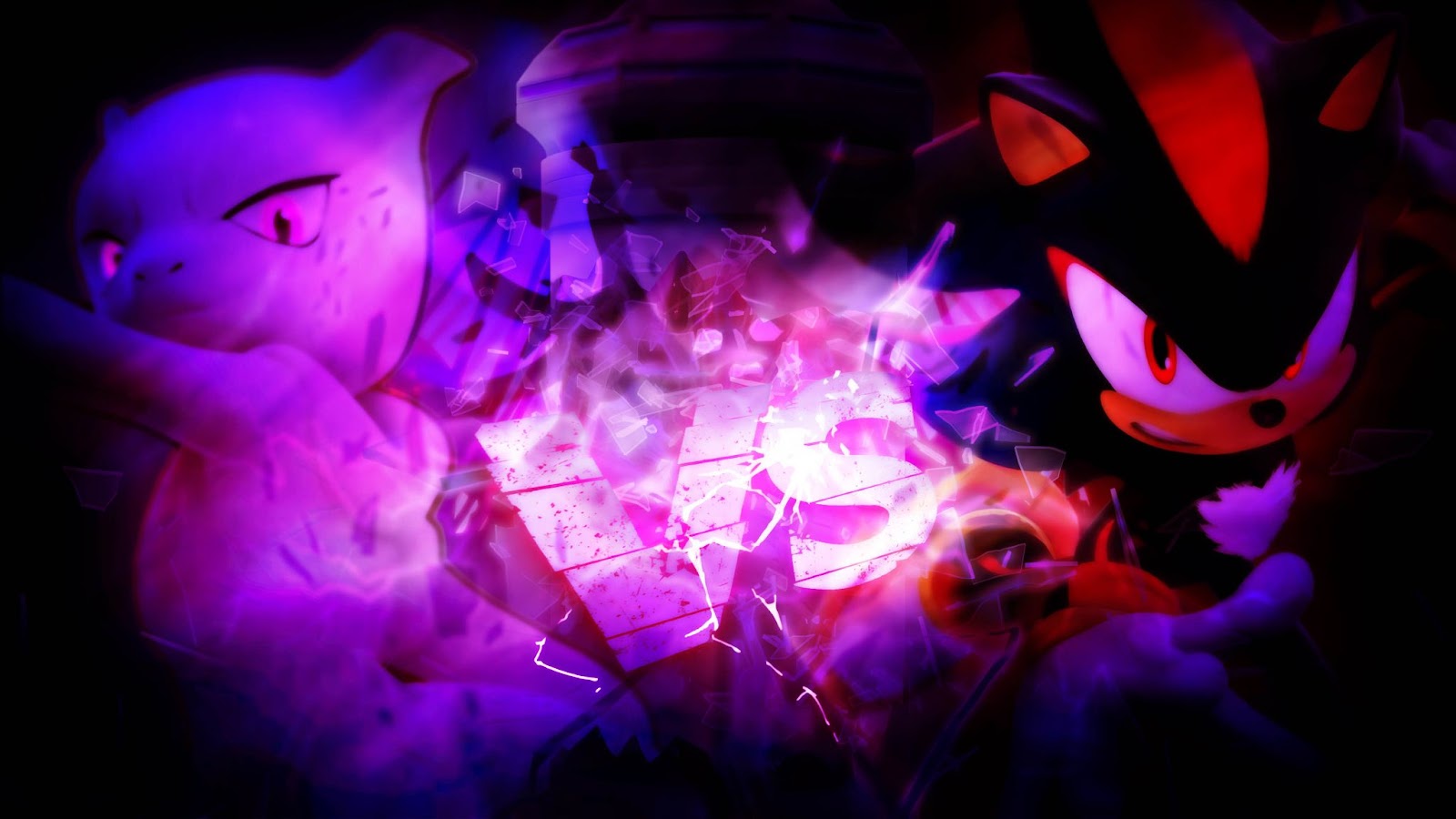



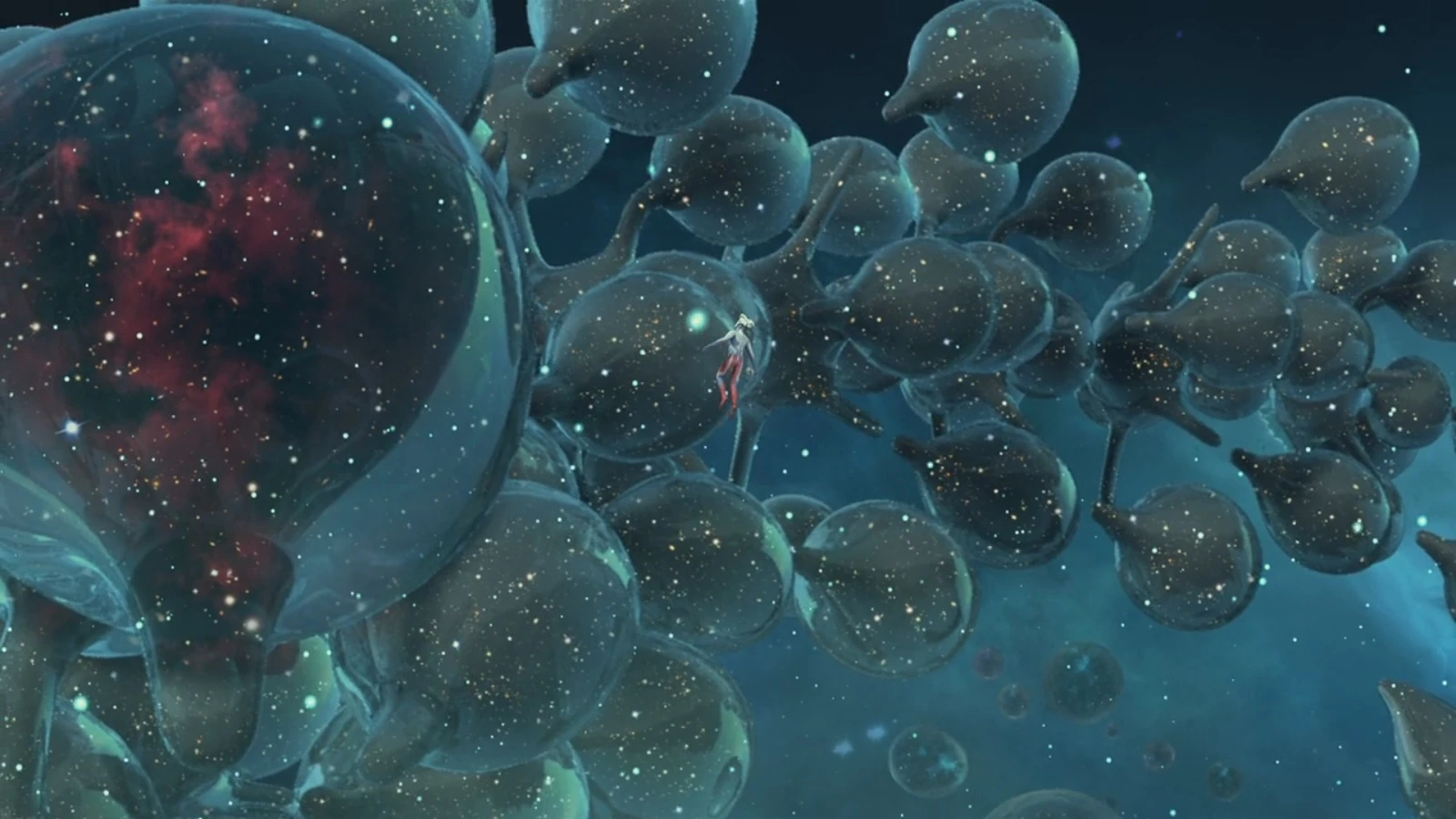


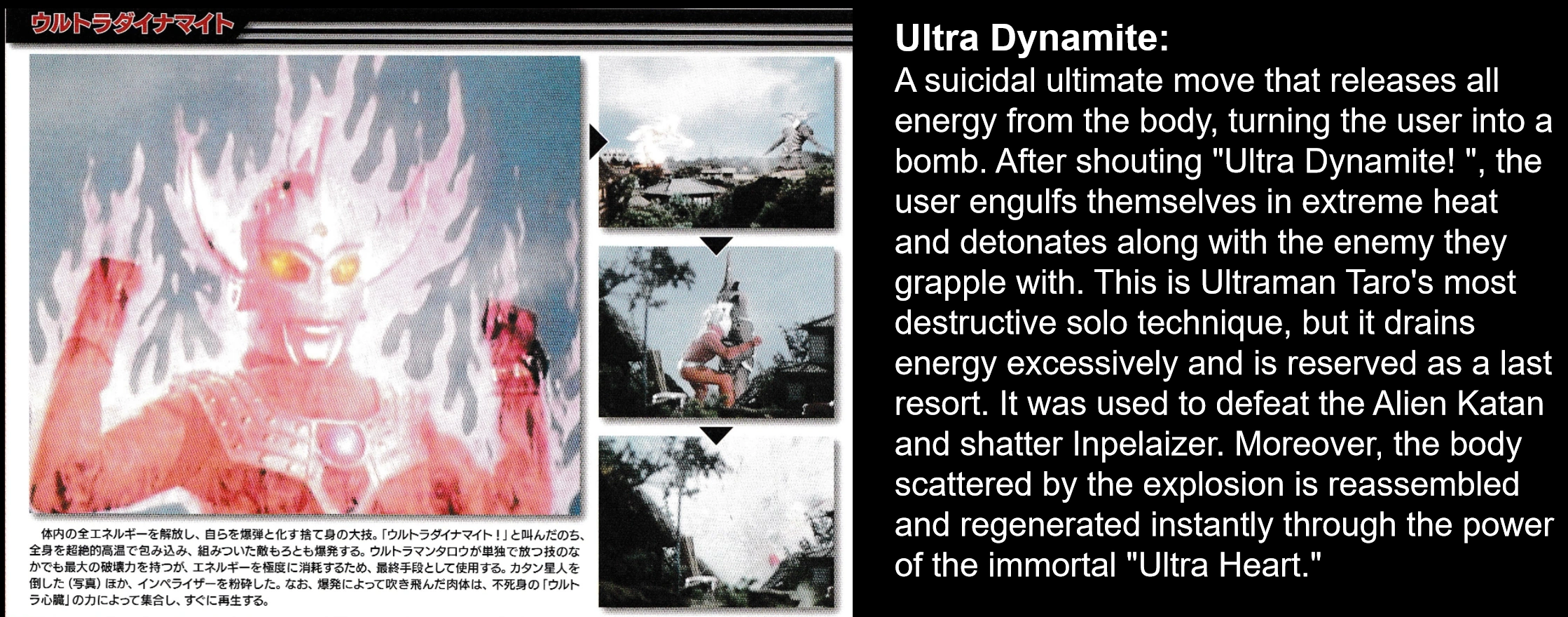

Comments
Post a Comment